


The beauty of baseball comes from its simplicity. No loud music playing during time-outs, free t-shirt cannons blasting cheap, branded tees into the crowd. No cheerleaders and no loud buzzer signaling the end of a quarter: just the batter, pitcher, and eight other players on defense.
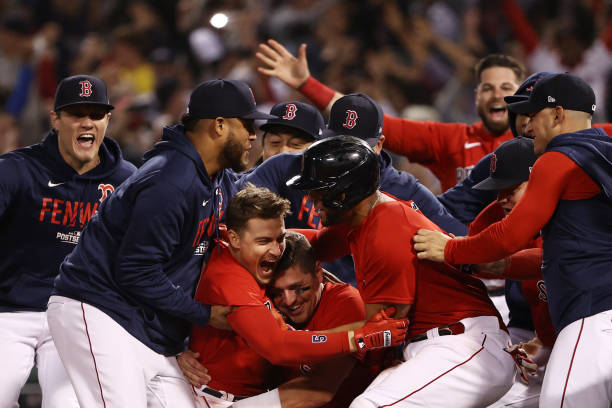
While I was watching the Philadelphia Phillies make their playoff run in 2023, I noticed something that took me by surprise; the bright white lettering of Strauss, a clothing company, was plastered onto the side of their red batting helmets. The players already had an IBX logo on their jersey’s arm, and this, for me, was one advertisement too far — taking over what was previously a shiny uninterrupted sea of red. The simple game I loved was dead.
Advertisements in the MLB are not new, but they’ve changed. Between designated commercial breaks or a mid-game ad read, advertising has been around for almost 100 years; but these were minor breaks in the action, nothing that took away from the game. Instead of having a slot meant for ads, audiences are now forced to have logos in every angle of their eyesight.
Of course, advertisements exist in other nationally televised sports, but the MLB is uniquely positioned to use the “dead air” — about four minutes between notable actions like a ball in play or strikeout — that characterizes baseball to overload ads, and it has been doing so for decades.
Starting in the early 1900s, the MLB peppered stadiums with advertisements on ballpark walls in the outfield and behind home plate. These ads were typically for local businesses and still left some empty wall space in the outfield. In 2026, Philadelphia’s Citizens Bank Park is drowning in glowing LED screens and rotating ads.
This didn’t happen on a whim. Audiences showed reduced interest in baseball, as MLB games lasted an eternity, or an average of three hours in 2022. The league decided to speed the game up by introducing a pitch clock the following year, since before then, batters could take as many time-outs during at-bats as they pleased. They now only have 15 seconds for the entire batting process, getting only one time-out per at-bat. The average game in 2026 clocks in at two hours and 38 minutes.
This change benefited the overall baseball playstyle; it led to more hits, steals, and defensive plays — everything that is not players taking breaths and watching the clouds go by.
But the change also meant fewer ad spaces and revenue for the MLB. Broadcasts lost eight 30-second ad slots due to the decrease in gametime. Each team would lose about $3.2 million per season, according to a calculation by marketing agency Line Drive Sports, amounting to about $100 million across the 30 teams in the league.
The league needed to recoup the loss that came from each team losing around 648 minutes of ad space each year.
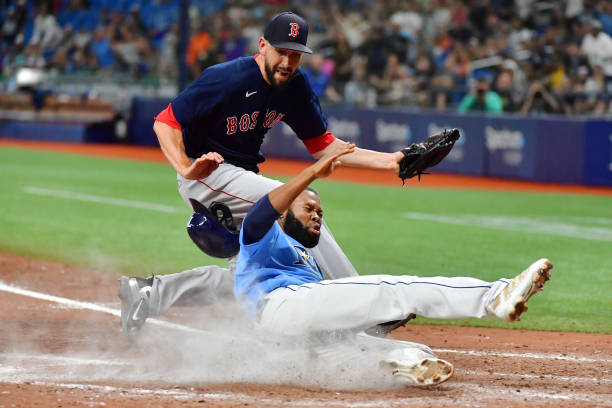
The owners decided to do something that, to this point, had only been seen in the major soccer leagues. In 2023, the league, along with the players’ association, announced in the Collective Bargaining Agreement the approval of advertisements on jerseys and batting helmets.
MLB has not stopped at plastering ads on players, but also began advertising more during the broadcast. Every pitcher’s mound has a rotating selection of advertisements per game, from insurance companies to banks. Every home run has its own sponsor. There is no longer a blank outfield wall in any stadium.
The innovations of the MLB’s ad department are leaking into other leagues. The NBA now features infamous “green screen” ads that appear on the court during broadcasts, along with their own advertising jersey patches.
Gone are the simple days of baseball. It makes me wonder if we will look back on highlights of the previous year’s playoffs and think about Bryce Harper’s biggest playoff hit and have to look up “PetCo Bryce Harper grand slam.”