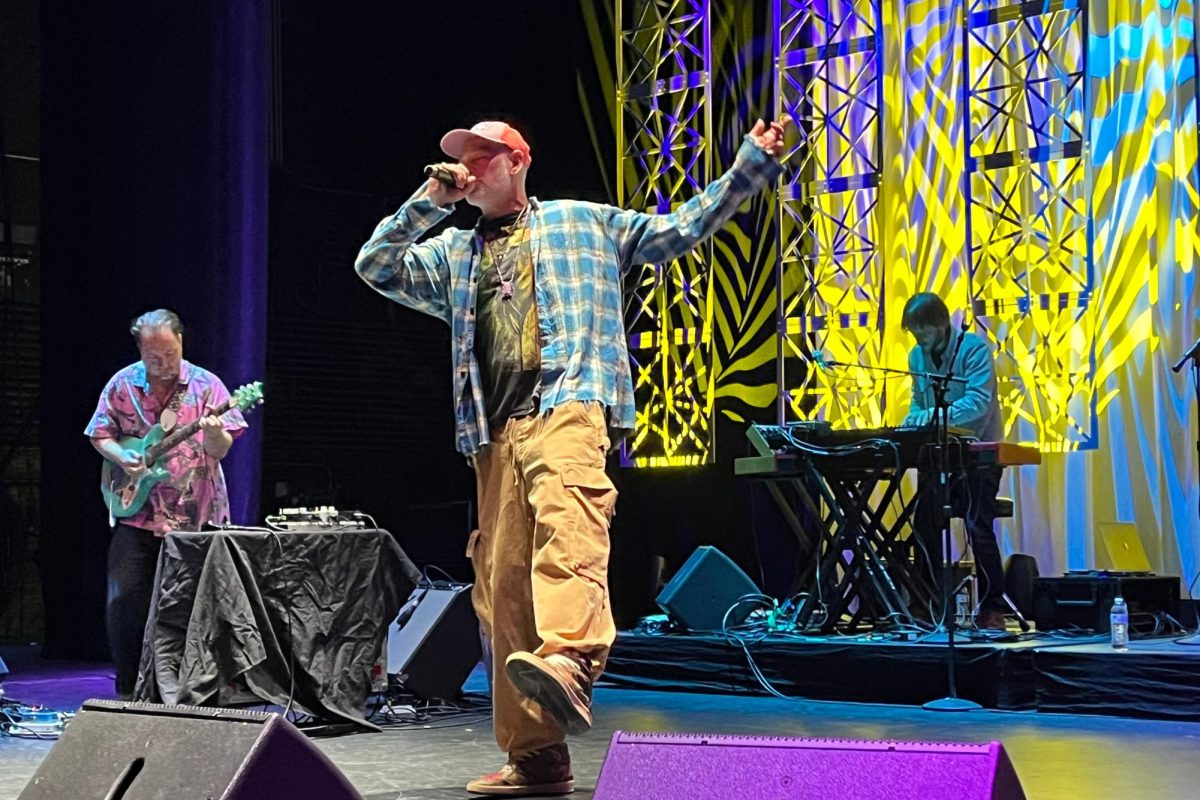


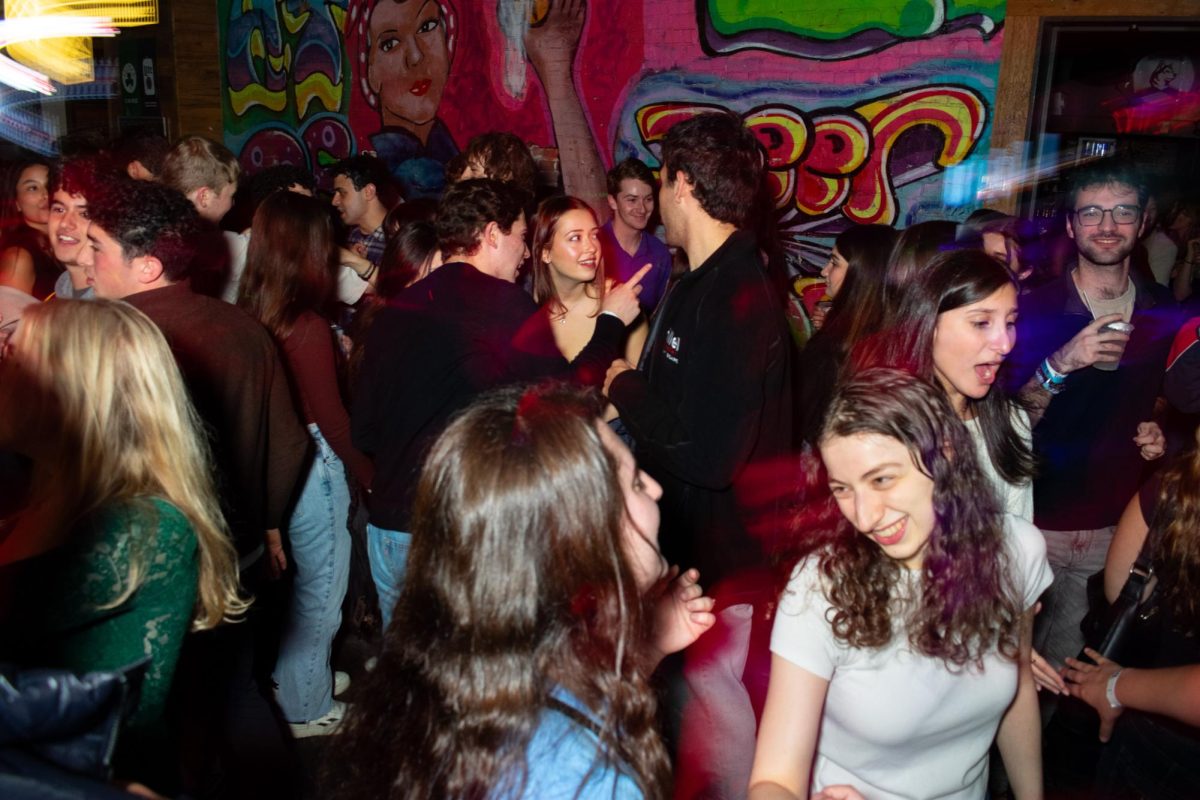
As students approached the crowded Two Saints Tavern near Northeastern University Friday night, they were greeted with the reverberations of Jewish and American pop music and the sound of laughter as partygoers enjoyed Hanukkah Palooza, an early celebration of the Jewish holiday.
Leaders from The Hillel Council of New England partnered with the Hillel chapters of Emerson College and Northeastern University to plan the event, which welcomed over 100 Jewish and non-Jewish students from schools around Boston. Attendees enjoyed soft drinks from the bar and ate latkes, which are potato pancakes traditionally enjoyed during Hanukkah.
While Hanukkah is a month away, Miriam Berkowitz Blue, the executive director at Hillel Council of New England, said they wanted to have a social gathering to make sure students had time to relax and have fun before the end of the semester.
“It’s a good time of year to get the students together before finals and before things get too hectic and they’re too busy to come,” said Blue. “We want to make connections across all of our campuses, especially for our campuses with smaller Jewish populations.”
Hanukkah, also known as the Festival of Lights, is a Jewish festival lasting eight days. This year, it begins at sundown on Dec. 14 and ends at sundown on Dec. 22, though the dates change annually. The holiday commemorates the miracle of a small jar of oil that burned for eight days during the rededication of the Second Temple of Jerusalem. It is tradition for many Jewish families to light a candelabrum called a menorah, lighting a candle on each of the eight nights until all of them are lit on the last night.
For Emerson, Rabbi Elisheva Pripas, the miracle of the jar of oil is inspiring, encouraging them to implement it in their daily lives and giving them hope during difficult times.
“In the darkest times of year, we always need to look towards the light, towards the miracles that are hopefully waiting for us in the future,” Emerson Rabbi Elisheva Pripas told The Beacon.
As an international student from Brazil who is new to Emerson, Renata Neves, a graduate sports communications major, said that Hillel events were a good way to connect with other Jewish people in Boston away from home.
“It’s a nice way to meet new people, and this felt like … the first huge party to go to [for Hillel],” said Neves.
Neves also explained her surprise at how many people across the world practice Judaism. She pointed out how she knew a Jewish acquaintance who was from China and how there were large populations of Jewish people in countries like Brazil and Panama. The Jewish diaspora swelled after WWII, which caused over a hundred thousand Holocaust survivors to be displaced from their homes and to seek refuge in other countries, such as the Dominican Republic or Bolivia.
For Neves and other event attendees, the number of Jewish people spread out across the world makes it more important for them to meet other Jews who have similar experiences and traditions as she does.
“It’s always fun to hang out with my friends, and especially since it’s at a place [where] I had to go outside the Emerson bubble,” said Lily Minkoff, a sophomore communications studies major.
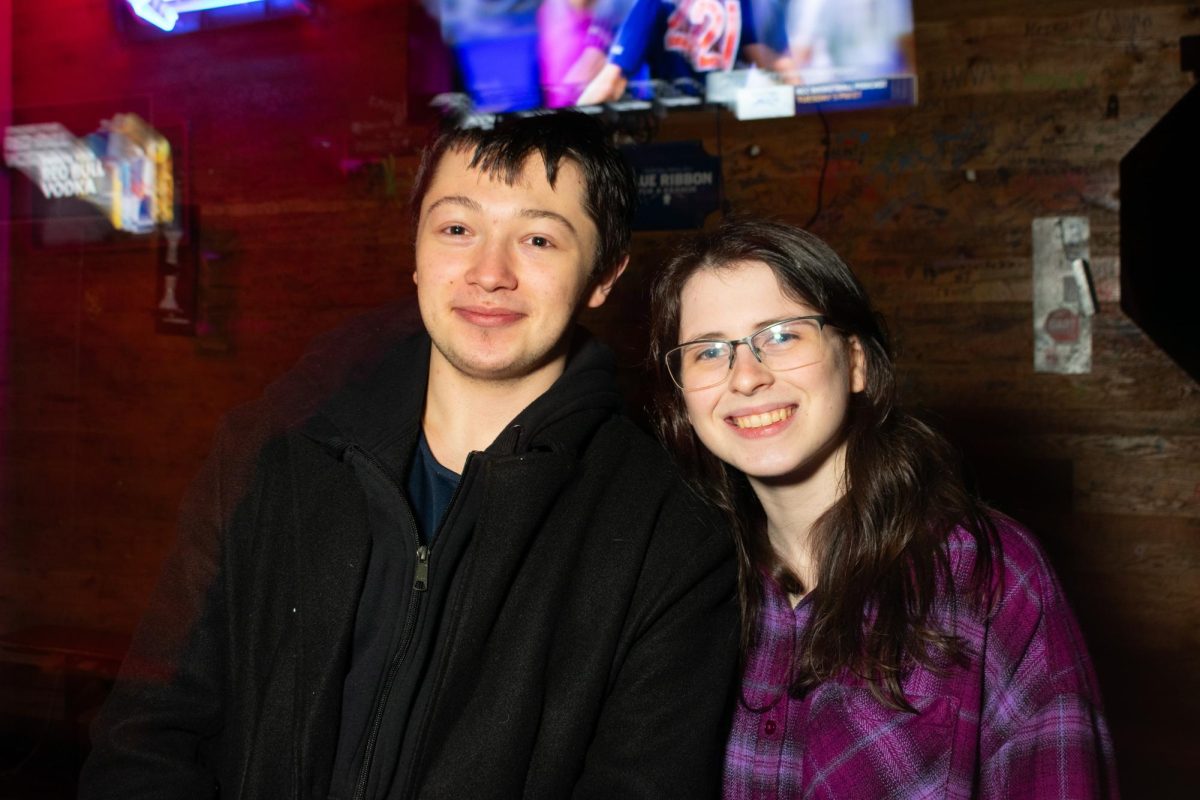
On Hanukkah, besides lighting the menorah, Jewish students also have their own family traditions. Kathryn Furmin, a computer science and math major at Northeastern, explained how her family would say prayers, eat donuts, and make latkes. In her childhood, Minkoff’s family would also do gift exchanges.
“On the first day, it’s always nice to exchange little gifts like cards and bobbleheads,” said Minkoff, explaining how she got her brother a “The Godfather” bobblehead for Hanukkah a few years ago.
Some of the traditional Hanukkah gifts include “gelt,” which is the Yiddish word for money and also the name for chocolate coins, and dreidels, which are four-sided spinning tops marked with Hebrew letters and played during a game of chance on the holiday.
Blue, a Philadelphia native, explained how growing up, her grandparents would give her and her brother a pop-up dreidel where presents could be put in it on Hanukkah. After telling her husband about her childhood traditions, he built a life-size wooden pop-up dreidel for their two children to continue the tradition.
“We have pictures of our kids inside the dreidel as babies, and now as big kids, that’s where we put the presents,” she explained.
Blue didn’t grow up with a Christmas tree like several other families during the holiday season. While stores like Walmart were coming out with decorations for Christmas, her family was making memories on the Jewish holiday, which makes the traditions she’s made with her own children even more important.
“It’s creating memories for our kids,” she said.