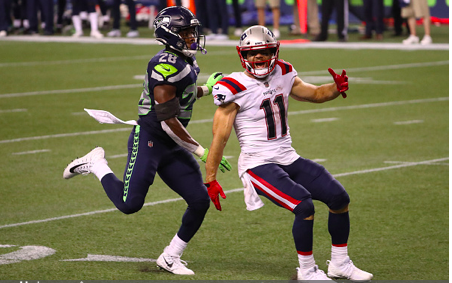



The New England Patriots didn’t lose Super Bowl LX on one play or by one error — they lost it slowly. Mistake after mistake buried them before the fourth quarter ever mattered, and soon enough, the Seattle Seahawk’s confetti was raining down at the end of the game.
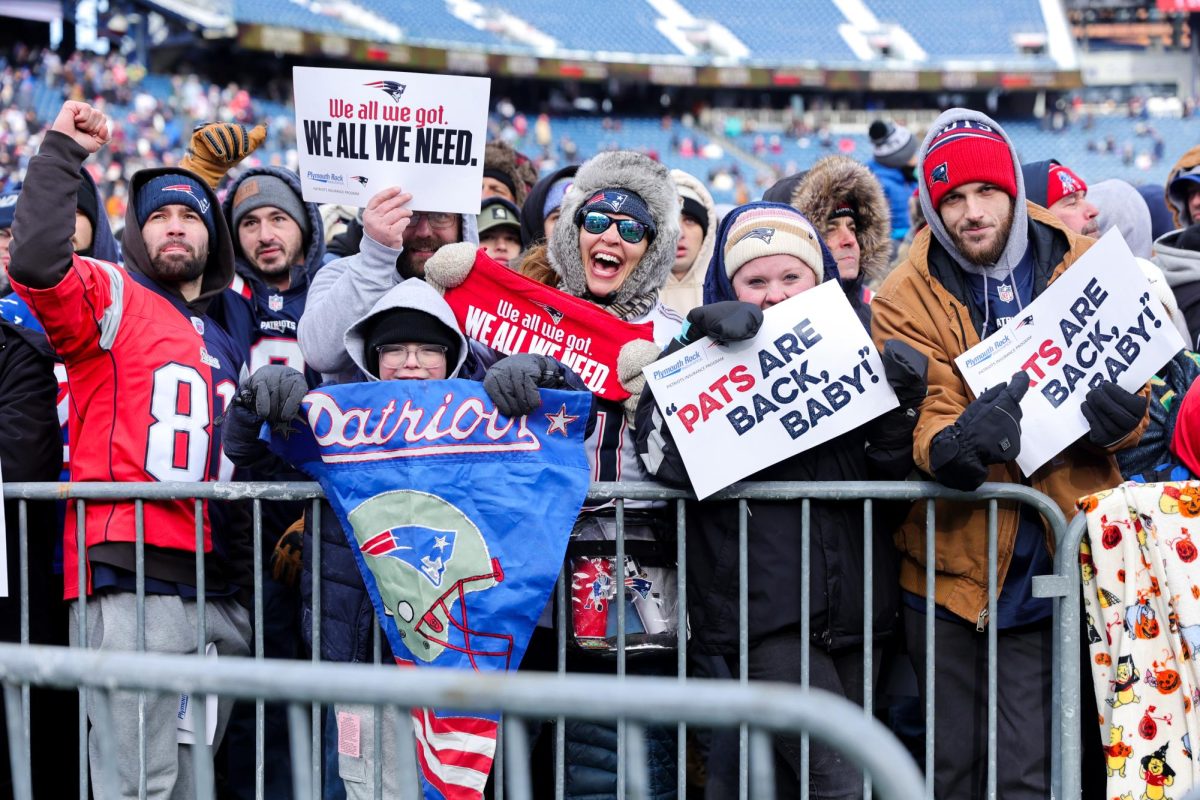
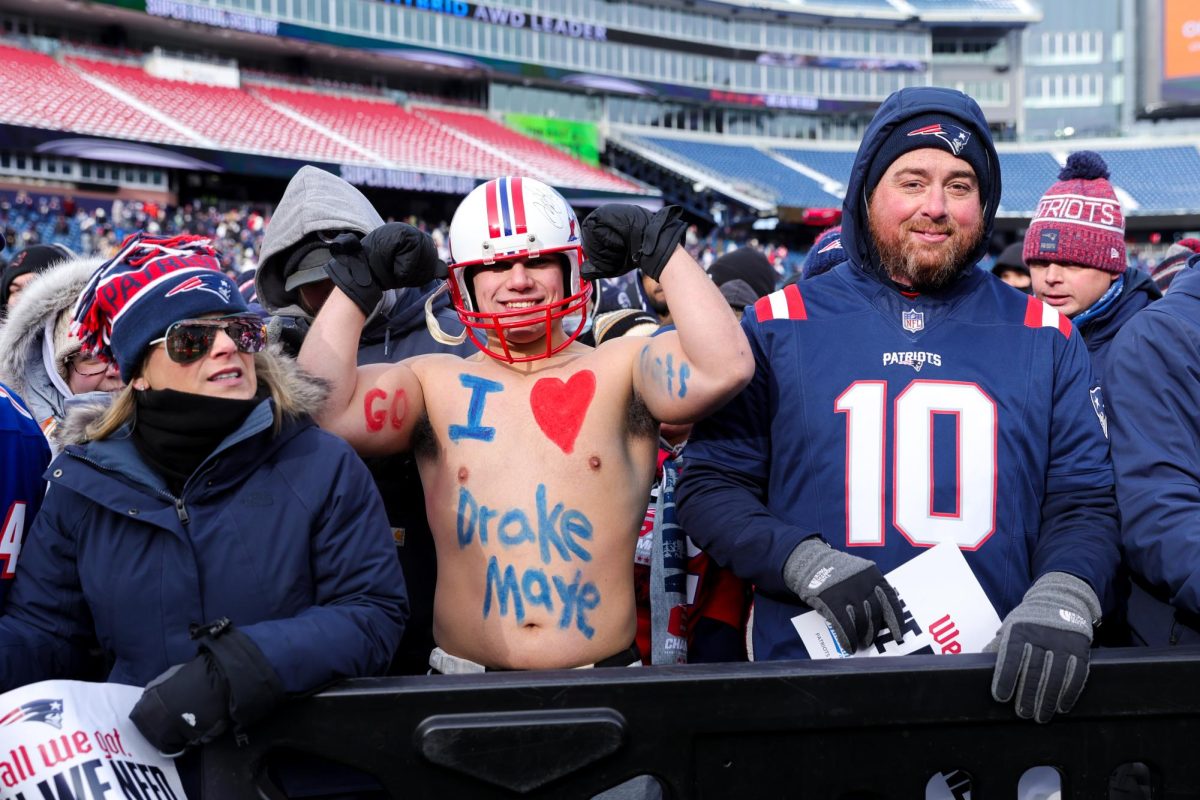
With each possession, all New England fans could do was watch the game slowly slip away from the Pats. The game mercifully concluded 29-13, and fans were not too happy with the outcome.
“It was the first time seeing my team in the Super Bowl in a while. I had high expectations, and they just didn’t show up,” said sophomore sports communication major and lifelong Pats fan, John Churchward. “I thought that it was a bad representation of our season.”
What went wrong for the Pats
From the opening quarter, the tone was unmistakable. Seattle dictated the pace, field position, and physicality with an unrelenting defense, while the Patriots’ offense struggled to find any rhythm.
Seattle controlled the game from the start, building a 9-0 halftime lead behind three methodical scoring drives capped off by kicker Jason Myers’ field goals. Quarterback Sam Darnold didn’t need explosive plays, calmly steering an offense that stayed efficient and patient, a formula that defined the Seahawks all season.
The turning point came late in the third quarter. After another Myers field goal made it 12-0, Pats quarterback Drake Maye fumbled on a sack by Seattle linebacker Derick Hall, setting up a short field that Darnold turned into a touchdown pass to Seahawks tight end AJ Barner.
Maye briefly responded with a 35-yard touchdown to Pats receiver Mack Hollins early in the fourth, but the momentum vanished quickly as he was intercepted by safety Julian Love. Maye was later picked again by Seattle linebacker Uchenna Nwosu, who returned it for a touchdown to seal the game.
A late touchdown pass to New England running back Rhamondre Stevenson trimmed the final score to 29-13, but the outcome was long decided. Seahawks running back Kenneth Walker III ran through the Patriots’ defense all night, finishing with 135 rushing yards, 162 total scrimmage yards, and earning Super Bowl LX MVP honors.
The Patriots didn’t lose just because they were outclassed in talent; they lost because they were outplayed where championship games are decided — at the line of scrimmage and in moments that demanded decisiveness.
Seattle’s defensive line dominated throughout the night, sacking Maye seven times and collapsing the pocket consistently. Patriots rookie offensive tackle Will Campbell struggled on the edge against Seahawks DeMarcus Lawrence and Ernest Jones IV, and the pressure neutralized New England’s offense.
Maye missed several open throws early and never fully settled in as the Seahawks dictated terms. Cornerback Christian Gonzalez was a bright spot for New England, holding up well in coverage, but even strong defensive efforts were undone by the offense’s inability to sustain drives.
“There were a lot of opportunities where [the Patriots] could have been aggressive and they were not,” said freshman sports communication major Luc Maass. “Winners are confident. Winners make bold decisions. Seattle didn’t really move the needle. They just did the little things right.”
Those “little things” defined the night. Seattle protected the football, won the trenches, and leaned on Walker to control the game.
Maye’s overall box score stats might not be terrible with 295 yards and two touchdowns, but the Patriots were dominated by Seattle’s defense, who completely smothered the Pat’s offense when it mattered, especially in the first half, where they only had 51 yards and no touchdowns.
What’s Next?
The loss stings, but it doesn’t erase what was a promising season for New England.
“I think that we exceeded expectations amazingly. We had three wins last year. It was one of the quickest rebuilds in NFL history,” said Churchward.
The path forward is clear after the Super Bowl: protect Maye. Maye put together a near-MVP season, finishing 2nd in MVP voting even with lackluster offensive line play throughout the season.
But even with Maye, New England needs more speed and explosiveness on the outside.
Too often, Maye was forced to hold the ball, waiting for routes to develop, a problem that only magnified the offensive line’s struggles. The Patriots have talent in the receiving game with young guys like Kayshon Boutte and DeMario “Pop” Douglas, but they need a true elite wideout that’s not an aging Stefon Diggs.
Whether through a blockbuster trade or aggressive free-agency push, the Patriots should be in the market for a true No. 1 receiver. The kind of player that defenses have to account for on every snap.
Names like A.J. Brown, Tee Higgins, or Jaylen Waddle may seem ambitious, but swinging big fits where this team is in its cycle. Even if the front office has to give up a first-round pick, it may be worth it to hoist a Lombardi Trophy once again.
Pair that with continued investment up front — developing Campbell, adding depth, and stabilizing the interior — and the Patriots can turn a painful Super Bowl loss into a launching point. The foundation is there. Now comes the harder part: finishing the job.
“We got our coach, we got our quarterback,” Churchward said. “I think we just got to get our offense more weapons. I think we’re just like one or two receivers away from actually being a consistent Super Bowl contender.”
Super Bowl LX will linger as a reminder that winning the big game isn’t as easy as Tom Brady and Bill Belichick made it seem. A reminder that on the biggest stage, hesitation is costly. Seattle played faster, tougher, and more decisively.
And in the end, that difference was impossible to overcome.