


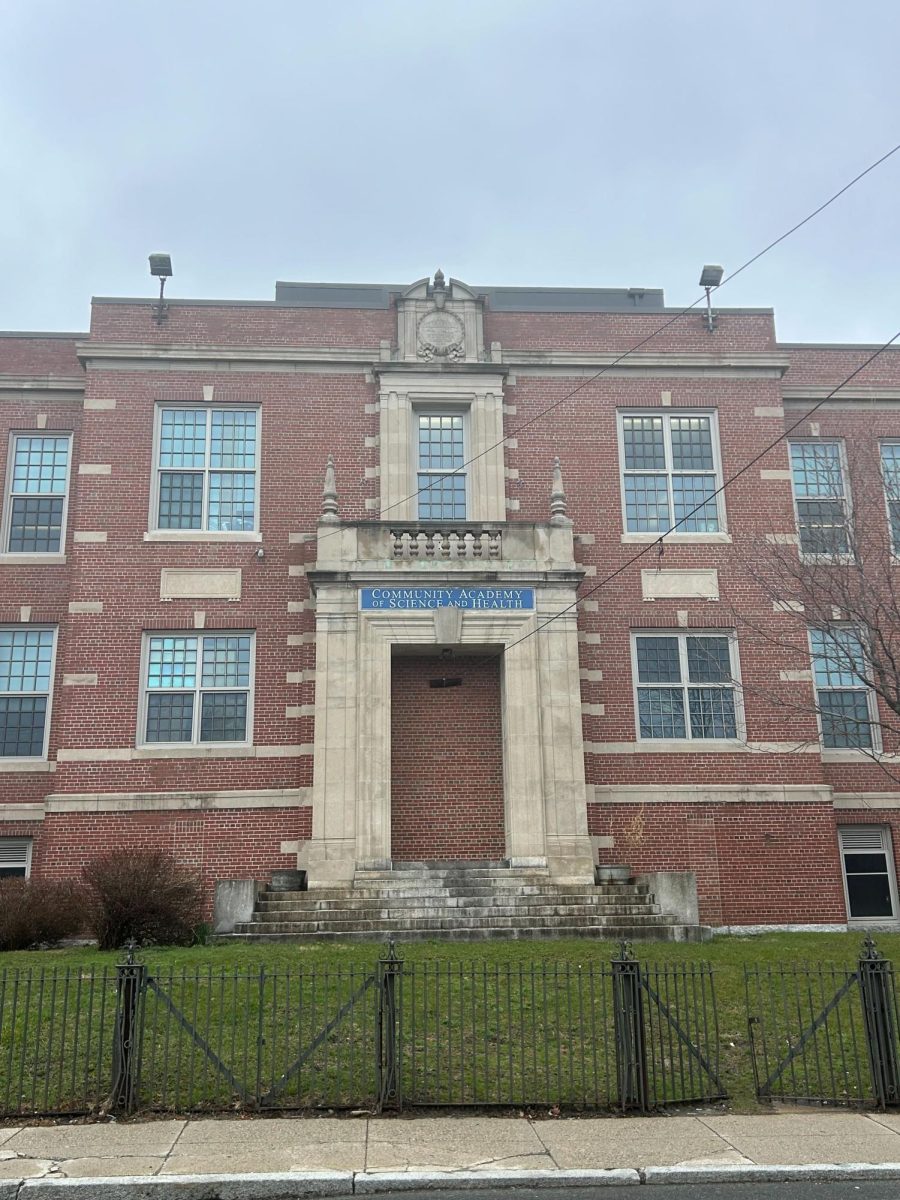
When Nyla Hicks Fernandes graduates this year from the Community Academy of Science and Health (CASH), a public high school in Dorchester, Mass., she will never return for a reunion or visit her favorite teachers — because there will be no building to visit.
CASH is one of several public schools in the Greater Boston area poised to shutter within the next two years due to facility concerns and enrollment declines, joining more than 20 public schools that closed or merged within the last two decades.
The closures are a part of a long-term facilities plan to reduce the number of school buildings within the city in an effort to provide students with newer facilities and a better, more attentive educational environment. The plan was created in 2023 after the Boston Public Schools district encountered a sharp enrollment decline that followed the pandemic, a decrease from more than 53,000 students to roughly 46,800.
The city hopes to close or merge more than 10 more schools by 2030, reducing the number of public schools from 119 to 90 across 17 neighborhoods.
Although each neighborhood should logistically see only one merger or closure, some areas have been disproportionately impacted. All but one of the schools that closed are in neighborhoods like Dorchester, Jamaica Plain, Mass., and Roxbury, Mass. — known for high diversity and immigration rates, as well as statistically lower income rates. These neighborhoods host BPS buildings that are older compared to those in downtown Boston or more affluent neighborhoods. Around 60% of BPS facilities were built before 1940, well over the recommended 40-60 years of school building renewal. Ninety-six schools lack proper ventilation systems that allow clean air into the building.

But while much of the closures come out of a necessity, it is forcing thousands of students to find another school in the wake of these disruptions. School communities are proven to have social and educational benefits for students, including higher test scores, less bullying, and stronger school spirit.
School shutterings disproportionately affect students who speak English as a second language, students of color, and students with disabilities.
Massachusetts prides itself on being consistently ranked as having one of the best public school systems in the country, but the title is largely reserved for its suburban schools, typically those that are richer and predominantly white.
Sophia Bishop, a freshman writing, literature and publishing major at Emerson College, recounted her experience at Arlington High School between 2021 and 2025, positively remembering her administration’s attention to the entire student body.
“I think Arlington pays a lot of attention towards common student needs,” she said. “It doesn’t cater so much towards individual needs, I feel, but overall I feel like they did a good job.”
Bishop told The Beacon that her school district had adequate funding and had recently finished building a new high school. She compared her experience to that of her boyfriend, who attended an elementary school in Dorchester.
“[He said] the quality was very poor. The quality of education was very poor, so much so that his mom had him test into other schools,” said Bishop.
Boston’s Public School system receives much less concentrated funding in comparison to suburban school systems within Massachusetts, money that would better equip schools and teachers in educating students. Although the Student Opportunity Act — a bill aiming to ensure equal education for every child regardless of race, gender, and physical ability — was passed in 2019, low-income urban students are not seeing adequate results.
An article by The Boston Globe reported that districts with the highest percentages of white students and schools that tend to be in suburban and rural areas received $16,500 per student from the Massachusetts School Building Authority. Districts made up primarily of students of color — which then tend to be more urban systems — only received $6,400 per student. According to a recent state census, around 15,000 children live in the Dorchester area, while Arlington, Mass. has around 8,400.
According to Massachusetts’ official website for education, the per-pupil expenditures for public school students in Boston are $35,083.89 — almost $20,000 more than the national average of $16,526.
With these high student expenditures, BPS should have the funding to upkeep their facilities; currently, $35,000 is being spent on a singular student’s educational experience. The majority of this funding is allocated for classroom education, with 44% going toward instruction, 19% toward student support, and 12% toward administration. This leaves only 15%, or $7,109 per pupil, for maintaining the school and building operations, which are critical to providing a healthy environment for learning.
The allocation of funding is relatively the same across different neighborhoods in Boston, with low-income schools having statistically higher per-pupil expenditures. In comparison to suburban schools like Arlington High School, the median per student expenditure is $20,434. Still, more than a dozen new schools are being created or renovated.
In Boston, that same number of schools are being shut down.
Many of the schools set to be closed specialize in providing accessibility services to students, like language courses, Individualized Education Plan accommodations, and other amenities that grant equitable education. When placed in a new, heavily populated school, students used to receiving more extensive care may find a lack of necessary help.
One mother of a disabled 4th grader at Henderson K-12 Lower School, who requested anonymity to protect her daughter’s identity, is worried about her daughter’s future at a new school
“My daughter has a disability, so she’s very much affected. And she’s not really able to articulate her thoughts on it,” she said.
In the BPS system, one out of every two students speaks a second language, and one out of every five students has a disability. Such mergers and closures underscore the need for special services. In every class, including English as a second language and IEP, there can be no more than 20 students enrolled in the class.
Maeva Dorelien, a junior at CASH, said she is concerned for IEP students who are accustomed to learning in a smaller school.
“Not a lot of students can thrive in big buildings like the students around them,” she said, adding that they won’t get the help they’re used to. “There are people in my classroom on IEP. I feel like they’re definitely not going to get the same services.”
The brevity of the displacements is not lost on the Boston Public Schools Committee. In a statement to The Beacon, a spokesperson for the organization said the decision was difficult, and they understand the community’s outrage. They said they are working closely with the affected schools and community, hoping to alleviate the educational concerns that are being raised.
“Over the next 18 months, we are fully committed to working directly with our students, staff, and families as we transition through these changes together to ensure that everyone is supported and that our students receive high quality resources and opportunities to learn and reach their full potential,” the statement read.
Boston City Council and Boston City Councilor-At-Large Julia Mejia, the only Council member who voted against the closures, did not respond to The Beacon’s request for comment.
Students say closures come as a shock over losing a strong school community.
Although the BPS Committee stated they would work closely with the school communities being affected by the closures, students have found the opposite to be true. During a meeting of The Boston Student Advisory Council, several students told The Beacon that they heard about their school closing in a very quick, abrupt manner that left them confused and disoriented.
“After school one day, we just got an announcement. Oh, three, four schools are getting shut down. For what reasons we don’t know,” Dorelien said.
Another student, sophomore Ma’ryah Williams from Henderson High School, said she found out about her school closing down from a news article.

Along with being a senior at CASH, Fernandes is the Boston Student Advisory Council student president, and has a more ambivalent perspective toward the committee and the closures. She has worked closely with various councilors, committee members, and administrators regarding BPS, and has learned about the logistics of the situation.
“I guess you could say that the communication has been kind of neutral, because they don’t want to do it, but they have to do it,” Fernandes said. She added that she understands why the schools had to be shut down, but is still upset with how and when the students discovered the decision.
“We were all getting notifications late, like super close to the school committee meetings. We had no time to plan,” Fernandes said. “We didn’t really have time to fight for our schools.”
Despite Fernandes’ senior year being her first year at CASH, she has grown close with the small school community that she is now working to keep. She believes many of the people in charge of shutting down the schools do not want to, but have to because of the undercrowding and facility concerns from the city.
“They are aware of it, but they also can’t overcome the school,” she said in defense of the BPS committee members. “They can’t overcome the superintendent; they can’t overcome Mayor Wu.”
Tenzin Denno, a freshman marketing communication major at Emerson, works for a school within the BPS system, Codman Academy Charter School. She said she can’t imagine those students and teachers being torn apart.
“The teachers are very well connected with their students,” she said. “Like sometimes the kids call the teachers by their first name, which I never had when I was growing up in elementary school.”