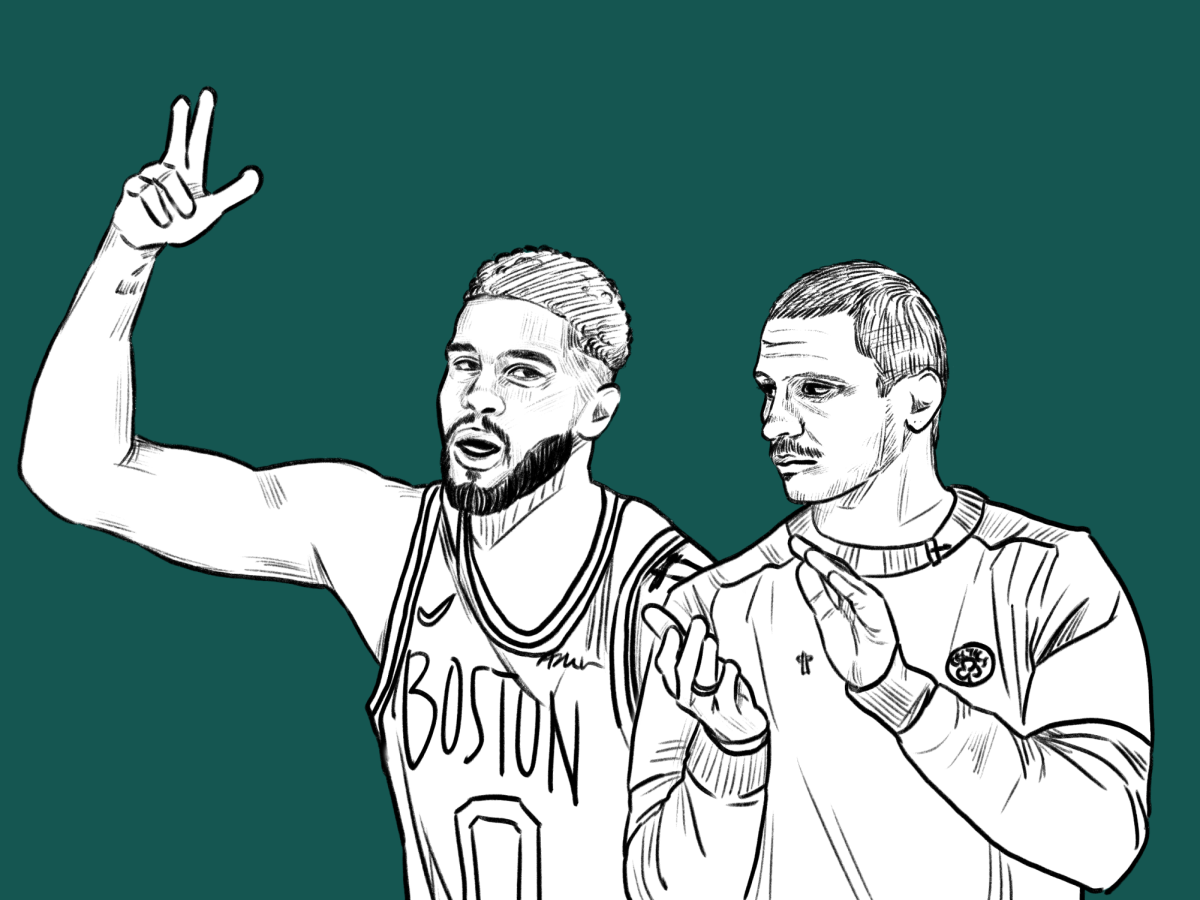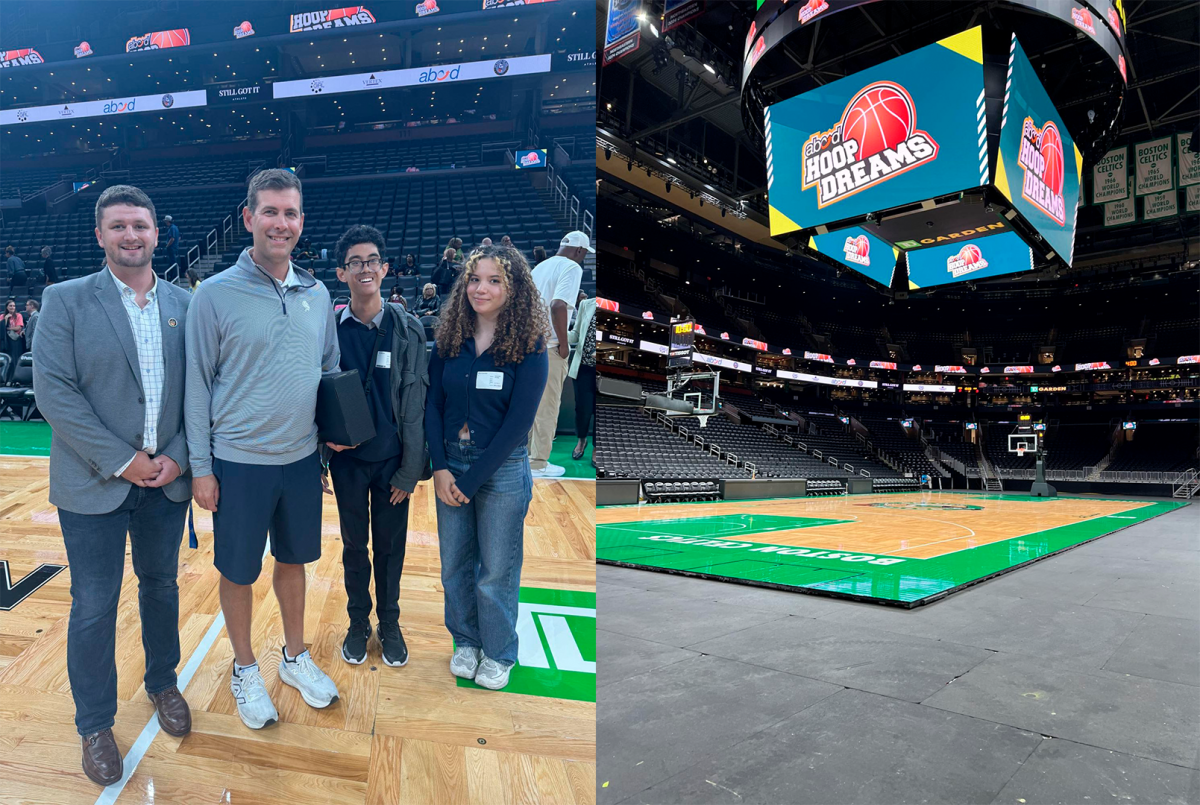


Amid tense attacks on marginalized communities, freedom of speech, and democracy at large, the Boston Celtics teamed up with the American Civil Liberties Union of Massachusetts to bring the same fire fans love to see on the court to something just as impactful: social justice.
Students and professionals were invited to reflect on current challenges through the intersection of sports, public policy, and community engagement in a panel titled: “Tipping Point: Fighting for Justice in the Greater Boston Community.” The Dec. 3 discussion was moderated by NBC Sports Boston anchor Trenni Casey and featured Allison Feaster, the vice president of team operations for the Boston Celtics and a retired professional basketball player; Jessie Rossman, the legal director of ACLU Massachusetts; and Traci Griffith, the ACLU Massachusetts racial justice director.
The group encouraged those in attendance, as well as members of Generation Z and younger, to remain active in social justice efforts amid threats to freedom of speech.
The Celtics have engaged in various social justice initiatives through Boston Celtics United, “a multi-focus commitment to addressing social justice issues impacting youth and families in New England,” according to the NBA’s website. Six pillars make up the organization’s work: education, economic development, health, juvenile prison reform, community building, and civic engagement.
Feaster said that the Celtics are a “socially-minded organization” when it comes to the team’s players and personnel.
“I work with athletes who are very socially minded and service-minded,” she said. “I’ve been a vessel and vehicle for them and helping them get connected to a community.”
Feaster said that community service and social justice are part of the Celtics’ DNA and “being a Boston sports team.”
“You recognize that you are a pillar in the community and you have a responsibility to leverage that platform to bring a voice to the marginalized community,” she added.
As part of an organization directly fighting the Trump administration’s efforts against free speech and the First Amendment, both Griffith and Rossman emphasized that there are many ways to join the fight to uphold democracy, noting the importance of protests like “Hands Off,” “No Kings,” and other displays of public dissent.
“We have to show up,” Griffith said. “We have to be in space with one another, saying no, not now, not tomorrow, not ever. We are not going to allow you to step all over our civil rights, our civil liberties.”
Casey and Feaster believe the show of support can extend to the sports world with athletes leveraging their platforms to speak out on issues. Despite some athletes being reluctant to do so, Feaster said it “comes with the territory.”
“Sports [are] such an important institution in this country,” she said. “It’s really hard to separate the responsibility that comes with having a certain platform.”
Feaster agreed with Casey’s assessment that athlete activism has become more important in the last ten years.
“It’s really hard not to expect those who have a voice not to use it,” Feaster added. She pointed to Celtics legend Bill Russell and boxing icon Muhammad Ali as prominent examples of athletes who led the charge, before highlighting WNBA players’ fights for pay equity and a new collective bargaining agreement.
“Athletes have, across time, been the voice of the masses,” Feaster said. “Even though some of them earned salaries, the money aside, they use their platforms to do what’s right for people.”
This kind of activism has spread to collegiate-level athletics. A four-year survey by RISE found that out of more than 12,000 student-athletes, 76% felt “obligated to raise awareness about social justice issues,” while 84% were willing to speak up about them.
In response to a question from a college student-athlete in attendance, Feaster said that it’s important to engage with those who see social justice as an afterthought, so as to be socially active at a critical point in history.
“We’re fortunate that we work in a league that embraces social responsibility as a business strategy,” Feaster said. “We are giving a voice to our player base [that is] also super diverse but also very socially active.”
Collegiate athletes can use their voices to support causes through name, image, and ikeness deals (NIL deals), Foster added. NIL deals allow student-athletes to profit off their personal brand through sponsorships or partnerships with companies.
“Hopefully, athletes embrace that aspect of being an athlete,” she said.
As for younger generations and their roles in the fight, Rossman said they can start by getting involved in areas they are passionate about.
“That’s also where you find community,” she added. “That is the space that you’re going to be the most effective in.”
Casey feels that this generation can engage in the fight for democracy “by being agents for truth” and helping their parents and older generations through current challenges.
“That’s actually really helpful when you help your parents, aunts, uncles, friends’ parents understand that not everything you’re reading is real,” she said. “Let me help you decipher what information you should be ingesting and how [false information] can be really dangerous to democracy.”
Griffith said that while there’s no single answer to the exact role young people have, it’s important to remember that passions can change over time.
“It’s never too late to become what you might have been,” she said. “There’s always that opportunity to grow and to change, and find your passions along the way.”
Following the discussion, Casey told the Beacon she hopes students and student-athletes alike are empowered to engage in social justice.
“I hope they feel like they found ways where they can be a voice for change, and they realize they’re not powerless in a really difficult time.”