


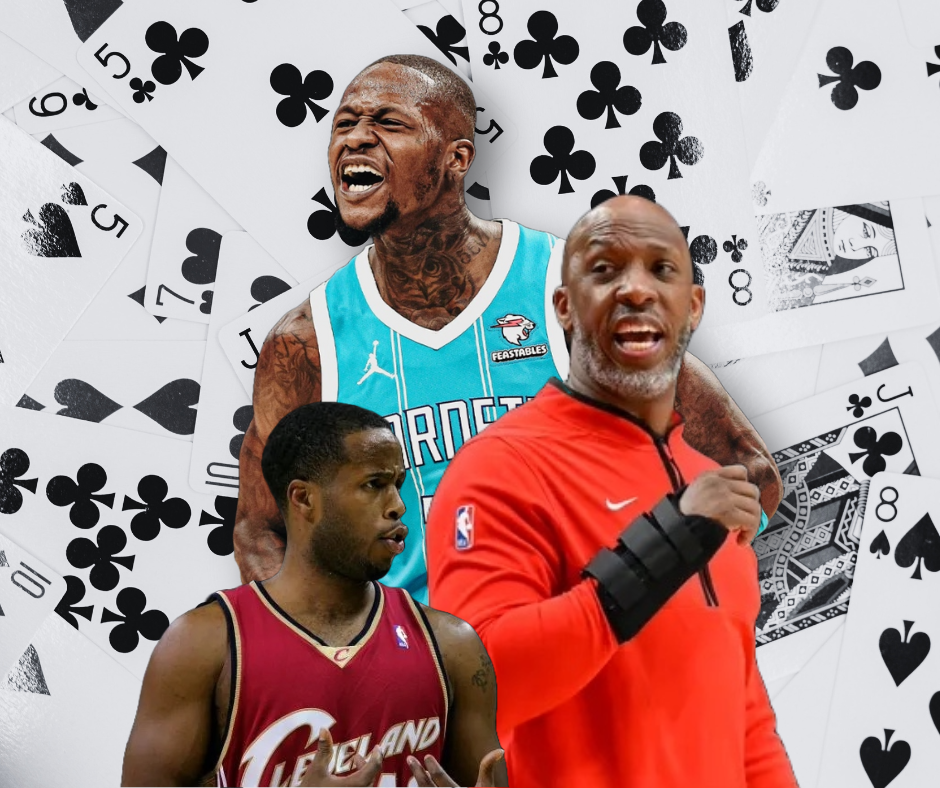
The NBA season is barely underway, yet the league is already entangled in a federal gambling scandal that’s ensnared current and former players, coaches, and raised urgent questions about the future of sports betting across all professional sports.
But this moment didn’t come out of nowhere. The NBA’s gambling crisis didn’t start with this investigation—it’s the inevitable result of a league that’s spent years blurring the line between competition and commerce. The NBA embraced betting as a way to deepen fan engagement and boost revenue, but in doing so, it created the very environment that made a scandal like this possible.
On Oct. 23, federal prosecutors unsealed two sweeping indictments exposing what FBI Director Kash Patel described at a press conference a couple days later as “an illegal gambling and sports rigging operation that spanned over the course of years.”
Among the most recognizable names involved were Portland Trail Blazers head coach and NBA Hall of Famer Chauncey Billups, Miami Heat guard Terry Rozier, and former Cleveland Cavaliers assistant coach Damon Jones — who were accused of ties to rigged high-stakes poker games and illicit betting schemes.
The Justice Department alleged that Billups was part of a poker ring backed by four of New York’s mafia families, where cheating technology was used to manipulate the results. Federal documents claim the scheme ran from 2019 through 2024, using NBA player notoriety to con victims. Players and celebrities like Billups were allegedly recruited as “face cards,” with the main goal of luring over wealthy gamblers to fixed games, generating millions of dollars in illicit profit. Dozens of other individuals, including Jones, are under scrutiny for similar charges and ties to the mafia, and new charges could be forthcoming, according to federal investigators.
Simultaneously, Rozier was accused of feeding confidential injury information to bettors who placed large wagers that focused on his performance being poor, which is called a player prop under. Among these games is one from March 2023, when Rozier exited the game early due to a supposed foot injury. Prosecutors said wagers exceeding $200,000 were placed on Rozier’s under totals that night.
NBA Commissioner Adam Silver, who championed sports betting legalization outside of Nevada in 2014, is now in an awkward position of fighting to contain the very forces he once endorsed.
Both Rozier and Billups have been placed on indefinite leave, as the NBA launched an internal review while cooperating with federal authorities.
“We take these allegations with the utmost seriousness,” the league said in a statement. “Our game’s credibility depends on it.”
Meanwhile, Billups’ attorney Chris Heywood told reporters, “To believe that Chauncey Billups did what the federal government is accusing him of is to believe that he would risk his Hall of Fame legacy, his reputation, and his freedom.”
Rozier’s lawyer, Jim Trusty, said in a statement to ESPN that his client is “not a gambler” and “looks forward to winning this fight.”
Both Billups and Rozier have yet to make a statement regarding their charges.
The NBA’s current crisis did not emerge in a vacuum. It’s a culmination of years of mounting tension between the league’s growing embrace of legalized sports betting and the slippery ethical slope that followed.
Two earlier cases involving players Jontay Porter and Malik Beasley set the stage for this moment, signaling that gambling’s integration into professional sports carries serious risk.
In April 2024, the NBA took one of its harshest disciplinary actions in decades when it banned Porter, a former Toronto Raptors forward, for life. The league determined Porter had shared confidential health information with bettors and intentionally limited his own playing time in games to help them win wagers. Porter had even placed bets on NBA games through third-party accounts.
Silver’s response to the Porter situation was swift and unambiguous: “There is nothing more important than protecting the integrity of NBA competition for our fans, our teams, and everyone associated with our sport.”
The Porter case marked a chilling first for the league: a player manipulating his own performance for gambling profit. Suddenly, the NBA’s close ties to sportsbook sponsors such as DraftKings, BetMGM, and FanDuel didn’t look like a harmless revenue stream; they looked like a liability.
Another gambling case popped up this past June, as Beasley, then with the Milwaukee Bucks, found himself under federal investigation for allegedly betting on his own player prop statistics during the 2023-2024 season. The Beasley investigation is still ongoing, with the NBA launching its own separate investigation in September, as Beasley remains a free agent to start this season.
These scandals aren’t random—they’re the logical outcome of a league that’s spent the last decade normalizing gambling as a part of its fandom. Since 2018, when the Supreme Court cleared the way for states to legalize sports betting, the NBA has leaned harder than any other major sports league, striking partnerships with betting companies, integrating live odds into broadcasts, and even encouraging fans to wager through official team apps.
This shift has blurred boundaries between sport, entertainment, and speculation. Players see their names attached to betting lines and prop wagers every night. Coaches and commentators are asked about spreads. Gambling talk hums in the background of locker rooms, podcasts, and postgame shows. In that environment, it’s easy to see how the temptation for players to bet on themselves grows—and how the league’s message about integrity can start to sound hollow.
Now with the arrests of Billups and Rozier, the NBA faces one of its greatest challenges since the Tim Donaghy referee scandal in 2007, where Donaghy was guilty of betting on games he officiated and received a 15-month prison sentence. The NBA cannot simply retreat from gambling, yet it must find a way to enforce integrity amid an ever expanding betting culture.
Whether the NBA emerges stronger or more cynical from this crisis will depend on what happens next—not in a courtroom, but in how the league rebuilds the trust it just lost. If it can’t, the consequences will stretch far beyond one scandal. Every missed shot, every bad call, and every improbable comeback will carry a hint of suspicion. Fans will stop believing in the product the league is selling: that what unfolds on the court is unscripted, untainted competition.


Fantastic analysis.