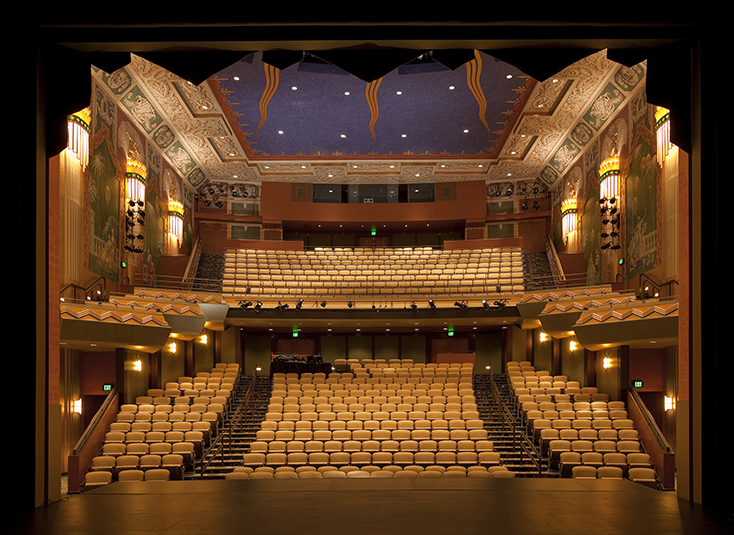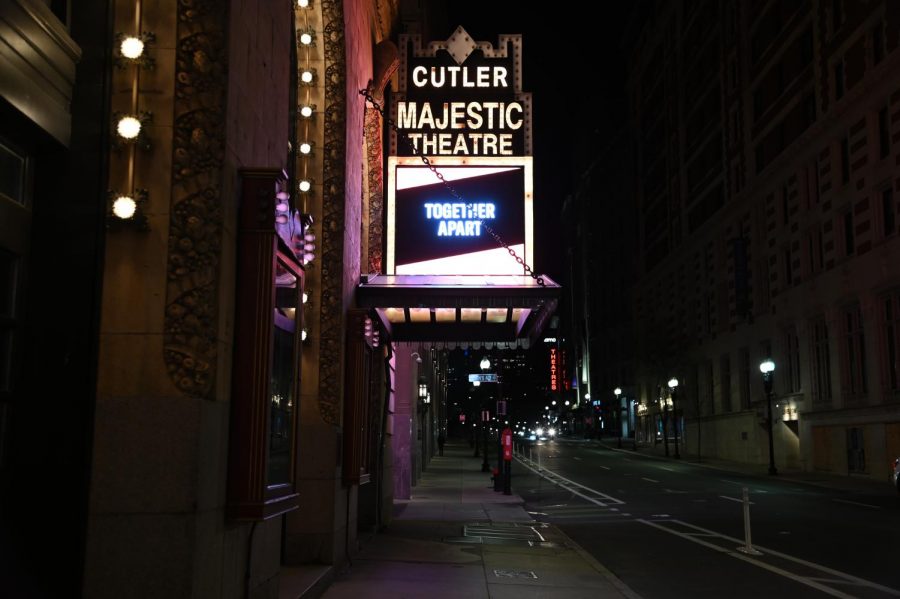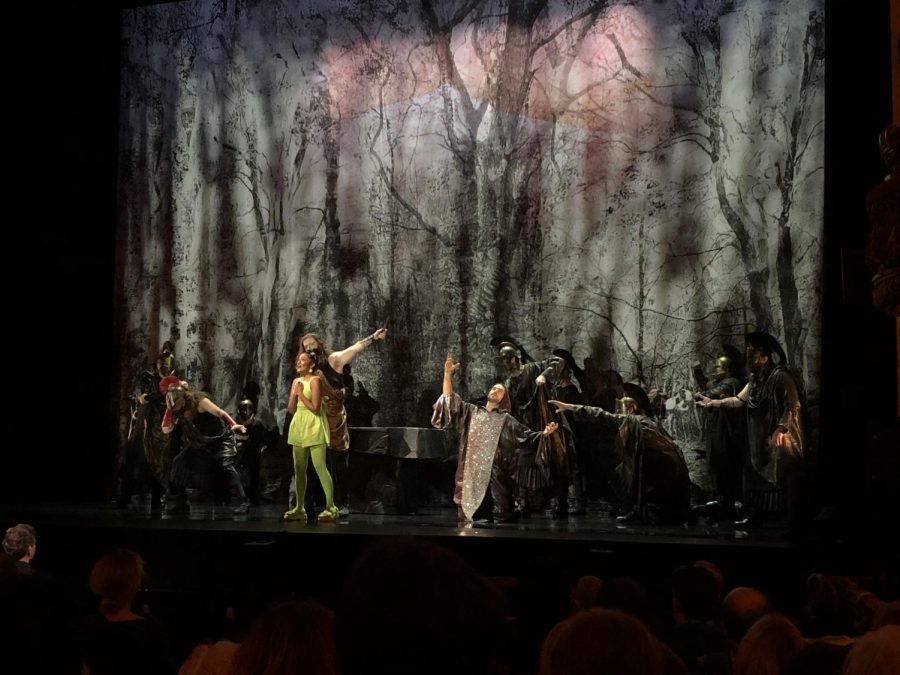



A colorful two-tier net sculpture hovers high above the stage of the Emerson Cutler Majestic Theatre. Four of the eight total performers are on the upper tier, holding another off the edge and cradling their body above the lower tier. As the music intensifies, they let go, and the ripples from the drop cause a frenzy of movement on stage.
“Noli Timere” is a visually striking aerial piece by Rebecca Lazier and Janet Echelman, combining Lazier’s choreography and direction with Echelman’s custom net sculpture that can be pulled up to 25 feet into the air. The collaboration between the two, and Quebecois composer and music performer Jorane, opened the 2026 portion of ArtsEmerson’s 15th anniversary season. It is an experience that invites introspection on fear and trust, but sometimes loses steam as the performers cycle through this fear and its counterpart, fearlessness.
Before the show began, the lighting subtly changed colors, allowing the sculpture’s blue stripes — set against pink, green, and yellow, all in neon — to catch the audience’s eye. Paired with drone-like audio subtones, the netting is reminiscent of lionfish and bioluminescence, promising immersion into the unknown.
The show opened with words from Ronee Penoi, ArtsEmerson’s director of artistic programming. She explained that “Noli Timere,” Latin for ‘be not afraid,’ is “an invitation and a promise.” Underlying this is a question often invoked, silently, throughout the performance: do you trust me?
The show was filled with moments of vulnerability, playfulness, and shock. During the post-show talkback with the artists on Jan. 31, performer Madison Ward referred to “Noli Timere” as her “most honest performance.”
This internal reflection rings true throughout the hour-long show. The performance is structured to allow for a consistent direction but remains open enough to allow the performers to adjust the details, suiting the netting’s tension and natural variability of movement.

While the title invites fearlessness, when watching the performance, it comes off as being more focused on moving through fear instead of existing without it. This idea of fear and freedom through community is highlighted most clearly in the beginning, where the novelty and the performance arc are spellbinding.
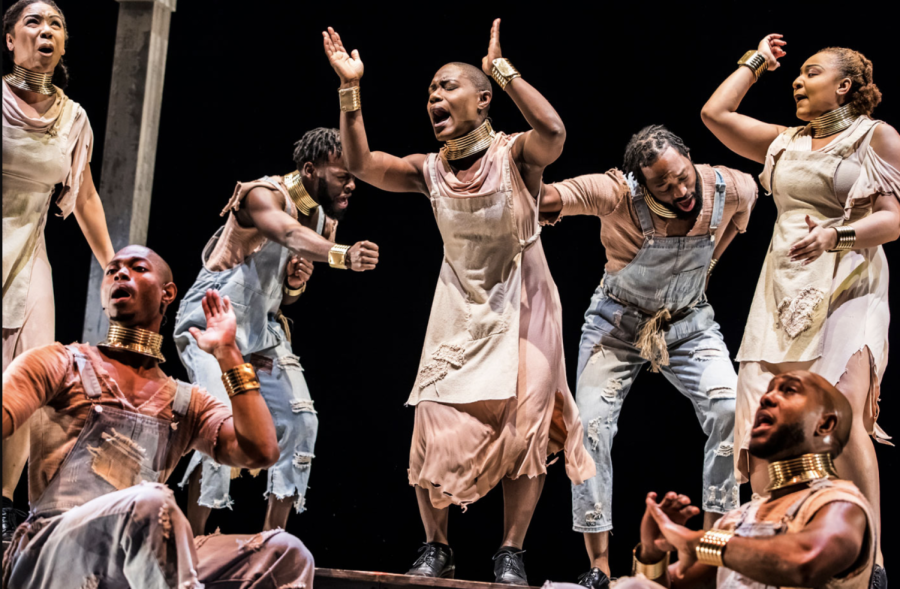
Performers start on the floor. The music is quiet enough that the soft slide of clothing against the stage can be heard as they approach the net and begin their ascension. The simple, light-toned costumes were unique to each performer and kept the movement as the focal point without removing the individual. Once the dancers help each other up onto the net, they break into chaos, shaking the nets as they move as if trying to escape.
Jorane blends recorded music with performed cello, live-processed vocals, and waterphone, an instrument with metal bars filled with water. The music is effectively haunting, but has moments that felt more like waiting than a buildup, giving away some changes in movement before they happened.
During the talkback, Echelman commented on the feeling of the ground no longer being stable. She related this to the current politics in the U.S., asking the audience if they felt that way when seeing the news.
The performers highlighted that the nets acted as “the great equalizer,” a unique setting that required everyone to learn the same vocabulary and how to move together regardless of experience. This aligns with Echelman’s vision of the performance reflecting how people must adapt as the world around them becomes more unstable.
Once the performers are suspended and united, they work their way back down together, minus a pair that falters in their trust and is trapped in conflict until the other performers provide them the courage to descend. This is one of the duets that Lazier said was a performance of micro and macroscopic relationships, followed by rescue and reflection. Echelman said “we know we are connected” in day-to-day life, and used the netting’s stripes to make those connections visible.
Lazier and Echelman have a bold vision that is worth experiencing, but suffers from being sold on novelty and messaging. After this first arc, the sparkle dulls and turns quieter instead of continuing to be thought provoking. A moment where the upper tier of the net rises with one person left within it is poignant from the mezzanine as the edges of the mesh are no longer visible. There is a drop at one point that draws gasps and exclamations from the audience, but much of the performance is similar enough to blend together.
While Lazier said the duets throughout were depictions of relationships, Echelman views the performance as the story of humanity. This makes the rising and falling more impactful, but was still somewhat flat as the same performers repeatedly moved up and down the mesh.
The printed handout for the show quotes Echelman, saying she aimed to capture a “profound experience by being surrounded by something beautiful,” calling her work experiential. “My sculpture is about the way you feel when you’re standing under it and inside it,” the quote from the handout said.
This goal is understandable, but contains one major flaw: the audience cannot actually be inside the netted sculpture.
There is beauty and thoughtfulness in the way we witness the performers experience Echelman’s art, but we cannot be on stage to experience it ourselves. The ending is strong, with a total of eight performers standing on the sculpture and, finally fearless, boldly looking at the audience, but needed more to draw audiences in. The message of strength during instability was interesting and this direction could be exciting for future iterations of this work or new pieces entirely, should it continue to be explored.
Despite “Noli Timere” being a good start to the 2026 portion of the season, it was a piece that hasn’t quite yet figured out the balance between existing for beauty or for thought.