





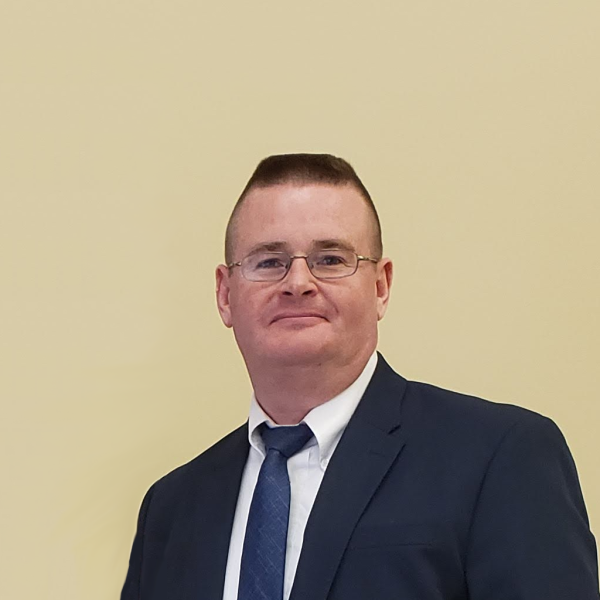
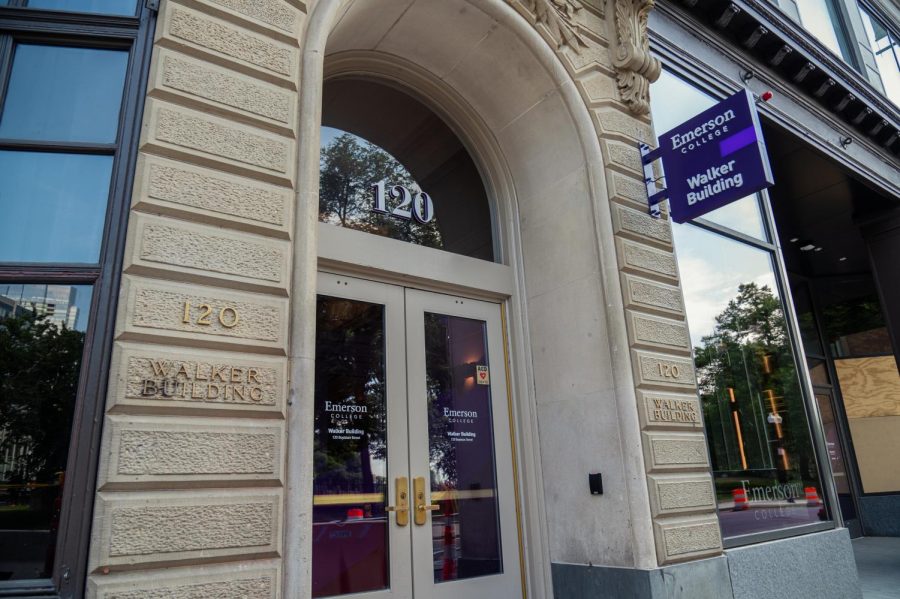
The Emerson College Police Department is being sued for employment discrimination by a Webster, Mass. man who alleges ECPD breached his contract and violated his civil rights.
Thomas Ralph Sr filed a civil suit in Suffolk Superior Court against ECPD on Feb. 2, 2025, after allegedly receiving a job offer that was later rescinded. Ralph is representing himself in court and seeking compensatory damages that would include emotional distress and his full legal fees, as well as punitive damages from defendants ECPD Chief Robert Casagrande, retired Chief Robert Smith, and head of Emerson Human Resources Cathy Carney. He is also asking the court to declare that his state constitutional rights were violated.
In response filings, the defendants say they ultimately decided against continuing Ralph’s hiring process due to concerns over prior disciplinary action he faced while working as a police sergeant with the Webster Police Department. In his complaint, Ralph asserts that any disciplinary actions taken against him were expunged from his record and therefore should not have influenced his eligibility for future employment.
Casagrande, Carney, and ECPD did not reply to requests from The Beacon for comment or an interview. In an email statement to The Beacon, a college spokesperson said, “The College will always vigorously defend itself against frivolous lawsuits and looks forward to seeing this baseless complaint dismissed.”
According to the lawsuit, Ralph, a lifelong law enforcement officer, applied for a full-time lieutenant position with ECPD in March 2023. In April of the same year, Smith and Casagrande conducted an in-person interview with Ralph for the position.
In his initial complaint, Ralph alleged that he was fingerprinted at this meeting—a claim Casagrande and ECPD both later denied in their reply filings to the lawsuit. Ralph, in his suit, alleged that six days later, on April 12, during a phone conversation, Casagrande verbally offered Ralph the position with a starting salary of $100,000, which Ralph accepted. Casagrande and ECPD denied the allegations of an offer with a salary and position in their reply filings.
In an interview with The Beacon, Ralph said that Emerson’s “diversified” campus locations in Boston, Los Angeles, and the Netherlands were attractive to him, as well as the prospect of returning to Boston, a city close to where he grew up. He described the excitement he felt after receiving what he said was a job offer from Casagrande.
“I called my wife, called my kids, told them that I’d been offered the job and accepted it,” he said.
Ralph also said he had a vested interest in the significance of having campus police officers committed to safety and protection in a college community. Having started his career as a campus police officer at Suffolk University and the University of Massachusetts Lowell, Ralph felt drawn to Emerson’s urban environment and campus culture.
“You will always know who the police are, because they stand out,” Ralph said. “As a parent, that’s important to me.”
He said in his suit that after allegedly extending the offer of employment, Casagrande entered Ralph into the ACADIS Massachusetts police database, where he designated Ralph as an active lieutenant with the Emerson College Police Department with a hiring date of April 20, 2023, and listed himself as Ralph’s supervisor. ECPD and Casagrande denied this in their responses.
Less than two weeks later, Ralph claims, Casagrande informed Ralph that a routine background search would be conducted by ECPD Detective Robert Miller, who contacted Ralph on May 11 with instructions to complete a background packet.
On May 10, Ralph attended a physical required by ECPD. As a basis for his complaint that his civil rights were violated, he referenced the Massachusetts Commission Against Discrimination guidelines, which state “an employer must make a conditional job offer before requiring a medical examination.” A conditional job offer, the guidelines say, refers to “an offer of employment to a job applicant which is contingent upon the satisfactory results of a medical examination.”
Ralph alleged this was an “employment physical,” which ECPD and Casagrande denied in their responses, stating it was a “pre-employment physical.”
Two weeks later, Ralph received this email from Emerson Human Resources on May 23:
“We’ve identified other candidates whose skills and qualifications better match what we are looking for at this time. We wish you the best in your employment search and encourage you to continue to review future opportunities at Emerson.”
Ralph recalled feeling confused and surprised by the email, but knowing it was a done deal.
“I’ve been in this profession most of my life. I can read the room,” he said.
In his filing, Ralph said he emailed Casagrande to inquire about the email from HR, to which Casagrande replied, “Our background check discovered that you were demoted from Deputy Chief to Patrolman and also had served a 12-day Suspension.”
In his response, Casagrande referenced Ralph’s answer to a question on the Peace Officer Standards and Training (POST) Attestation—a document assessing a candidate’s qualification for law enforcement certification—in which Ralph indicated that he had not been subjected to disciplinary action during his previous employment.
According to Ralph’s suit, he explained in a follow-up email the reassignment in question was nondisciplinary, the suspension had been erased from his record, and he received compensation for the 12 shifts. Because the suspension was reversed and erased, Ralph said, his response of “none” on the POST Attestation form was accurate.
Additionally, Ralph claims he was both eligible for retirement and retired in good standing with the Webster Police Department. Ralph also asserts that his personnel file, the controlling record of a police officer’s service, does not contain any adverse actions or discipline taken against him. The Webster Police Department did not immediately respond to a request for comment on Ralph’s retirement status.
In his answer to the complaint, Casagrande alleged that during the May 23 email correspondence, he wrote to Ralph, “I am not looking for a change in your offer of employment, I am just seeking to understand where the misinformation stems from.”
Given that this was a private email exchange under the purview of Emerson College, a private institution, this correspondence was not subject to verification by The Beacon through the Freedom of Information Act.
The demotion in question resulted from multiple incidents between 2003 and 2004 following Ralph’s report against a fellow officer for racial profiling, according to Ralph. The town alleged Ralph had failed to investigate excessive force and had been insubordinate. After these cases, Ralph was reassigned from deputy chief to sergeant and later to patrolman in the Webster Police Department. He was reinstated to a sergeant in a settlement with the town that same year. No disciplinary finding by the town was ever sustained.
In 2017, however, Ralph was suspended for 12 days without pay after a hearing officer determined Ralph broke the chain of command by speaking to two Webster selectmen about concerns of a police cover-up, rather than reporting the concerns to the chief or deputy chief. Breaking the chain of command is prohibited in the rules of the department, according to a Telegram and Gazette report.
Eight years ago in Webster, an anonymous email sent to two Webster selectmen alleged a Webster police officer used excessive force against a Black man, and that the police department had engaged in a cover-up when pushed to investigate this claim, triggering a third-party investigation. Ralph was not found to have penned the whistleblower email, though he brought the same concerns to the two selectmen, according to a complaint he filed against the town in 2018.
In the email to the town administrator, the whistleblower alleged that they brought up the matter to the chief and deputy chief, who brushed it off, saying they “should mind [their] business.”
The Webster town administrator initiated an internal affairs investigation as a result of the email, which was conducted by a third-party company, Billingsgate Associates LLC of Wellfleet, and ended up costing the town nearly $19,000. The Billingsgate investigation said that the officer’s use of force was justified “considering the circumstances,” and that a police cover-up of the incident did not occur, according to the Telegram and Gazette.
Ralph maintains the force used in the incident was excessive and that he raised concerns over the conduct in good faith. Officers are currently obligated to report instances of improper force under M.G.L. c. 6E § 15. While this statute was adopted in 2020, courts in Massachusetts have historically recognized this responsibility, such as in Commonwealth v. Adams (1993), which Ralph said “emphasized the duty to report or intervene in improper force by fellow officers.”
The Billingsgate investigation did, however, find “related matters” of concern with regard to Ralph’s conduct. In reference to a 2016 incident, the report said Ralph had conducted a warrantless search of an individual suspected of drunk driving, using physical force to enter his home after the individual turned his back on officers to retrieve his license. Ralph maintains that his actions were lawful, appropriate, and grounded in public safety concerns.
Ralph was suspended following the report, with a recommendation made by Billingsgate officials that he receive further training on how to handle complaints concerning the Police Department, probable cause, consent to enter a suspect’s home or vehicle, and search and seizure practices.
Then, in 2018, Ralph sued the town for wrongfully suspending him without pay, saying the town violated the state whistleblower law and breached his freedom of speech. In 2021, Ralph reached a settlement with the Town of Webster.
As a clause in the settlement agreement, the Town of Webster and the Webster Police Department agreed to remove any disciplinary documents, including those pertaining to the 12-day suspension, from Ralph’s personnel file, according to the Worcester Superior Court docket. The town and department maintain in their response the settlement agreement did not say they could not submit said disciplinary documents to POST, which the police department alleges they are required by law to do. The town and departments also asserted as part of the separation agreement that they would recommend Ralph be certified as a police officer if asked in the future.
In a separate complaint filed against Webster Police Department in 2024, Ralph claims that the town provided prospective employers with Ralph’s personnel file, including the disciplinary actions, and in doing so, violated the terms of the settlement. “The Town, contrary to the settlement agreement, provided prospective employers with Ralph’s personnel file which contained references to disciplinary actions.”
“It did not remove discipline from Ralph’s personnel file which it had agreed to do,” the complaint said.
As a result of this failure to remove the disciplinary actions from his file, the complaint said “Ralph has had several offers of employment withdrawn and has had several prospective law enforcement employers reject his applications.”
Ralph maintains that the town retaliated against him for speaking out about the failure to act on an excessive force complaint. As the basis for his current lawsuit against the town, Ralph said that in Massachusetts, civil service employees’ communication with public officials on matters of public concern is protected, and under M.G.L. c. 31 § 75, such communication cannot serve as a basis for discipline.
When asked about the decision to pursue legal action against ECPD, Ralph said retaliation was something he had experienced at previous departments as a result of what he believes is an “us vs. them” mentality within law enforcement.
“I think there’s always a stigma that goes along with filing suit and breaking ranks in the policing profession,” he said.
On June 6, 2023, a week after the email to Casagrande, Ralph contacted Carney, citing a lack of response from Casagrande and reasserting the accuracy of his answer on the POST form via email. Carney responded later that day, according to both the defendant’s and plaintiff’s filings, saying she needed additional time to investigate the matter and would respond once she had more information.
Two weeks later, Ralph again contacted Carney, who responded on June 21, saying, “Emerson personnel discovered generally available public record information that caused us to discontinue your hiring process. We will not be engaging in further discussion regarding this matter.”
In ECPD’s answer to Ralph’s suit, they noted that Carney’s response was incomplete as quoted, and the court should review the entire document. When asked about his decision to pursue legal action, Ralph referenced his inability to stand by while knowing “something wrong” was taking place.
“I believe that people that can do something have an obligation to stand up and do something,” Ralph said. “I just couldn’t let this go, because it was wrong, and if they’re doing it to me, they’re going to do it to other people.”
The pretrial period for the case has been repeatedly delayed by requests for an extended period of discovery, the time during which all parties can enter evidence to be reviewed by the judge and jury on the case, and a request to extend the pretrial timeline. The first pretrial conference in the lawsuit is currently set for June 9, 2026.







That quote at the end sums it up perfectly: “… if they’re going to me, they’re going to do it to other people.”
Yep.
As a former Webster police officer and someone that has dedicated the last 21 years to the profession I can’t express enough how often this happens. Good cops that do the right thing are black listed while departments such as Emerson copitulate off the record with departments such as Webster off record. I hope that Emerson pays out and is exposed. These types of administrations can no longer continue.
As a former Webster Police Officer I will be the first to say shame on this college. Webster police has a long track record of this behavior. They have slandered multiple officers that do not support their just shut up and do what I tell you attitude. Background investigators that play these games should lose their qualified immunity and be liable for things such as this.