

Three Emerson College professors were awarded travel grants via the Marion and Jasper Whiting Foundation Fellowships to further their research and courses.
Emerson professors Kimberly Dahl, Adam Franklin-Lyons, and Jon Papernick were awarded grants out of 144 applicants.
The Marion and Jasper Whiting Foundation is a permanent charitable trust fund established under the will of Jasper Whiting. It began awarding annual fellowships following the death of his wife, Marion Whiting, in 1965. In 2025, the foundation awarded 44 area professors a combined $266,200 to further their research via travel. The aim of the grants, according to the solicitation letter, is to “stimulate and broaden the minds of teachers so as to improve and enhance the quality of their instruction.”
The foundation began awarding grants and fellowships in the mid-60s to prospective and current New England university professors to “enable them to study abroad or at some location or locations other than that with which they are most closely associated.”
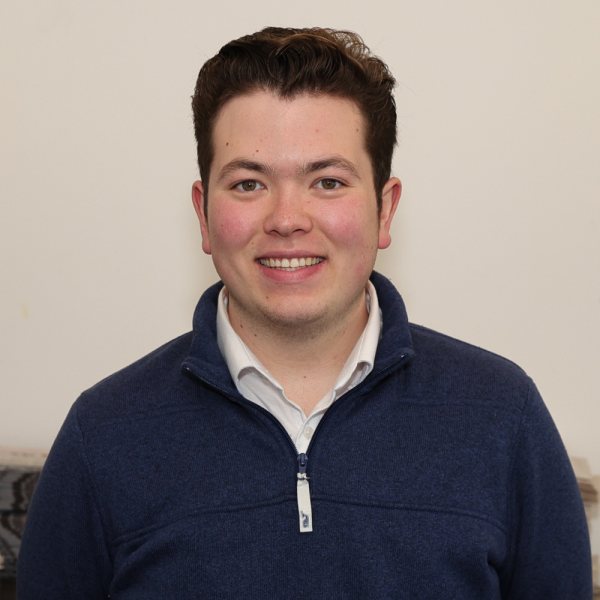
Dahl, an assistant professor of communication sciences and disorders, began teaching at Emerson at the beginning of the 2025-26 academic year. Her clinical research focuses on voice and motor speech disorders, primarily Parkinson’s Disease. The clinical research takes place in otolaryngology specialty voice clinics, which focus on diseases of the ear, nose, throat, head, and neck. Her main research focus is on speech motor control.
Dahl proposed to the Whiting Foundation that she travel to the Mayo Clinic in Minnesota, largely regarded as the “premier institution for neurodegenerative disorders,” according to Dahl. As part of this experience, Dahl proposed that she immerse herself in their speech pathology clinic and observe their approaches in evaluating and treating speech disorders. She hopes to then bring this firsthand experience and knowledge back to speech pathology students at Emerson.
“These are the sort of experiences that provide foundational, engaging education for students in speech pathology,” Dahl said. “[It] is amazing that I can go observe the top clinicians and bring that back.”
The awards come at a tumultuous time for higher education institutions and research grants, many of which have faced federal cuts. President Donald Trump proposed $5 billion in cuts to the National Institutes of Health in the budget for fiscal year 2027. Dahl noted that funding cuts across higher education make it harder to get valuable research up and running. From her perspective, this makes cross-institutional collaboration even more important.
“That is also what I hope to be a really good benefit of this — to formalize some of my relationships with people at Mayo Clinic so we can be more strategic about where funding goes and where the work is done,” Dahl said.
Franklin-Lyons, an associate professor of history in the Marlboro Institute of Interdisciplinary Studies, specializes in medieval European history, specifically the Crown of Aragon, a composite monarchy that spanned across areas of today’s Spain, specifically Catalonia, France, and southern Italy. Franklin-Lyons researches food supply, agriculture, grain shortage and famine, and, more recently, communication and news.
In 2024, he received a Mann Stearns Award through Emerson to fund his main research project: creating a map of piracy communication and courier systems throughout the Crown of Aragon.
“The computer-based map version is only so good,” he said. “What I wanted to do with the Mann Stearns [was] to go along the coastline of Spain with a bicycle and go to these places and take pictures to actually capture [and] combine the photography with the map.”
These visuals, according to Franklin-Lyons, would give viewers a sense of interruptions in visibility, how the different points on the map interconnect, and further analysis into the “systematic surveillance of 300 miles of Spanish coastline.”
With the travel funds from his Whiting Foundation Fellowship, Franklin- Lyons plans to travel across the Balearic Islands in Spain’s archipelago to continue the mapping project. He will also separately document points on the map spanning 100 miles, from Barcelona down to Tortosa, Spain.
“I think it’s no surprise to anybody at Emerson that you have to have some experience doing the thing that you’re helping students do,” he said. “What I’m doing, reading documents and collecting information about the 14th century, that’s doing history.”
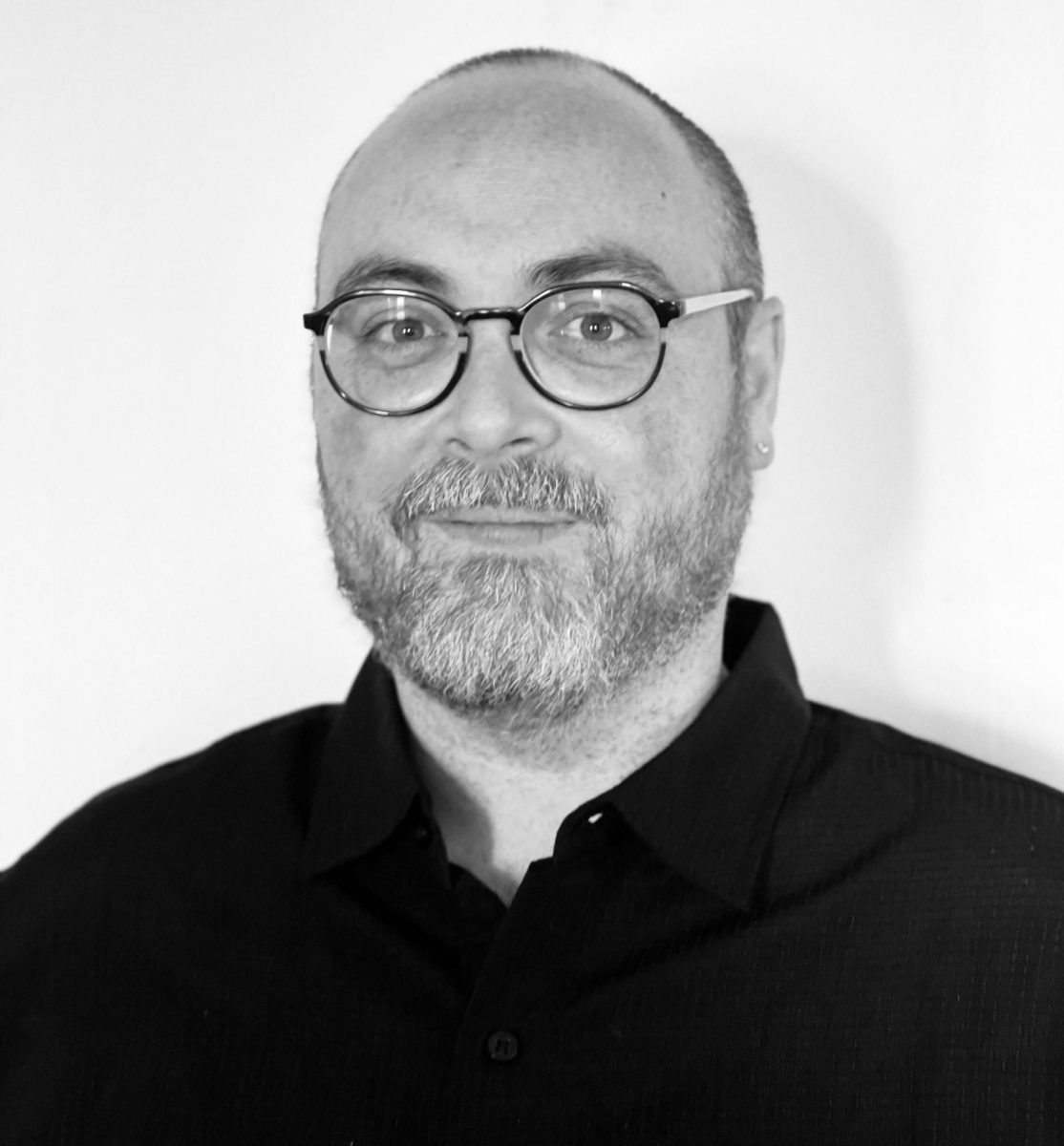
Papernick, an assistant professor of writing, literature and publishing, has taught fiction writing at Emerson since 2007. With his Whiting Fellowship funds, Papernick plans to travel to the Baltic states to learn about Jewish storytelling traditions, Rabbinic stories, moral tales, and Yiddish folk narratives.
“These are places that were once very vibrant communities that were almost entirely erased during the Holocaust,” Papernick said. “I thought it would be a really interesting opportunity. Some of my ancestors come from there; my great-grandfather comes from Lithuania.”
Much of Papernick’s writing is centered around the state of Israel and various Jewish fiction pieces. He was the center of a controversy last year when he posted photographs of unmasked student protesters in a parent Facebook group against antisemitism. He wrote in the group that he also sent the photos to the police.
Papernick said he doesn’t shy away from these topics and hopes to engage more people through his writing.
“A large part of my writing [deals] with Israel, which is a subject that has become increasingly divisive,” Papernick said. “A lot of people won’t even read it or look at it.”
Through this travel research, Papernick hopes to broaden the exploration of Jewish themes in his writing beyond the boundaries of Israel, “looking at communities that once were” and seeing how those traditions have kind of led to where we are today.
“I’m not going in a goal-oriented manner, but everything that you experience touches you,” Papernick said. “I’m sure this will affect my writing going forward, and maybe it’ll provide some new subjects that I haven’t really thought of.”
The grants are given annually. In 2025, the 44 winners comprised 22 different New England colleges and universities. The 2026 award winners were notified about their awards on April 3, according to the solicitation letter. Applications are directed to Whiting Foundation Trustee Robert Bannish and Grants Coordinator Lisa Cunningham.