


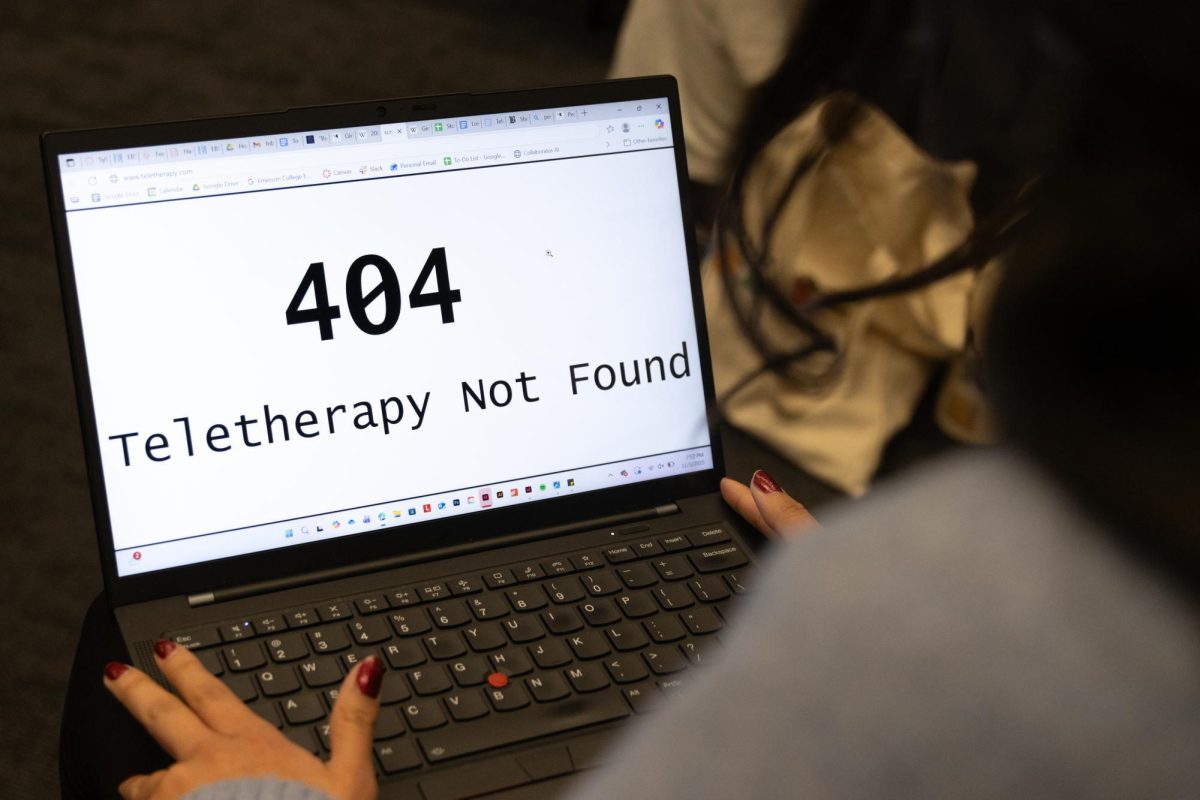
For the past two years, as an Emerson student living in Boston, I’ve relied on teletherapy once a week instead of traveling over 200 miles back to my home state of New York to talk to my therapist, which is not financially or academically viable. I didn’t think there would be any problem in doing this, especially since the rise of virtual meetings and platforms like Zoom have become a new frontier in everyday-life environments.
Recently, however, my therapist informed me that legally, he’s only licensed to provide online care in the state of New York through PSYPACT, which is an agreement allowing licensed psychology practitioners to offer telehealth services across certain participating states. My therapist originally believed he could continue working with me since 43 states participate in PSYPACT, including most of New England. It wasn’t until recently that he found out he actually can’t legally talk with me while I’m away at college, because the only state in New England that hasn’t implemented PSYPACT into law is Massachusetts.
When I first heard this, I was baffled. Massachusetts, the state with the most college students in all of New England, one of the biggest East Coast college hubs, and the state where, as of earlier this year, 44.3% of students enrolled in full-time postsecondary institutions are non-residents, doesn’t allow out-of-state teletherapy? I honestly laughed out of disbelief.
To put this into perspective, there are still eight states not part of PSYPACT, and currently, only two states have introduced PSYPACT legislation—being Massachusetts and, surprisingly, my home state of New York. For two of the most progressive states in the country, both of which pride themselves on championing mental health access, this is honestly just embarrassing.
On PSYPACT’s website, this organization has a map of the states that participate in teletherapy. Only six states, including California, don’t have any active legislation. Meanwhile, states you might think wouldn’t implement this system, like Florida, Texas, Ohio, and Kentucky, all actively participate in PSYPACT. If I went to any college in those states, I could legally be provided with teletherapy. But in the state of Massachusetts, where I go to college, I can’t legally talk to my therapist.
Immediately, my thought upon learning all of this was I have to say something. College is categorically one of the most stressful times in a young person’s life. Not being able to talk with my therapist, even over the phone, is honestly not just ridiculous but dangerous.
I go to therapy to deal with my social anxiety and personal issues. I’m not someone who usually wants a lot of eyes on me, but therapy helps me, and I know so many people who rely on it. Personally, I don’t know what I would do without a long-term mental health provider. So many already have enough trouble finding someone they feel comfortable talking to, and I can only imagine how not even having the option to talk to a trusted professional could negatively influence their time at an out-of-state college.
I’m hoping that people who read this can help pass this issue along to our state legislators, anyone who can lobby, and anyone who has the resources to get this incredibly helpful system signed into law, like 45 other states and territories in this country have already done. This is something that a state like Massachusetts should have passed at the inception of PSYPACT, and we can ensure that in the near future, with enough outcry, they do.