


I’ve always been really good at leaving.
Part of that comes from where I grew up: in post-Soviet Georgia, where war felt like a constant possibility and the political system shaped how people thought about stability. How quickly it could disappear, how little control you actually had over keeping it. Nothing felt guaranteed. Not safety, not opportunity, and not even the basic structure of everyday life.
When you grow up with that awareness, permanence stops feeling like something you can rely on. You stop building your life around the expectation that things will stay the same. You learn how to move, how to leave, how to adapt. And over time, that becomes its own kind of freedom.
Maybe that’s why I moved across the world alone at 17. And maybe that’s why I’m about to move again — to two different cities — in the span of a year. And while I’m really excited for what’s next in my life, it also feels so unstable.
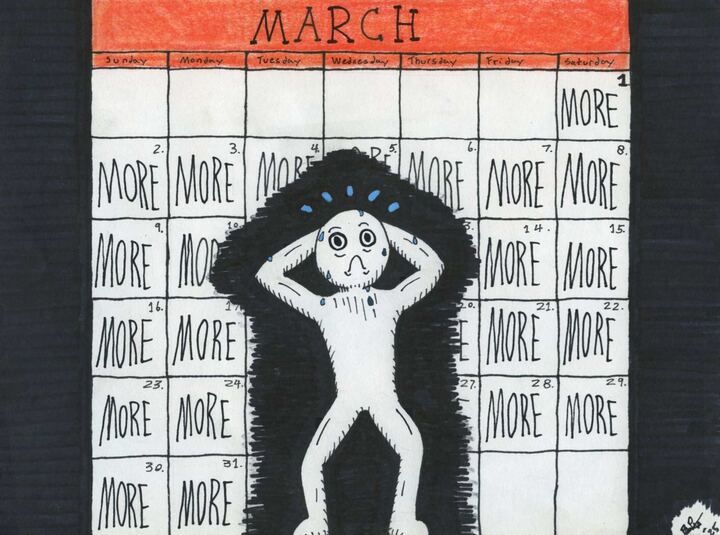
I know this kind of instability isn’t unusual at our age. We’re in college, between places, between identities, figuring things out as we go. Right now, as the semester comes to an end, as students prepare to say goodbye not just to these past few months but to their entire college experience, that feeling is everywhere.
But even when it’s common, it can still feel overwhelming.
For a long time, I told myself that the only way to move forward was by leaving things behind, and I got used to doing that in a very specific way.
You see, it’s hard to walk away from something you love. But it’s much easier to leave something you’ve convinced yourself you don’t. So I would focus on the flaws. Magnify what didn’t work. Reduce things to a simple, manageable story: “This was never meant to last anyway.”
That logic worked until it didn’t. I don’t know how many more “let’s hang out before you leave” conversations I can take. Because this time, there isn’t much I want to convince myself to dislike. There isn’t an easy narrative to fall back on, and it’s forcing me to rethink something I’ve believed for a long time.
We’re taught, often without realizing it, to measure relationships by their permanence. The ideal is something lasting, something definitive. “Dating to marry.” “Best friends forever.” Anything less can feel like a failure, or at least something incomplete.
But that way of thinking isn’t really realistic. We act like we can predict what will last, but most of the time, we can’t.
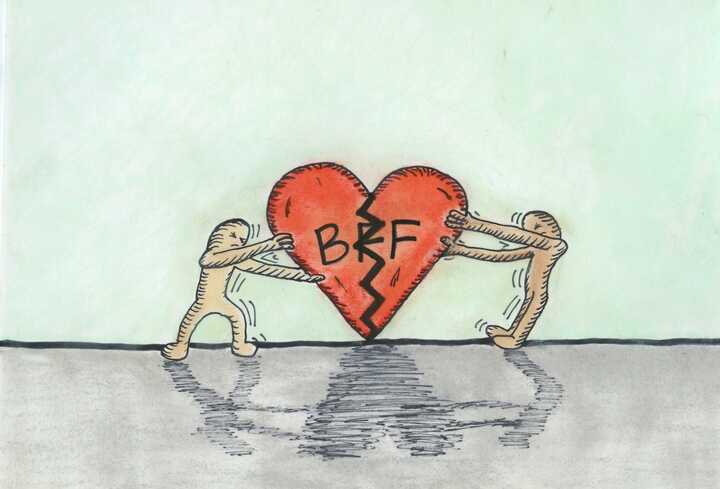
There are people I have loved all across the world. Some of them I thought would be in my life forever but aren’t anymore. But I still think about them all the time. Not in a “I want them back” kind of way, but in a “this is how you used to take your tea” or “you would have loved this album” kind of way. We don’t just love once, or in one place. We meet people in different versions of our lives, and some of them stay while others don’t. That doesn’t make those relationships any less real. It just means they belonged to a moment that couldn’t last.
This time of our lives, especially, is defined by transition. People move — often, and far. According to the U.S. Census Bureau, the average American moves nearly 12 times over the course of their life, with the highest rates of mobility concentrated in early adulthood. Relationships are shaped as much by timing and geography as they are by compatibility. In that kind of environment, impermanence isn’t the exception; it’s the structure. And it isn’t a bad thing.
We’re young. We’re supposed to be moving, starting over, and not staying in one place for too long. I don’t think that instinct is something we’re meant to grow out of. If anything, the ability to begin again — to choose something new, even later in life — might be one of the most important forms of freedom we have. If anything, it might be the condition we’re meant to learn how to live within.
There’s this idea in Buddhism — the concept of “anicca,” or impermanence, which suggests that everything is constantly changing, and that discomfort often comes not from the change itself but from the expectation that things will stay the same.
As someone who grew up in the aftermath of the Soviet Union, I value freedom and opportunities more than anything else. To live in a system like that meant your imagination was limited, and what you could imagine your life to be was constrained. Even after its collapse, this mindset continued to shape how people viewed their futures — as something narrow, predetermined, and not entirely their own. Coming out of that environment taught me to appreciate taking chances even at the expense of stability. Comfort isn’t always the right choice. Sometimes, it can be the thing keeping your life from expanding.
And yet, we still hesitate to fully invest in things unless we believe they’ll last, as if permanence is what gives something value. I’ve felt that hesitation myself. Caring about people who live in different places. Meeting someone at the wrong time. Knowing that even when something feels right, it might not fit into the version of permanence we’ve been taught to aim for.
For a while, that made those connections feel like they didn’t fully count.
I don’t think that anymore. We tend to see endings as something that takes away from value, but what if they’re part of what creates it? If something lasted forever, it wouldn’t feel the same. There would be no urgency to notice it, no reason to appreciate it while it’s happening.
I felt that recently. I was spending time with someone I care about — someone I’m more likely not to see again anytime soon than I am to keep in my life. For a moment, that thought started to take over, turning everything into anticipation of an ending instead of appreciation of what was actually happening.
There’s even a psychological reason for that. The brain is constantly trying to predict how things will feel in the future — a process known in cognitive psychology as affective forecasting.
But instead of following that instinct, I tried something different. I let the moment exist on its own terms. I let myself believe that this conversation, this time, this version of us, mattered, even if it wouldn’t last.
And it did.
As someone who usually lives in my head, constantly moving between past and future, that surprised me. I’m not naturally good at being present, but at that moment, I was. I think it’s because I knew it was so limited — because when something won’t last, you stop waiting for the right moment and realize what it actually is.
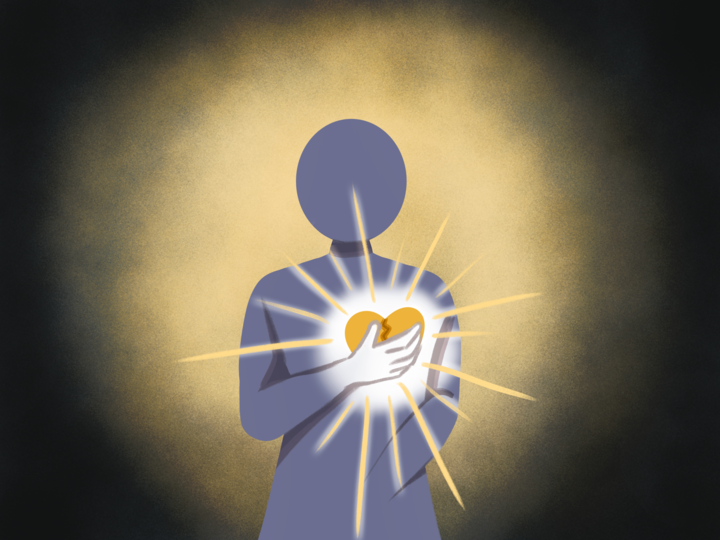
That doesn’t make impermanence easy. I’m still anxious when I think about leaving, when I realize certain relationships won’t exist in the same way again, when I understand that some things are already ending even if I’m not ready for them to.
Yet maybe the goal isn’t to avoid that feeling. Maybe the goal isn’t stability at all. A fulfilled life isn’t always comfortable or predictable, but one where you take chances, where you leave, where you accept change instead of resisting it. Because even if you choose to stay, life won’t stay the same.
As this semester ends, it’s easy to focus on what’s slipping away — the people, the routines, the version of life that won’t exist like this again — instead of how they matter.
Some things are meant to be experienced fully, honestly, and without trying to turn them into something permanent, and if we stopped demanding permanence from everything we care about, we might live a little differently. We might take more chances. We might say yes more often. We might invest in people even when we don’t know how it ends.
Things change whether you’re ready for them or not. You can either spend that time bracing for it, or actually be there while it’s happening.