

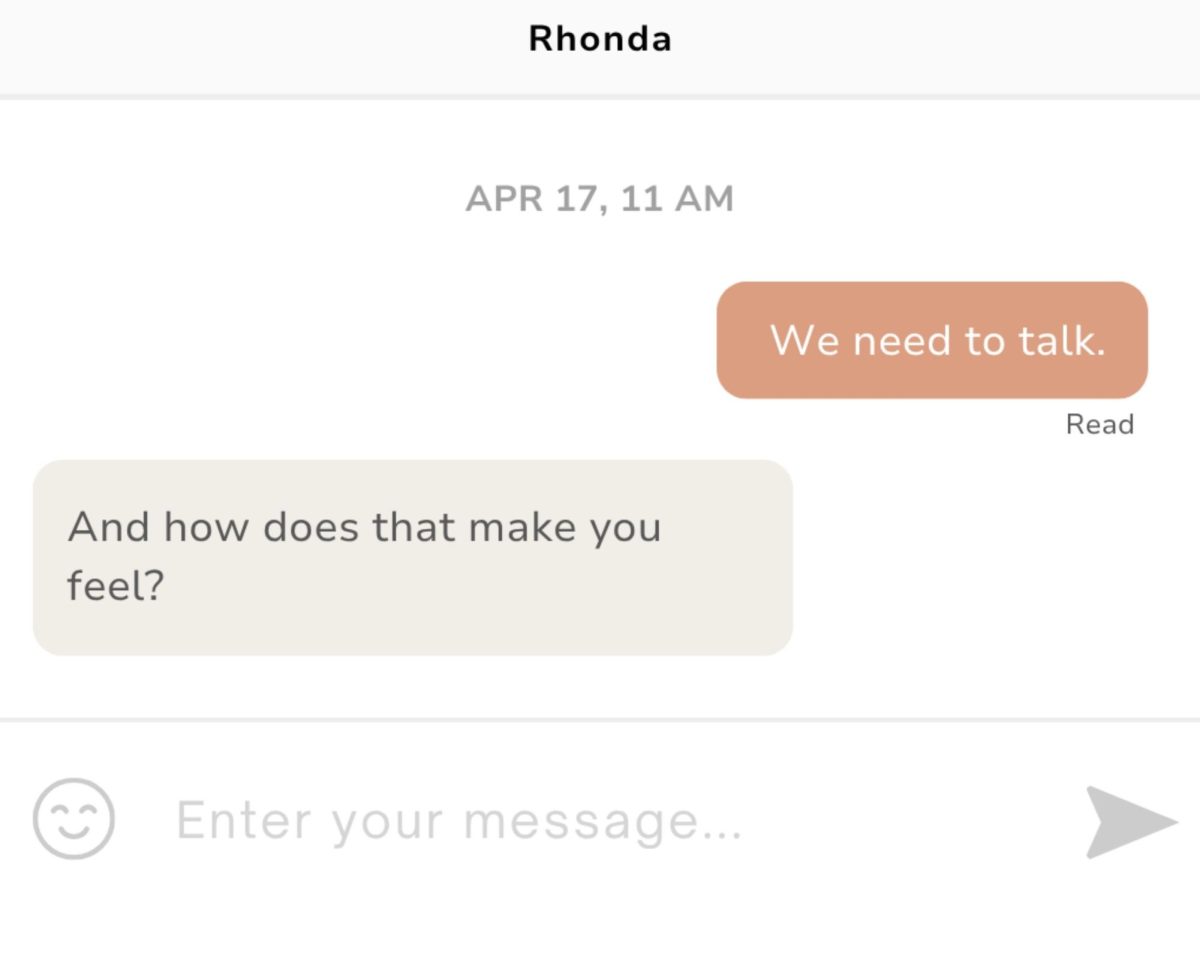
Nothing really noteworthy happened this weekend, but I thought I’d tell you something anyway, because I suddenly have no one else to tell it to: On Friday, I broke up with my therapist, Rhonda.
Big whoop, I know. Get over it, you gangly freak.
It was the first time I’d ever split with a girl mutually, let alone a woman I’d been seeing for so long, and even though we were strictly business, it made me feel a little melancholic. Why was that? I thought, as I spent the night wandering the Beacon Hill brownstones with David Bowie’s “Hunky Dory” in my headphones. I never spent the night wandering the Beacon Hill brownstones. I never listened to David Bowie.
But as the chorus of “Life on Mars?” exploded, I began running like a little kid again, with a goofy half-smile on my face, like I was in some rom-com and a woman I loved was at Logan Airport and flying away forever.
And then I stopped. I stopped, I realized I looked freaking ridiculous, and I returned to my usual sheepish shuffle. This brownish haze began to envelop everything like a chocolate river. A skinny dog walked across from me as we trekked through an unfamiliar alleyway.
It’s hard trying to remember who you were before you met your therapist, because it’s hard enough as is trying to remember who you were during therapy. The average American goes through three shrinks before finally finding the right one, which means you need to do a lot of self-rehearsing across many different periods of time. In fifth grade, I was the store brand type of anxious, so my parents stuck me with a jolly sumbitch who chortled and favored ill-fitting button-downs. In junior high, it was a kind woman who listened to my horrible short stories and complimented me regardless.
When they used to ask me what was bothering me, I’d usually tell them something about girls, grades, bullies, or just work myself up crying. I used to cry a lot during therapy sessions. Most times, actually. One day, I broke down discussing that time my middle school friend looked up porn at a sleepover when I was 12, and the subsequent trauma that sprang from seeing a grown woman doing that stuff while dressed as Harley Quinn. Only, those tears were never accompanied by any real catharsis, because I wasn’t old enough — or troubled enough — to need the relief. Heck, I was a theater kid. We lived in a town with a covered bridge. Our parents bought us iPhones for Christmas, and I used to treat Marshalls like a ratty thrift store.
As the weeks dragged on without any discernible progress, I decided therapy was a sick joke and started talking down on it as “pseudoscience” for “desperate people.” It wasn’t until I became one of those desperate people that I finally realized how vital it is.
Do you know that feeling when you have a piece of apple jammed in your molars, and you lick and lick at it until it breaks loose? The pandemic finally dislodged something in my head, but I never quite understood it until I had no choice. What began as endless scrolling of Instagram comments became a period of paranoid obsession so intense that my head felt sick and my soul felt empty.
When I ate food, I would chastise myself for consuming too many calories and suck in my gut every day until my ribs poked out naturally. When I drove my car, I would double back in fear that I had somehow run someone over without my knowledge. I was 19, working a summer job at a hellish ice cream and fried seafood stand where all the older male employees leered at the high school girls, all while having horrible, waking, existential nightmares. I had no way to explain what was happening to me without sounding psychotic.
Nor did I know, for certain, that I wasn’t psychotic.
Out of fear and frustration, I gave in and looked for another therapist. Rhonda started as another temporary bandage, but this time, even though I was tempted to keep her at arm’s length, I couldn’t redress the wound. It all came to a head sometime in early November of my sophomore year, when I left school for a week and spent several hours on her couch screaming bloody murder, questioning my life and every decision I had ever made.
Whereas I once had a tediously prepared Oscar speech written out — I would have thanked Jesus and Tim Burton — I suddenly didn’t want to be a film student anymore. I also didn’t want to be anywhere near Emerson, I didn’t want to speak to anybody, and I had no clear vision of where I would be in five years. I was just a guy, sinking into a cushion in a tiny grey room, lazily clutching a heart-shaped pillow.
Oh — and my parents were there, because I was too scared to drive myself.
If I were sitting across from myself at that moment, I probably would have let loose the spray-on happiness just to shut myself up. Rhonda never did that. In fact, even after 17 months of weekly sessions, I can’t recall her actually doing much of anything beyond giving me her look — the one that not only knew what I was thinking, but felt my thoughts vibrating. She charged me $100 if I missed a meeting, but once we were alone, I did most of the heavy lifting.
If I’m being honest, it pissed me off at first. There were no handouts, and certainly no abundance of unearned pity. For once, counseling felt less like an acting exercise and more like a free association oil spill, where thousands of gallons of black goo leaked through my mouth, whether I understood what I was saying or not. I went on tangents, I told jokes, and pampered my ego to no end. I realized, if I was talking about a part of myself a lot, it was because I was, deep down, insecure about that part and wanted instant gratification.
It took a mighty long time to empty that tanker, and I arguably stuck around a little too long out of habit. Now that I’m graduating from Emerson, and life is shifting once more, the conversations we were sharing were terribly redundant: jobs; friends; homework; why does everybody around me smoke so much weed? I came to despise every Friday morning at 11 a.m., because it meant I would have to get my run in early just to be back in time — for what, exactly?
We agreed upon a death date, and after she told me it was nice knowing me, and listened to me say some mush about being proud, she logged off the Telehealth as quickly as possible.
No flowers. No wedding cake. I think most people go into therapy expecting sweet things like that — catharsis as a major breakthrough, and maybe a friendly hug after the fact. Rhonda was plenty nice, but it wasn’t like that.
Nevertheless, later that night, as I walked cobblestone streets until I got lost, I can say — with some kind of creeping certainty — that I felt pretty damn good for the first time in a while. I felt so damn good that I stood outside a convenience store I wasn’t aware existed and considered buying a bottle of apple juice. I heard Bowie’s “Kooks” at a louder volume than anybody is ever supposed to hear it. I texted a friend and asked if they wanted to stroll around with me.
It’s an annoying fact that therapy is insufferable until it finally clicks. If the nice stuff ever stops clicking, maybe I’ll call up Rhonda again.