


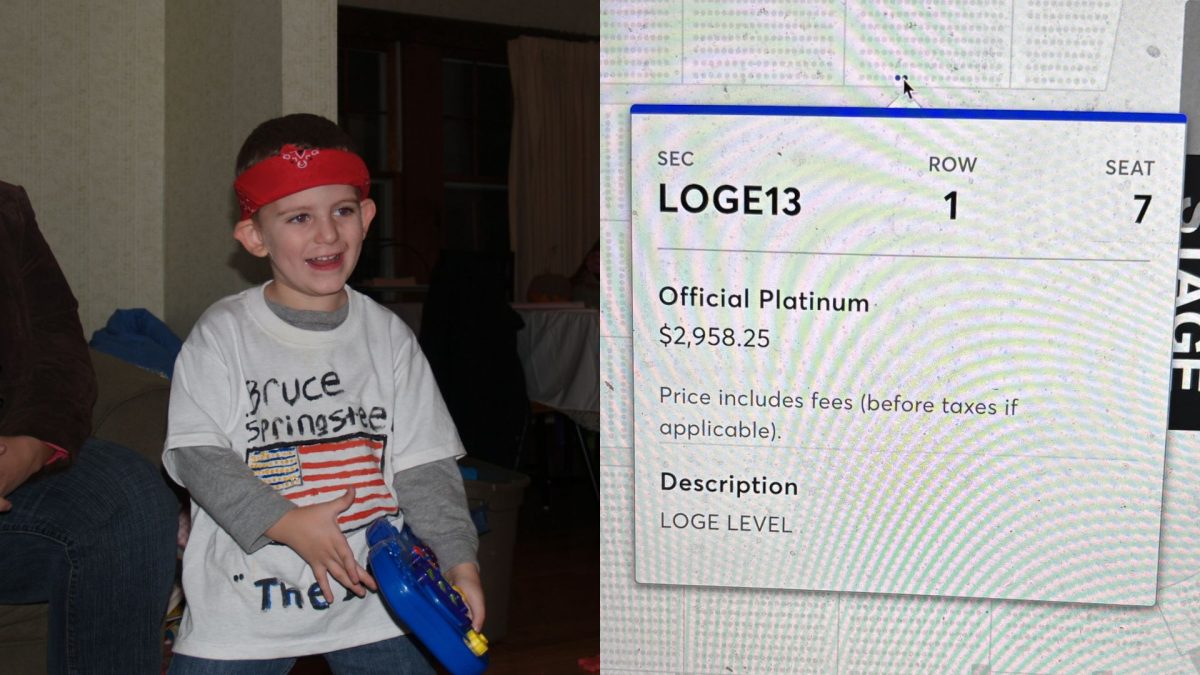
When the world sucks, and I’m feeling down, I find solace in Bruce Springsteen’s stubbornly optimistic vignettes. The ones that — set to a pulsing E Street Band backbeat — trace runaways, lovelorn 30-somethings, families of 9/11 victims, and the trials and tribulations of giving your life to the man.
Right now, the world is so unbelievably sucky that even a rockstar like the Boss is feeling down.
“Brothers and sisters, fans, friends, and good folks from coast to coast, we are living through dark, disturbing, and dangerous times,” Springsteen said in a recent Instagram video announcing his Land of Hope and Dreams American Tour.
Springsteen’s songwriting has always dealt with the divide between the working class and the dreams they harbor, but until this latest stage of his career, he’s never gone after such explicitly “political” topics before. In January, in response to ICE’s killings of Alex Pretti and Reneé Good, he released “Streets of Minneapolis”, a raw folk tune that became the de facto theme of the third “No King’s Day” protest. Springsteen’s subsequent media interviews became an anti-Trump lecture series — which, in a wholly unsurprising twist, has led to a swath of personal attacks from the president’s Truth Social account, including a doctored photo posted this Sunday of the singer “prior to plastic surgery.”
“My job is very simple: I do what I want to do, I say what I want to say and then people get to say what they want to say about it,” Springsteen told the Minnesota Star Tribune. “Those are the rules of my game. That’s fine with me. I don’t worry about if you’re going to lose this part of your audience.”
Now that there’s an endless barricade between the White House and the America it serves, it makes sense that rock’s greatest live performer, now 76 years old, forgoes the mass appeal he’s fostered for more than 50 years and goes straight for the kill. And you’d do well to listen to his message — if you can afford the absurd entry price.
At first, I got a major kick out of my hero’s willingness to choose democracy over pleasing the masses. Heck, I wrote my college essay on the guy, dressed as him twice for Halloween, and saw his dreadful biopic on opening night. If he was ready to drop everything and become a weathered liberal badass, I was ready to strap on my steel-toed Sketchers and walk into battle with him.
But in the Ticketmaster trenches, the Land of Hope and Dreams American tour — an arena where everyone, “regardless of where you stand or what you believe in,” would be welcome — quickly became a betrayal of every word coming out of Springsteen’s mouth. He isn’t new to charging exorbitant prices for his concerts; back in 2022, he defended the controversial decision to institute “dynamic-priced” ticketing — which fluctuates prices based on fan demand — because everybody else was doing it. However, with his high profile shift from rock icon to freedom-rallying watchdog, Springsteen’s decision to gouge audiences is fundamentally at odds with the brighter future he wants to have a small part in creating, and with what his music means to the voiceless.
Wasn’t this the same man who sang about leaving his wallet at home in his “working pants”? Didn’t he spend his weeks “loading crates down on the dock” while dreaming of a Friday night escape with his baby?
I wonder how many crates a guy has to load to make $2,958 — the price of the cheapest Ticketmaster ticket available by the time I got through an hour-long queue.
Here’s a thought exercise: If we’re to examine the downtrodden characters who do desperate things for money in Springsteen’s songs — such as the narrator in “Atlantic City” (1982) who falls into debt and does a “little favor” for a mobster — and graft them onto the real world, a pattern emerges. Trump won the “working class” vote — defined by Brookings as “voters without a college degree” — by a staggering 14 points in 2024, a number which jumped to 34 points when stratified for white voters. Furthermore, an NBC poll found that 68% of voters in key swing states called the nation’s economy “not so good or poor,” and 47% said their family’s financial situation had worsened over the previous four years.
Trump promised to fill the pockets of Americans struck by inflation; in 2026, his tariffs and focus on unexplained foreign warfare have squeezed the average consumer far harder than Joe Biden ever did. Sure, I’ve yet to face the terrors of housing and grocery shopping, but my generation faces an equally scary post-grad housing market, and we’re the ones who readily admit to overspending on concert tickets.
In another time, Springsteen would have spoken up for people without the means to experience his work. A 1981 profile published in Musician magazine saw him waging war on scalpers gouging hardcore fans for front row seats.
“It’s an old story, and most bands would let it slide, but Bruce took a stand,” wrote critic Dave Marsh. “Each night in LA, he gave the crowd the name of a state legislator, and a radio station, who’d agreed to campaign to change the scalping law in California.”
But it’s a simple matter of fact that a majority of our nation voted for Trump, and they did so because they had a fleeting dream that they might see favorable returns from a broken economy. Springsteen is right to call the president out on his “America first” hustle, but, on a far smaller level, he too should be called out for suddenly gatekeeping his concerts in the midst of an oil crisis — where a consumer must choose between a tank of gas or a ticket to a rock show.
When the Boss steps up to the mic, he’s certainly saying a lot of things that resonate with a whole lot of people, and maybe that alone will keep most left-leaning fans happy. But even as I continue stalking StubHub in search of cheap nosebleeds, I wonder who he’s really speaking to: The people from “Streets of Minneapolis” who come to demonstrations with homemade cardboard signs and winter jackets, or the comfortable crowd who staked out his staggering ticket queue?
“But do not despair,” Springsteen continued in his tour announcement video. “The cavalry is coming!”
The cavalry might be coming, but their boots are a little too high fashion for my liking.


I got a $250 ticket in the nosebleed seats. It’s crazy expensive for sure. But isn’t that the normal price for a stadium concert?