


I’ve been ravaged by a cold for the past week, and the longer it flares its tendrils through my sinus cavity, the more I think about the fevers of childhood: Being waited on hand-and-foot by whichever Lucky Assorted Guardian has been assigned to you while your parents are at work, bottomless Spaghetti-O’s, and extra quilts from the forgotten closet in the hallway.
Strangely, I think those were my most comforting days of adolescence — when all there was to do to pass the time was to watch Hollywood Video DVD rentals on the tiny Panasonic television your pitying dad moved into your childhood bedroom. That’s when I first saw “Willy Wonka & the Chocolate Factory,” (1971) and stumbled upon the film’s hero, the friendly young boy, Charlie Bucket — the first and only person I’ve ever met that shares my exact first name.
“Cheer up, Charlie,” sings Mrs. Bucket as she wrings laundry dejectedly. “Just be glad you’re you …”
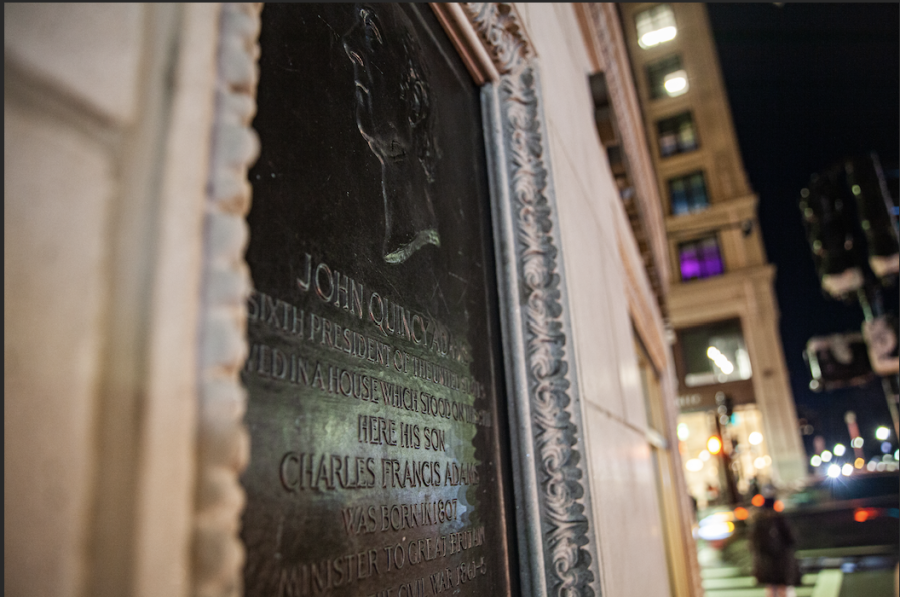
To most, there’s nothing outwardly unique about a happy-go-lucky name like Charlie. Living in Massachusetts, you’d be hard-pressed to walk a block without running into a Charlie’s Sandwich Shop, or a Charlie’s Barber Shop, or a Charlie’s Service Center. Our kind is loveably inglorious; we adorn your MBTA passes, we were the ninth most popular name of 2025, and due to our association with moderate Republican Charlie Baker, we were once your glorious state’s governor.
However, when you dig past our identity’s topsoil, a wormy pattern begins to emerge. For one, the reason MassDOT calls transport tickets CharlieCards is because of a 1949 ditty called “The M.T.A. Song” — in which a poor man named Charlie is doomed to stay on the subway because he can’t afford to get off. And Charlie’s status as the ninth most popular name? That’s based on data from the American Kennel Club, meaning there are far more canines with our name than there are humans. And heck — Charlie Baker isn’t even a “real” Charlie, but a “Charles” in disguise, and so are Charlie Parker, Charlie Watts, Charlie Rose, and Charlie Chaplin. When I went to a hoity-toity Catholic middle school, my ID card read “Charles” for two years straight, and at least three high school English teachers — and one cafeteria lady — tested my familiarity with the Scott Baio-led ‘80s sitcom “Charles in Charge” (1984-1990).
To make matters worse, the name has appeared in its fair share of crime beat aliases. “He would not give his name,” reads a 1898 New York Times account of a petty thief arrested at a horse race. “… but was identified as ‘One-Armed Charlie,’ a well-known character on the local tracks.”
Put together, all these truths seek to delegitimize our standing as serious human beings with a serious name. When a little boy bites his sister, it’s Charlie, not Charles, that’s the butt of viral YouTube jokes; when you cramp up, we’re the proverbial horse in your proverbial calf; when we meet you, you ask us if we’re using our “real” name, or ask us to do the wisecracking Starkist Tuna voice.
In those moments, accented by intense eyerolls, I’ve often pondered: Would people think higher of me if I were someone else? Edward Desjardins, or Jonathan Desjardins, or, dare I ask … Charles Desjardins? Hell, what if my name was even less popular?
“I always have wondered what it would be like to have a name that, when someone asks you what it is, the conversation just stops there,” said Star Vanguri, an associate professor at Nova Southeastern University, in an interview with The Beacon. “But it is always a conversation prompter. It’s always, ‘What’s your name? Oh, let’s talk about that for five minutes!’”
Vanguri, who concentrates on onomastics — the study of names and naming — admits that her psychologist parents named her after an inmate they saw at a women’s prison. “Formal” names, she says, are only formal in the sense that they had more time to be properly established.
“Even [with] a hypertraditional name, the default [assumption] is to make it longer or to make it more formal,” said Vanguri. “The idea that Charlie must be short for Charles is because once it was. Once, it had to be, right? There was no Charlie.”
After all, the history of naming conventions is far more limited than most might believe. François Mignot once determined that a whopping 65% of newborns in 1810s France held a “top-10 most popular name” like Jean or Georges — a phenomenon indebted to family tradition, as well as the overwhelming Christianization of European culture. Prior to that, in Ancient Rome, this list was even thinner, with University of Missouri professor Guy Blandin Colburn citing no more than twenty names “in use at any one time.”
It was only when the United States pried itself from monotheistic monarchy and struck up independence that the widening of the name pool followed suit. The population grew from 76 million to 281 million in the 20th century alone, and along with this growth, Mignot notes that “babies have been receiving a higher number of distinctive first names, especially since the 1950s.”
Thus, deciding to name your kid the decidedly un-Biblical “Carson” or “Cyrus” not only made them stand out against the army of Johns they would inevitably meet on the playground, but felt like severing some grand invisible rope. Parents began shunning tradition for fresher influences from counterculture, and television, and pop music, and literature, and politicians, and film, and the internet, and prisoners.
“We just really liked ‘Charlie,’” my mom told me. “We knew we wanted you to have an informal name.”
And none of this accounts for the commercial baby-naming blitz, which has grown over the decades from a series of textbooks to an entire name consulting industry. Whereas the only resource our grandparents had was their imagination, Nom de Bloom’s Jenn Ficarra spends hours discussing possibilities with her clients — a process that includes Zoom calls, a detailed questionnaire, and visual collages. Those feeling extra motivated can spring for Ficarra’s $450 “Vibrant Bloom Package,” which includes “up to three rounds of name list edits,” or send detailed rolodexes of vetoed names they associate with ex-partners or annoying coworkers.
“We are in [the middle of] this sort of unique ‘main character syndrome, ‘anything goes’ kind of hyperindividuality, or at least we have been for at least the past five years or so,” said Ficarra. “And I think with that comes people’s desire to stand out and be more unique. Maybe their life isn’t super extraordinary or unique, but [they] can find ways to stand [out.]”
And yet standing out, while the popular trend, continues to be the dissonant factor in this mess. If we’re all knocking each other up and searching for blindingly new ways to christen the offspring, why the continued interrogation of names that don’t fit a standard?
The easy answer is that adherence to conventionality is a stubborn little cockroach; having a name that strikes others’ curiosity has less to do with the intent of the curious, but everything to do with the connotations that subsequently surface — connotations that blur “unusual” or “informal” with “dangerous.” A jarring 2009 study in Social Science Quarterly links juveniles in the United States with “unpopular” names to an “increased propensity to commit crime,” as well as an increased likelihood of being profiled by police, living in “nontraditional households” — led by a single parent or a female — and faltering in the job market. Feminine names face more discrimination than “gender-neutral names,” and as do “African-American-sounding names.”
“Black culture, as a kind of a counterresistance type of move, gave their babies names that did not fall into mainstream culture,” said Vanguri. “And so, because of some prevailing racism, if you see a name that’s unique or that is spelled in a way that isn’t traditional … there would be an immediate judgment of that being like a lower-class-type name.”
While there’s no reported reason as to why Roald Dahl picked the name of his candy-loving protagonist, a far earlier draft of “Charlie and the Chocolate Factory” saw Charlie Bucket written as a “little black boy” who, while touring Wonka’s factory, gets trapped in a chocolate mold and gifted to the chocolatier’s son as an Easter present.
“Just be glad you’re you…”
It’s confounding that, for purposes of simple identification, we’ve created thousands of combinations of phonetic information — and those sounds have somehow taken on lives of their own, defining us based on their relation to some standard of white-bread governance we’ve deluded ourselves into thinking is long ago. Yes, the sheer variety of modern polyculture has dampened the judgment a great deal, but though Catherine has given way to Kate and Kailyn, and Jacob has given way to Jake and Jason, I continue to field the same old questions — whether my name is the result of playfulness, or cutesy childhood teasing, or I just like it more than Charles.
Here’s another inquiry for that great, burning pile: If enough people wonder who you “really” are, then what does that say about your double lurking on the other side of their door? Until we find a way to escape their silent expectation — I suggest travelling back in time and making ‘Star’ the biggest name in Arthurian legend — the boundaries of a name can only fully be bypassed through movie characters and adolescent fevers.
“I think the name ‘Charlie’ provides a little bit more fun,” said Ficarra. “It feels less serious.”
“But I don’t ever think that just because someone has a fun baby name, it means that they’re not a serious person,” she continued.