


In fall 2018, Emerson College began offering an early orientation session for incoming and transfer BIPOC students. The two-day program allowed self-identifying BIPOC students to arrive on campus early and build relationships with peers ahead of Emerson’s predominantly white student body’s arrival. Last fall, the program disappeared.
This upcoming fall, the College has implemented a First Generation Pre-Orientation program, allowing incoming first-generation students to arrive early and participate in community-building and mentoring activities.
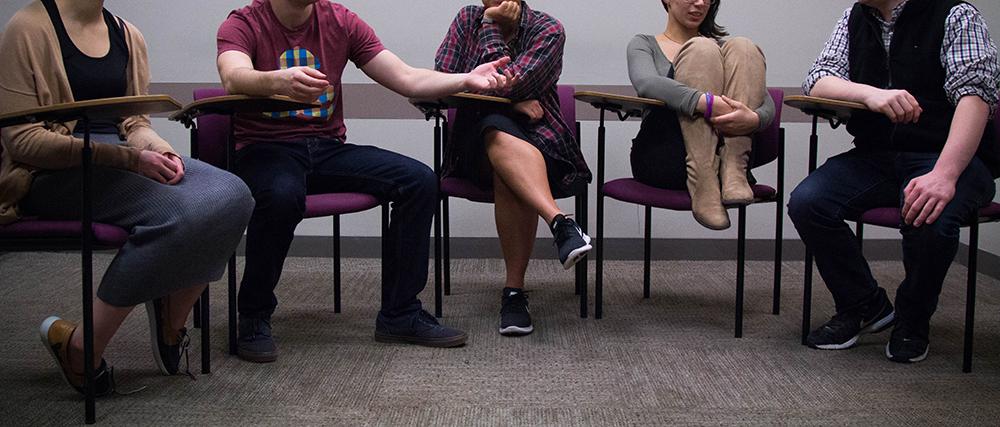
BIPOC pre-orientation offered marginalized students a space to connect, share resources, and foster community. The College claims that parts of the pre-orientation have now been integrated into the main orientation. But many students feel like the move is an erasure of the program and compromises BIPOC pre-orientation’s objectives. Sienna Arroyo, a sophomore business of creative enterprise major, attended the program as an incoming freshman in fall 2024.
“If you ask anyone who was there, it was an overwhelmingly positive experience,” Arroyo said. “Everyone there has friendships that they’ll probably carry on for the rest of their lives. It was everything they said it would be, which is why I went.”
Anabeth Fernandez, a senior BCE major, attended the program as a transfer student in fall 2024. She discussed the importance of identity-based pre-orientation programs, particularly at predominantly white institutions like Emerson.
“You’re preparing yourself for what you’re about to experience, which is isolation in a way, and I don’t think a lot of people get that,” Fernandez said.
Fernandez also stressed the program’s role in building her own community at Emerson.
“Just seeing people around, I might not even remember their names, but we met at BIPOC [pre-orientation], and we were close for those few days. Those interactions genuinely [made] my day,” said Fernandez. “It feels like, ‘I don’t know what you’re going through, but I know you’re surrounded by white people right now.’”
Students who previously attended BIPOC pre-orientation have raised concerns about the program’s elimination. The school ended the pre-orientation without a formal announcement to the student body — a move that some students said was like erasing it from existence.
“[The BIPOC pre-orientation] was very important for students of color and minority students to become accustomed to each other because there are so few of us, and it can be hard to be the only one,” Arroyo said. “Having an opportunity before school even starts, before college even starts, to get accustomed with people who you share an automatic similarity with is really important.”
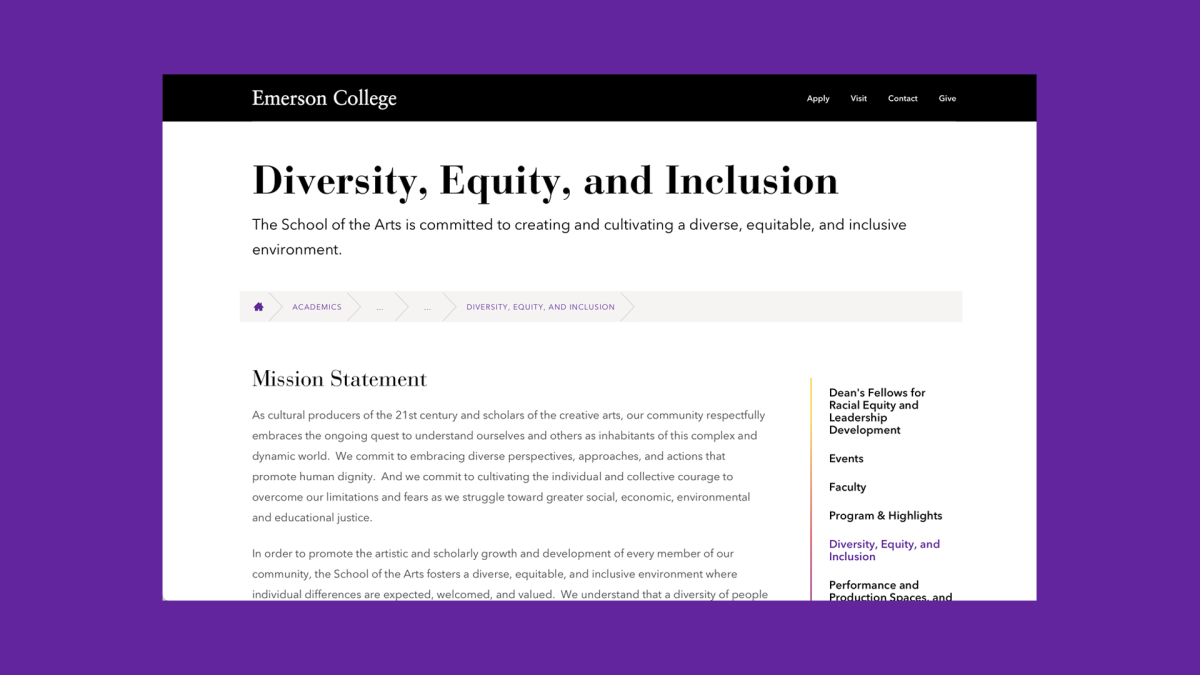
Emerson’s website lists inclusion, equity, and collaboration among its core values. But minority students on campus have said they feel disappointed by the lack of community-building opportunities for BIPOC students.
The cancellation of the pre-orientation program served as a reminder for minority students that “a [predominantly white institution] has the power to make you feel unsafe … BIPOC was the one thing I had,” Fernandez said.
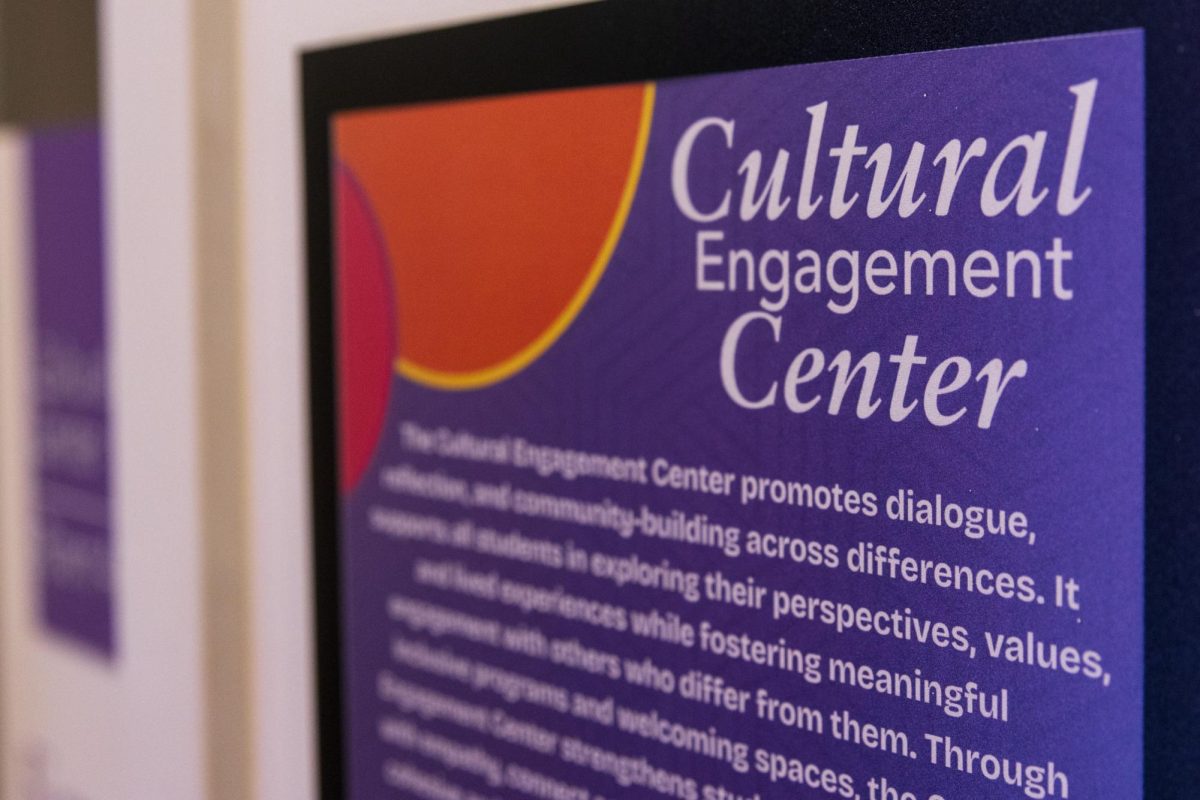
Changes to federal DEI regulations have created uncertainty for colleges and universities nationwide. At Emerson, the former Center for Intercultural Student Affairs, which implemented the BIPOC pre-orientation in 2018, was replaced by the Cultural Engagement Center. The center removed language referencing BIPOC and LGBTQIA+ communities from its website. In October, Shaya Gregory Poku, vice president of the Division of Community, Culture and Belonging, told The Beacon that the Trump administration did not influence the restructuring and rebranding of diversity offices.
In a statement to The Beacon, a spokesperson for Emerson said the intent of the restructuring was to “expand access and participation, not to eliminate or diminish the program’s purpose.”
“This change was informed by years of feedback from students who wanted access to this programming but were unable to arrive early due to travel, financial, work, or family constraints,” the statement read. “By placing this content within orientation itself, the College was able to reach a broader and more representative group of students, including first-year and transfer students who previously missed some or all of the program.” The College did not include research to support these assertions.
However, some minority students who arrived at Emerson in the fall said the new structure failed at providing the resources or community building geared toward BIPOC individuals that the pre-orientation program once guaranteed.
Maya Smith, a freshman theatre and performance major, said that her orientation experience, “was like having cold water splashed on my face. It was kind of a rude awakening.” Rather than centering minority students, she said her orientation programming was “broadly framed.”
Now, the multi-day orientation program involves scheduled information sessions about campus life and college resources within a fixed group.
Smith was unaware that the BIPOC preorientation program had existed previously, but said she would have attended if given the opportunity.
“I’m used to being in pretty diverse circles, so I think that would mean a lot to me to have a group that felt like home,” she said.
Smith said she wished her orientation experience included intentional spaces for minority students to connect.
“It can be really scary, so just having someone who understands what that experience is like, it means a lot. It’s really comforting,” Smith said “Especially in those early times, when it’s really new, and you don’t know a lot of people.”
According to the College, changes to orientation programming were informed by the “Extraordinary Emerson 2030” campaign, aiming to strengthen Emerson’s present and future.
For some students, these changes appear to have eliminated an inclusion program that provided minority groups with a sense of safety and community.
Now, many minority students are left wondering where they belong at the College that once promised them equitable opportunities.
“We are already unsafe in big spaces, we already have to deal with being the minority, so the least that you could do is give us a chance to just be together,” said Fernandez.