


The very first time I felt like I was doing something illicit, I was actually participating in the most licit human tradition of all: subjugating myself to religion.
It was my First Communion in the Catholic Church. Though I had been entrusted with carrying the wine, the blood of Christ felt heavy and wrong in my hands. My mother’s sterling silver cross, cool and then warm against my breastbone, felt even more so. Even then, I was only performing piety.
At home, I often stole books from my parents’ wardrobe to read under the covers with a flashlight. I was relentless in my pursuit of stories, drawn, as I tend to be, especially to those I wasn’t supposed to touch. After a few days, I’d return each book to where it belonged, and no one ever noticed a thing. It became my own private, clandestine library. Though I knew it was wrong, it felt like something I had to do. My mind craved the challenge these novels offered.
Before First Communion, you have to confess. When I sat down in the confession booth, Father Brian on the other side of the veil, my thievery, deception, hunger, and greed for knowledge beyond my age sat right on the tip of my tongue — but I couldn’t bring myself to say the words. Instead, I stumbled through an “I’m … uh … mean to my … brothers? Sometimes,” playing every part of the ditzy, absolved choir girl.
A week later, looking down at my reflection in the Communion wine, that first real illicit feeling settled deep in my stomach, like I was getting away with something by being allowed to savor the blood and body of Christ while my biggest sin — the audacity to want, and to take — remained harrowingly unconfessed.
Eleven years later, in 2024, I came across The Beacon Magazine’s 2021 sex work edition.
Sex work is everywhere. Its impacts on our society are widely felt, even carving a home for itself in our own campus community. And yet, I had never heard even one person discuss it. It exists in a strange space as a topic that is widely experienced and widely understood, yet relegated to only late night, under-the-covers-with-a-flashlight conversations. A public issue kept out of the public discourse.
It was that dissonance, that same learned pattern that renders some desires, harmless or harmful, unspeakable, that led me to ILLICIT. If we never talk about the realities people live through, how do we expect anything to change? Who gets to decide what is illicit in the first place? And who benefits from controlling what society deems acceptable, and consequently, lawful? ILLICIT inhabits the silence by bringing less-discussed issues and less-heard voices to the forefront, and questioning not just what we call illicit, but why.
People who know me would probably describe me as an open book. Talk to me long enough, and I’ll tell you almost anything — my own secrets, and, sometimes, those of others. But there are still things I hesitate to say out loud, things that I have been well taught are best kept quiet.
Every single contributor to this edition of The Beacon Magazine has taken on that risk and chosen to speak anyway, to explore what is otherwise not said out loud. They have bared vulnerable parts of themselves in service of building a more inclusive cultural discourse, and I will not let them stand alone. And so, to you, I bare my identity as Catholic: the most complicated, illicit relationship in my life.
I still reckon with the sin of wanting more than I should, and taking just as much. With Sunday Mass in the rearview mirror of my life, far more harrowing sins than reading beneath the covers at night remain unconfessed. If there is Heaven and Hell, I will have to plead my case well.
Despite this, I believe.
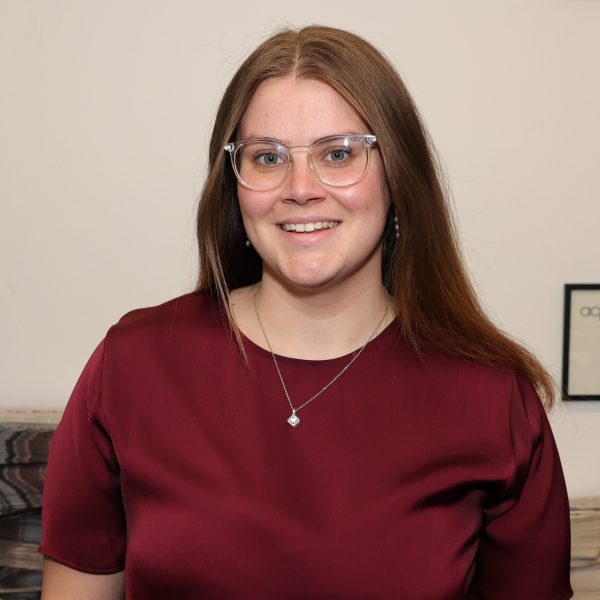
Ella Duggan