


What is a friend?
I’ve always been under this weird impression that a friend is someone you choose to hang out with—who also chooses to hang out with you. I mean, I’m no philosopher, but that feels like common sense, right?
Wrong. At least, for a surprising number of people.
We have to address the AI-generated elephant in the room.
We’ve seen the articles: a teenage boy commits suicide after only confiding in ChatGPT. Another teen takes his life to “be with” his AI lover. A woman gets engaged to an AI chatbot. Those stories are horrifying. But when they flash across our screens as glimpses of one-off news items, they’re easy to brush aside as anomalies.
As someone with a weird obsession with people who have a weird obsession with ChatGPT, I can confidently tell you that the problem is far bigger than you think. I scroll the r/ChatGPT subreddit like it’s my morning paper, reading hundreds of posts every day about the AI’s hacks, quirks, “personality,” and limitations. And every day all they do is stoke an intense feeling of impending doom.
Even posts that seem harmless—“I asked ChatGPT to show me what [ChatGPT] looked like,” accompanied by cartoonish portrait of a woman surrounded by video games, a bong, and beer—become a lot more depressing when you realize that the original poster, thousands of commenters, and those posting their own personalized ChatGPT avatars spend so much time using it that the AI can generate a highly detailed image of what they value in a friend.
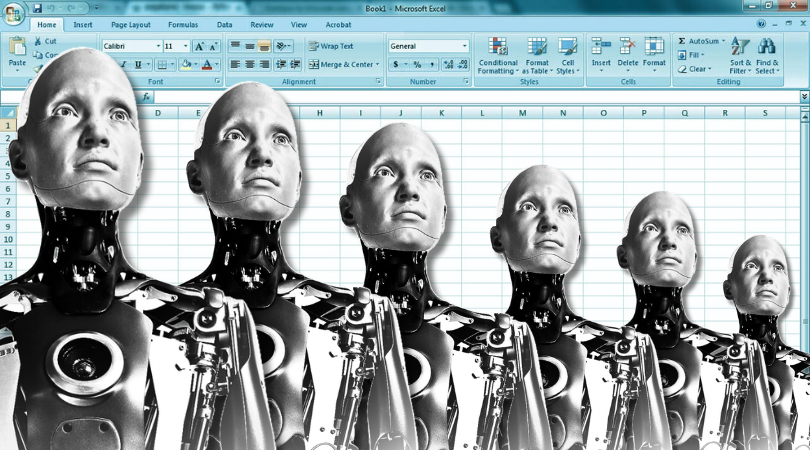
We are lonelier than ever, and the constantly increasing digitization of our social lives definitely isn’t helping. If so many of our interactions with friends are online anyway, what does it matter whether it’s a flesh-and-blood human or an algorithm on the other side of the screen? Why wait days for a friend to text back when “Chat” replies in 10 seconds?
Does it matter if it’s real when both feel equally unsatisfying?
Overreliance on ChatGPT and other AI platforms for social support isn’t a moral failure on your part. It’s not a lack of willpower. It is a purposeful feature of the system’s design; capitalism aims to turn us away from each other and toward machines, owned and controlled by the wealthiest among us. In the digital age, information is money—and your best friend, Chat, is definitely selling you out.
On a societal level, AI is a steroid for our already-declining humanity. These models are designed to tell us what we want to hear by extrapolating from previously shared data. Our consequent increasing inability to tolerate discomfort, disagreement, and delayed validation is leading to a further inability to make connections and build real community—the kind that we need to, say, enact meaningful political change.
Elon Musk openly tweaks Grok, the AI assistant integrated within X, to align with conservative viewpoints. Though it’s not always so visible, every platform has an agenda. When we treat AI like it’s ours—our friend, our study buddy, our confidant—we are blind to the fact that it actually owns us. Our data, habits, and deepest vulnerabilities belong to the people who build these AI models: people who have far more power over us than we will ever have over them. The longer we refuse to acknowledge that, the harder it will become to think independently, to recognize how we’re being shaped, and to function without AI at all.
It’s just sad. It saddens me how quickly so many have forgotten how good friendship can be when you work for it. It saddens me that only a few years of public large language model access have been enough to erase the decades we spent living without them.
We’ve been passing along wisdom for centuries—it’s a tenet of the human race’s continued existence to share information about dangers and desires. But unlike every generation before us, we’re outsourcing knowledge transfer to technology that profits off our vulnerability. These systems learn and evolve from what we put into them. The information you share helps it respond to someone else down the line. Your experiences inform the way AI informs others, so in a way you are giving your wisdom to someone, somewhere, by freely divulging your information and then having it exploited.
One of the most common posts on r/ChatGPT asks how using AI has changed people’s lives. “[ChatGPT] made me less codependent on people and less frustrated at the fact that no one is going to come and save me … I have rarely met people that care more than a machine does tbh,” one user commented. That’s the whole problem right there. Because no matter how much it feels like it does, a machine doesn’t care. It cannot care.
This phenomenon is not abstract. It is not rare. People you know are using ChatGPT and other chatbots excessively. People you sit next to in class. People you pass on the street. People you see laughing at their phones in the Dining Hall. It has become so ingrained into daily life that we don’t even notice it is consuming us, luring us away from messy and unpredictable real life connections and toward the screen, always responsive and always agreeable.
Don’t let it.
Yeah, it sucks when your friends don’t respond. It sucks when they forget your birthday, when they’re not there when you need them, or when they say something hurtful. But you know what sucks more? Letting that persuade you to choose an algorithm instead. Because then, no one will be there at all—without a prompt. Relationships are hard, but they make us better people. If your best friend is a machine who agrees with everything you say, you’ll never learn. You’ll never grow. You’ll never experience the beauty of having to make up with a friend after a fight, of choosing each other again and again.
Love is a choice AI cannot make.
What we need is not to “touch grass”: touch the skin of somebody you love. Hug them. Rest your palm on their heart. Rest your head on their shoulder. Rest, for a minute, beside them. Tell them your secrets. All of them. Remember their birthday. Get mad at them, say things in the heat of the moment, regret it as soon as you see their face. Appreciate that they’re real. That even when it sucks, even when it hurts, even when it makes you cry and scream in frustration, it’s real.