

Some luck I’ve got. I wasn’t even born in time for Y2K. I never got to see the mass hysteria and I wasn’t around when all the lights stayed on. I completely missed the world’s most underwhelming armageddon. I was born four years after, spat out into the ensuing vacuum, and what I have become sure of, in the years spent waiting for the “for real” apocalypse, is that it already happened.
The world really did end with Y2K, and we’ve actually been dead for years.
Let me reel in the hyperboles. I mean that Y2K should serve as our benchmark, a cultural time of death, so to speak. From then on, we have all been living in a mild form of digital purgatory—an anchorless pixel bath, repeating ourselves over and over until now. The snake has caught up to its own tail. In recent years, the ‘60s might be in vogue for a year, then the ‘90s, then the ‘70s after that. But these were periods of set trends, acting in a clearly observable cycle.
Compare this to the modern sphere, which has become remarkably more tangled. We live in a newly shattered state, where simulacrums are now doing impressions of simulacrums mere seconds after the original was posted. It’s all rebounding so quickly it would make Jean Baudrillard’s–the French sociologist and philosopher’s– head spin and yet, it’s all getting less and less interesting. Call it what you want: artificial intelligence slop, disinformation overload, or simply a bloated, purple, flatlining culture.
I should make it clear that I am not rediscovering postmodernism. Taking old ideas, and recontextualizing them via irony is not remotely novel. But in a digital purgatory, it’s impossible to ignore the feeling that the tried-and-true postmodern energy has warped into something flatter, terminal—a fabricated irony that leaves us feeling nothing.
It wasn’t always like this, or so I’ve been told. At its roots, the internet was meant to be an egalitarian space—where all people could access all information, and all of it was free. It sounds too good to be true, damn near utopian. But, like other current democratic institutions I could mention, we have watched a good thing become obliterated in a startlingly short span of time. Something that was once by the people, for the people, has been snatched up by corporations; The “Man” if I have to speak in cliché. Now the internet acts less as a place of cultural connection and is transformed instead into the newest branch of mass marketing—data harvesting.
Even the term “harvesting” is worth a moment of humorless reflection. It implies that our data, our engagement, is something that we have essentially grown for someone else’s use. But all this is already well known. People are generally aware that their data is constantly taken, bought and sold to unseen entities across the globe. Even the advent of Palantir-style surveillance, and YouTube’s recent identification checks, are noted and widely ignored. Doesn’t that just add another gray filter to an already monochrome perdition? Increasingly, even our idle clicks are being used to feed massive language models. We are not the producers. In fact, we’ve now been turned into the produce: easily fattened, easily harvested, easily forgotten.
So, the internet was hijacked—taken from us and essentially stripped of its original power. Surely culture, that ineluctably human system, could change course. Not a chance. By the time most people realized they were no longer steering the ship, culture had already become virtually indistinguishable from the internet itself. I cite the decline of Vogue as one of the most glaring indicators that real people no longer dictated the movements of culture. Cruise control had officially been switched on. Welcome to the self-driving era. Take your hands off the wheel and just vibe to that sweet, sweet algorithm.
Last year, in a bout of distress, I asked a Condé Nast editor whether it was even possible to fully retreat from the digital sphere while still remaining tapped into the movements of culture. Could I be a functional journalist without my Instagram, without TikTok, without those irresistible balls and chains? I got back a pretty dismal answer: Not really, no. Actually, I was told that I could always try listening to more podcasts, which was hardly an encouraging alternative. But the proof was right there. Culture is synonymous with the internet, inseparable, interchangeable, and utterly inescapable.
The same corporations who seized control of the internet are clearly and pitifully attempting to restart culture’s stalled heartbeat, and the result is the aforementioned clusterfuck. Nothing lasts anymore. Nothing means anything. Trends come and go faster than they ever have before, and even the ones that do manage to hold some sticking power are instantly corroded by an acidulous population of netizens.
Cynical enough? No? Yes? Is this just another passing comment in a deluge of similar shitty takes? Maybe. But truth be told, I’m actually hopeful, if that’s worth anything. I haven’t given up on culture just yet. If the modern internet has proven itself useful for one thing, it is irritating, escalating, and ultimately imploding in a glorious supernova.
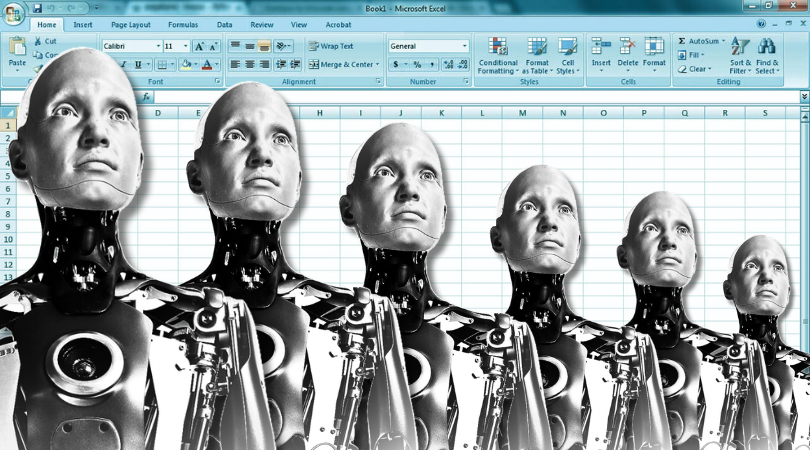
There is a specter haunting the internet, and its name is Agentic AI— the incoming upgrade from generative AI. On the digital horizon, groundbreaking AI is looming and already we are feeling the seams of the internet beginning to burst. Recent estimates show that nearly 57% of the internet is some form of AI generated content. AI slop has exploded, blooming in spectacular spores throughout every avenue of the digital space, all the way to the official White House Instagram account, and even the personal socials of wannabe dictators. It’s a pretty nightmarish final chapter to close out our purgatory era, but it is definitely reaching an end, that much is clear.
Professionals in the field generally agree that there will soon come a point when the function of the internet will have to fundamentally change. Some speculate it will become a background infrastructure for AI systems. Some argue it will become more or less irrelevant as people become fed up and hungry for some semblance of objective permanence. In truth, it will likely be far messier, more discordant, and volatile.
So Y2K came and went, and there was no earth shattering kaboom— just a snowballing cataclysm that has seemingly stalled at whatever a Labubu is. Some will say the real end came with the invention of the iPhone. Some will say it’s all tied to TikTok. But Y2K, that first mass panic when the internet became synonymous with life itself, marks an incipient moment. From then on, there have been definite bright spots—highlights in our 25-year stint in purgatory. We’ve also had more than our fair share of low points. All said, it has been frequently horrifying, often hilarious, and if I’m being honest, I’m exhausted already. Somewhere up ahead, I know there is a great shift incoming, but I’m at a loss as to what to do in the meantime. Ralph Waldo Emerson said it better anyway: “No man has learned anything rightly, until he knows that every day is Doomsday.” Fuck me, the world ended 25 years ago and I missed it. Might as well touch some grass.