


Shane Hollander and Ilya Rozanov have taken the world by storm. The girls, the gays — and yes, even some straight men, too — are glued to their TV and laptop screens in a landmark moment for queer media.
Why has “Heated Rivalry,” a show about two hockey players from rival teams who have a secret romance and struggle to come out as gay, become so prevalent in the cultural lexicon?
From the moment they are drafted by the Montreal Metros and the Boston Raiders, Hollander (Hudson Williams) and Rozanov (Connor Storrie) immediately become heated rivals. Tangential to Hollander and Rozanov, viewers are introduced to Scott Hunter (François Arnaud), a star hockey player for the New York Admirals, and Kip Grady (Robbie G.K.), a smoothie barista.
The slow burn of each pair’s feelings is palpable. Throughout its first season, the series explores queer identity, both public and private, in an environment of hypermasculine athleticism.
Kip wants to be publicly pictured with Scott. But it is not easy for Scott, a closeted player in a game where the f-slur is hurled across locker rooms.
At the same time, Ilya and Shane experience their own hurdles. Ilya, who is from Moscow, lives his life as internally bisexual. Shane is closeted for most of the series, and both he and Ilya maintain a façade that hockey players regularly maintain.
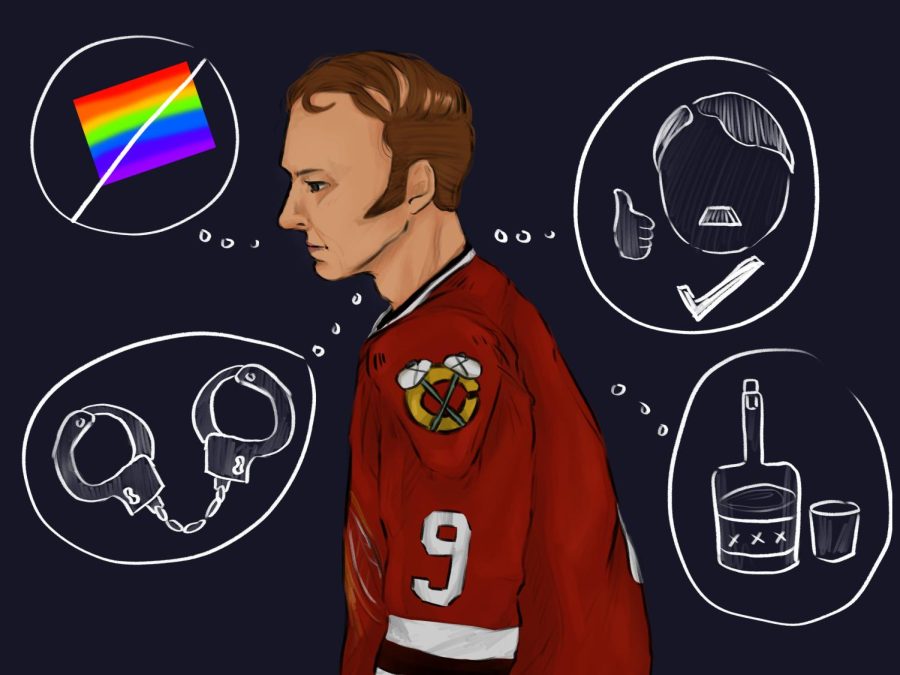
Each character eventually gets a happy ending. But away from the TV screens, the reality of being an openly gay man in professional sports is much bleaker. Players Glenn Burke and Billy Bean both came out after they retired from Major League Baseball in 1982 and 1999, respectively. By 2021, the only two major league athletes to come out while actively on a roster were the NBA’s Jason Collins and the NFL’s Carl Nassib. Luke Prokop, who plays for the American Hockey League’s Bakersfield Condors, a step below the NHL, came out as gay in 2021.
In 2024, there wasn’t a single active openly gay player on a major league roster. However, it is impossible to disregard the likelihood that there are professional athletes who feel they aren’t able to come out because of the masculine nature of their major league sport.
But why, 11 years after Obergefell v. Hodges and hundreds of LGBTQ+ “Pride Nights” across professional sports, do athletes largely not feel comfortable living as their authentic selves on the ice, on the court, and on the field?
Matt Kenny, an Ontario native who played competitive hockey throughout his childhood, knew he was “different” at age 14, but did not publicly come out as gay until he was 24 years old, after he left hockey. During those 10 years, Kenny felt like he was living a double life. Publicly, he was a competitive hockey player, but his true romantic feelings were suppressed, internalized, and kept private.
“You have to … not only suppress that, but really change … who you are to meet the demands of the outside world,” Kenny said in an interview with The Beacon. “And then you layer on that hyper-masculine environment of competitive hockey, and it … [becomes] very challenging.”
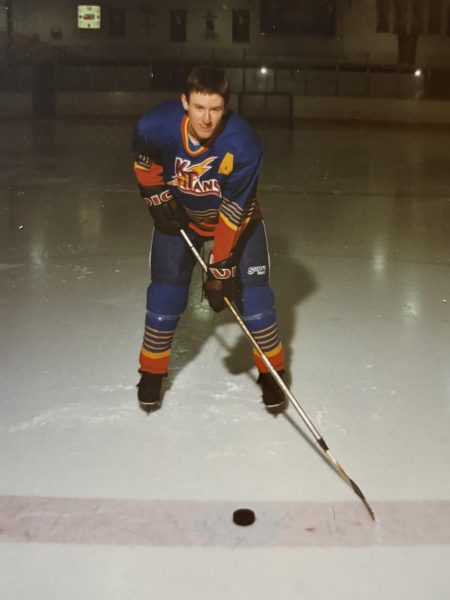
Just 15 minutes into watching the first episode of “Heated Rivalry,” Kenny described having a panic attack. He said he felt that the show held up a mirror to his own life, including a secret relationship he had with a fellow hockey player for around a year.
“I think what brought up some of those really big emotions, too, is just things that I hadn’t processed or ever been allowed to talk about,” Kenny said. “Friends and family had no idea that … I had this relationship. Two boys were trying to navigate … being gay at a time when [being] gay wasn’t like it is now.”
Society, according to Kenny, develops archetypes that define how men and women are supposed to act, and he noted how many shows portray romance through a heteronormative lens. When gay men are younger and navigating the road to self-acceptance, the lack of representation for same-sex relationships muddies this road and perpetuates misguided stereotypes.
“How do we navigate being soft when I’ve been trained my whole life to punch people, take hits, and hit pucks?” Kenny said. “How do you manage those kinds of relationships? It’s a mental mess.”
Kenny felt that weight very heavily while playing hockey. Every word, he said, the way he moved his hands, and the way he spoke, felt almost rehearsed. The answer to, “Why don’t you have a girlfriend?” was always prepared.
“If we have professional athletes in the NHL, which I know for a fact we do, who are closeted, they’re 10 times better than any other player out there,” Kenny said. “What they had to endure to get there, the extra weight they’re carrying to survive day-to-day, most of our players couldn’t last a week in those same kinds of scenarios.”
During the COVID-19 pandemic, Devin Ibañez, a Brookline native who now lives in the U.K., wrote down a list of things that would make him happier. As Ibañez checked things off the list, one of the last remaining items was to publicly come out. On Dec. 29, 2020, during a lunch break at work, Ibañez publicly came out and became the first openly gay Major League Rugby player while playing for the New England Free Jacks.
“After traveling and playing around the world, I got to the point where I’ve accomplished so much more in the sport than I ever realistically thought that I was going to,” Ibañez said in an interview with The Beacon. “I [knew] that this would make me happy.”
After publicly coming out, Ibañez noticed that his relationship with rugby had changed. Always an aggressive player, he turned his inner anger to enjoyment and love for the sport.
“It really was a big shift for me in terms of where the emotions behind what I was playing for came from,” Ibañez said. “It was now more about representation and having that joy of playing and being myself, rather than constantly trying to prove everybody wrong.”
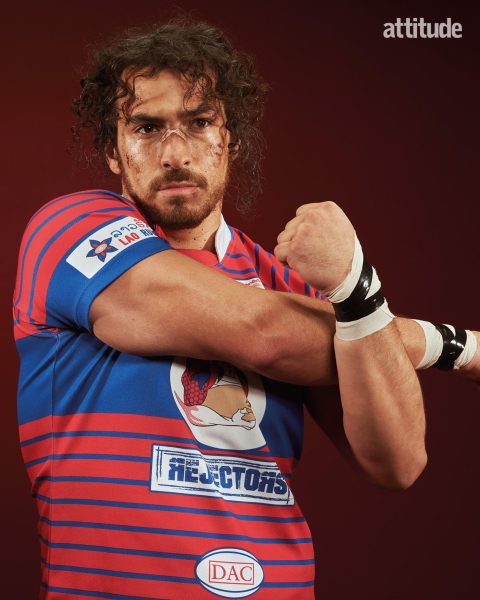
When Ibañez watched the first episode of “Heated Rivalry,” he saw that the show was clearly a fantasy. Players on opposing teams in the immediate media spotlight as they explore their love for each other was too unrealistic for him.
“I always do get that feeling of a little bit of sadness from watching these shows … that these are experiences that could exist … if the world wasn’t necessarily like the way that it is,” Ibañez said.
Ibañez said he believes that men’s sports must grapple with toxic masculinity for athletes and front office staff to feel comfortable living as their authentic selves.
“I think that men’s sports in particular don’t necessarily understand that toxic masculinity is actually potentially holding them back from having a more collaborative environment, which also then makes you much more successful as a team,” Ibañez said.
Ibañez noted that sports teams have the most to learn from the demographics who feel the least represented in their specific sports, particularly trans and nonbinary athletes.
“Creating an amazing team comes from having an incredibly diverse set of perspectives and people contributing to a goal,” he said.
He called for sports professionals who think their teams are inclusive to have empathy toward those coming into the sport “completely othered.”
“Ask yourself [whether] you feel comfortable in that situation,” Ibañez said.
Jake Eldridge navigated a different sport. At age 10, he moved from California to Dallas, where he started playing American football. Eldridge specialized in his position, long snapper, and eventually committed to play at Rutgers University — a member of the Big Ten Conference. He played during the 2023 season, but a diagnosis of ulcerative colitis, a chronic bowel disease, forced Eldridge to retire and leave the game of football behind.
Eldridge came out to his parents in high school, but coming out publicly was a different story.
“I was playing football. I was so scared of it,” Eldridge said in an interview with The Beacon. “It was … kind of like a full-time job to hide it in a way. And I was just faking my life every day.”
Eldridge soon began posting lifestyle content on social media. After leaving football, he felt pressured by the comments he was seeing online to come out:
“We know you’re gay, just admit it.”
“Just come out.”
“I hate that you’re acting like you’re not.”
That was Eldridge’s reality as an up-and-coming social media content creator. Those comments made him feel like he had to come out, which he did via social media in 2024. Looking back, he sees both sides: wishing he had come out while still playing, but acknowledging that no one owes their truth to the public, especially on someone else’s timeline. To those athletes who might not feel comfortable or be in an environment to come out, Eldridge says to “do it on your own time.”
“Don’t feel the pressure to come out. But if you want to come out, do it, and know that you have an entire community of supporters behind you,” Eldridge said. “I think ‘Heated Rivalry’ shows people that … despite everything going on in the world, [there are] enough good people that will stand by your side and have your back.”
Watching “Heated Rivalry,” Eldridge felt like he was seeing a reflection of his life through a different lens: hockey instead of football, at a professional level instead of collegiate.
Football, according to Eldridge, is a sport in which “every guy is trying to be more masculine than the other.” This type of masculinity on display in football facilities, from Eldridge’s perspective, quiets people internally and makes them feel like they have to fake who they are.
“I think some straight people have to act [tougher] than they really are, and have to act, in a sense, ruder than they are, just to feel like they fit in, which I think is probably the biggest issue,” Eldridge said.
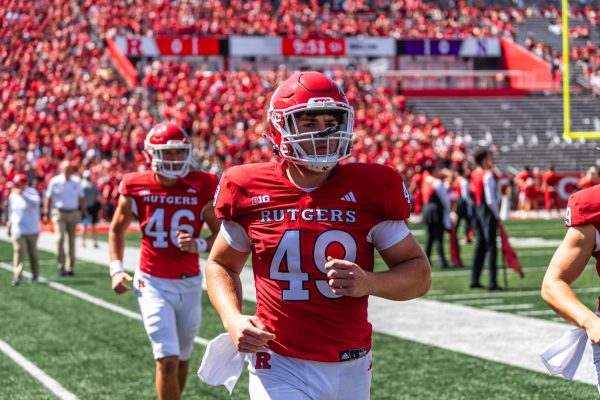
Eldridge believes “Heated Rivalry” will help further the conversation around inclusivity in sports, but he does not think droves of athletes will come out overnight.
“People have families that aren’t accepting, and that’s a whole different story that, luckily enough, I haven’t had to deal with,” Eldridge said.
As far as the NHL, Kenny said he does not believe the environment is safe for athletes to come out. Kenny said that in the fight for greater LGBTQ+ inclusion in sports, he would rather be the one doing the work and having people come after him in the fight, because, “I have no [hockey] career to lose.”
“Give me and everybody else who’s been in this fight for so long some time to try to navigate this change and get some protections in place, and you just focus on hockey,” Kenny said. “Know that you are loved. Know that this is not right, the situation we put you in. But we’re working super hard to get you to a place where you’re going to be able to get out in the sunshine.”