





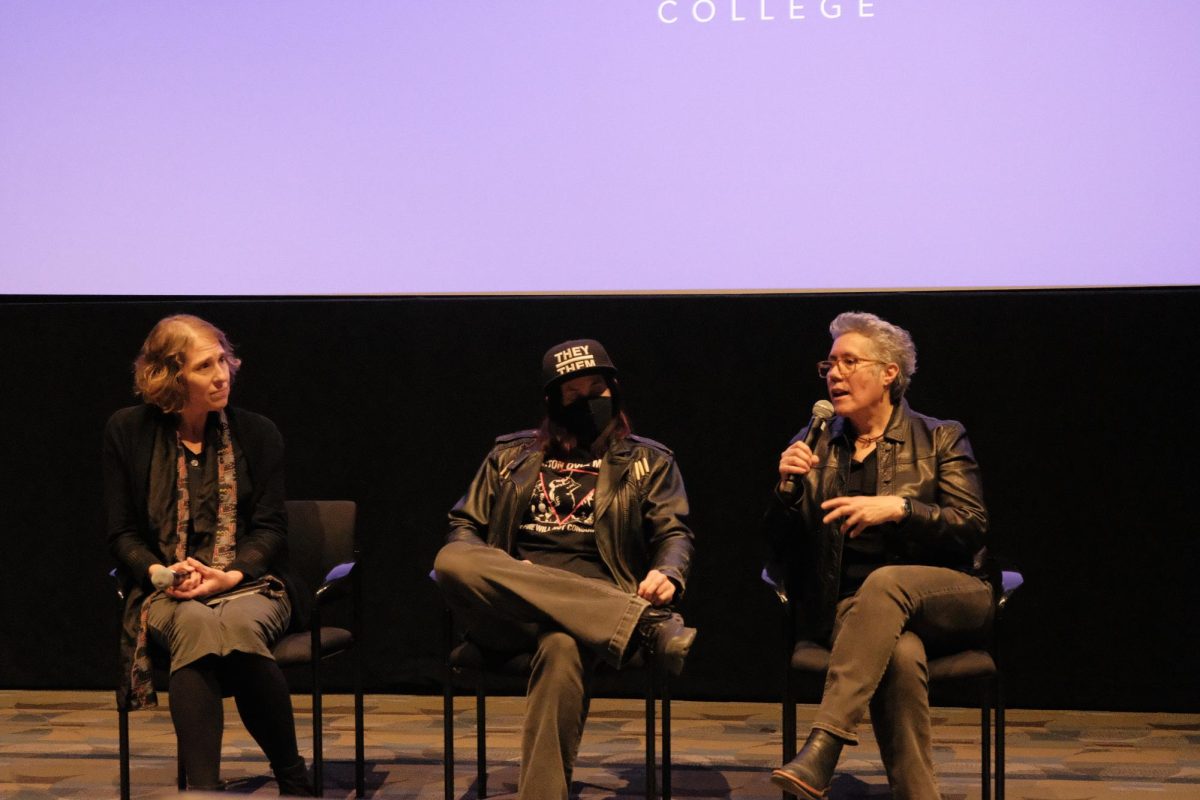
On a Friday earlier this month, the Massachusetts Institute of Technology hosted a lecture celebrating MIT humanities professor Alan Lightman’s 1992 novel “Einstein’s Dreams.” Holding court at the MIT Museum, Lightman and Emerson College assistant professor Daniel Pillis waxed philosophical (as professors often do), questioning whether a one-to-one manufacturing of a dead relative’s tobacco pipe, identical in all aspects, could somehow—through some internal deception—elicit the same tobacco smell as the real deal.
Pillis thought for a moment, and told the audience that this is the very question he’s been studying for years.
“The brain’s the most powerful machine,” he said.
If Pillis’ name sounds familiar, it’s probably because, in the past few weeks, it has been feverishly whispered around campus. In the spring, he’ll be teaching AI Tools in Media Production, a new visual media course aiming to explore the “rapidly evolving role of generative artificial intelligence (AI) in the filmmaking process.”
“Students will generate films and learn to apply AI tools to transform pre-production, production, and post-production workflows, including scriptwriting, visual effects, animation, editing, and even distribution,” read the course description sent to all juniors and seniors in the School of Film on Nov. 6. “Through a combination of lectures, hands-on workshops, screenings, and collaborative projects, students will gain practical experience using AI-driven tools while critically examining their creative, ethical, and industry implications.”
This development’s reception has been mixed among staff and highly negative among students, as evidenced by a now-viral post on the anonymous social media app Fizz, which simply states, “Yeah I’m not taking this class dog.” With evolving generative artificial intelligence tech triggering multiple Hollywood strikes in recent years, birthing a lifelike actress named Tilly Norwood, and inspiring Paul Schrader to envision the first “AI movie,” the concept of human creatives entering the “biz” is less certain than ever—let alone the concept of human creatives earning an expensive film school education.
“It doesn’t feel right that we’re being treated as guinea pigs in a weird way,” School of Film student Madison Decina told The Beacon.
“Nobody knows where AI in media—AI in anything—is going to go,” she said. “And the fact that we’re the first generation, we’re the first few grades that have to deal with it, it’s not something that I think could be positive right now.”
Emerson’s adoption of these technologies is far from isolated; nationwide, film students are being forced to grapple with the growing role of artificial intelligence in arts education, with institutions from USC’s Center for Generative AI and Society to NYU’s Martin Scorsese Virtual Production Center (which houses the Runway suite of generative AI) attempting to “position themselves at the forefront of a technological shift” in media production.
In successful implementations, like Loyola Marymount University’s student-favorite Producing and Screenwriting with AI course, generative artificial intelligence is treated like a “tool,” an experimental paintbrush for learners that will supplement—not harm—their livelihoods.
“The benefit of a class like this is learning the logic of this, learning the limits of this,” associate professor Russell Newman, head of Emerson’s faculty-led Emerging Tech Initiative, told The Beacon. “In order to critique the thing, and in order to have the broadest understanding of what the implications are for a particular tech being inserted into a broader social system, [sometimes] there is just no other way to find out how hot the fire is without sticking your hand in a little while.”
AI Tools in Media Production should be, on paper, one of these “beneficial” courses. After all, Pillis, a self-described “advocate for human-centered artificial intelligence” whose work in Emerson’s Emerging Media Lab was previously chronicled by The Beacon, is a strong advocate for maintaining the “human” portion of human-machine interaction.
“What I’ve always been concerned about is, in these experiences and virtual environments, making sure people are still engaged in reality,” Pillis told The Beacon. He previously worked as a research assistant at the MIT Media Lab, where his research centered around “TeleAbsence”—an experimental project allowing people to interact with nostalgic environments through “tangible memories and ambient media.”
“When we’re teaching on these topics, I do encourage students to think about the things they’re doing at all times,” Pillis said.
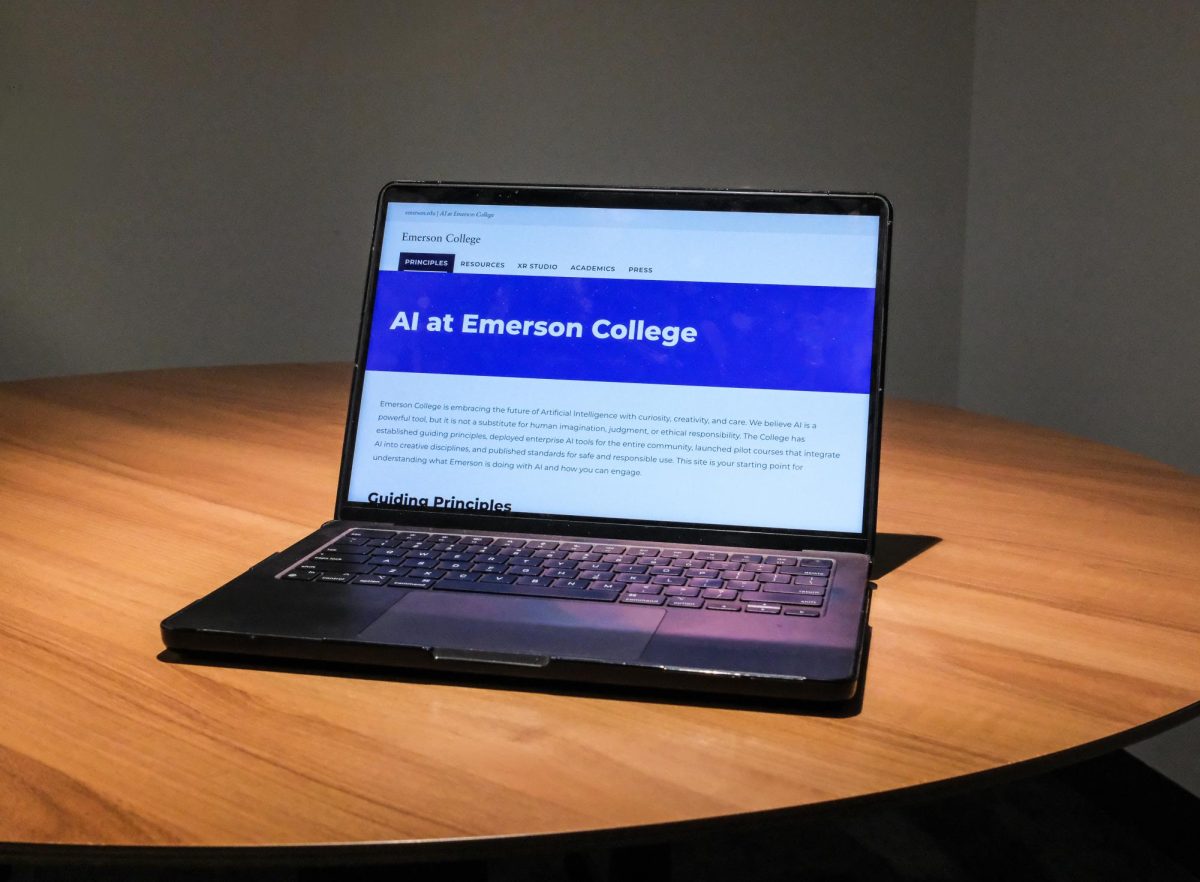
However, as much as I admire the timbre of Pillis’ morals, this school isn’t a scientific innovator like MIT. A growing dissonance has begun to emanate from courses like AI Tools in Media Production, which can be chalked up to the comparative simplicity of Emerson’s technological guardrails (which allow professors to work with, around, or against AI in classroom settings).
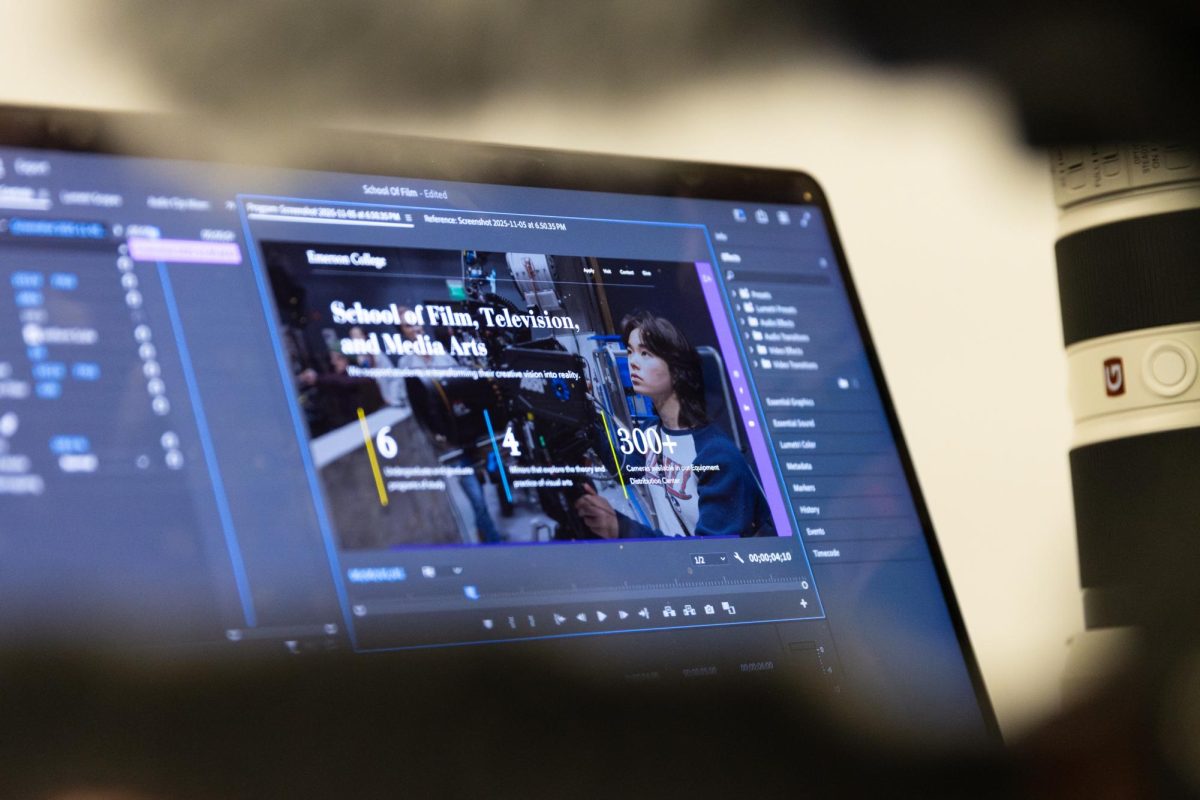
The publication of spring’s “Extraordinary Emerson 2030” plan, which highlighted the college’s “integration of emerging technologies such as XR and AI,” marked a large yet healthily ongoing step toward the cutting edge. Then, like a bottle rocket from hell, a recent rebrand from the college’s Department of Visual and Media Arts to the School of Film, Television, and Media Arts snatched the cutting edge off the street and took it for a joyride.
“With the new name comes an emphasis on new tech and virtual production, with AI having been integrated across the curriculum,” wrote The Hollywood Reporter’s Mia Galuppo in her write-up of Emerson as the 6th best U.S. film school of 2025.
Suddenly, what was once described as “integration” has started to look like “takeover”—a side effect of the “AI arms race” gripping higher education. Instead of offering experimental inroads into a bold new filmmaking world, the “transformative” rhetoric of AI Tools in Media Production is a perfect Molotov cocktail for a generation of professors and students who are still largely uncertain about the consequences of this generative technology.
“I was starting to think with myself and other friends, where’s the limit of what we’re gonna make as projects in this class?” Emerson faculty member Al Spruill told The Beacon. “Are we gonna be making full-length features and feeding the device all these different plot points and design styles?”
Spruill, who teaches Media Copyright and Content, describes artificial intelligence as “the wild west of the next frontier of legal jurisprudence.” She says copyright matters haven’t been explored deeply enough to fully anchor a course like AI Tools in Media Production, highlighting Stability AI’s recent victory against a Getty Images lawsuit that accused the U.K.-intelligence startup of using its content to train an image-generation model.
“There’s very few cases that actually make declarations on AI,” said Spruill. “So I think that, while to us, it seems like the issues are primed and ripe to talk about, it has not gotten through the court system, which is always what I’m looking for as an attorney.”
Similarly, Emerson alum Marc Perry, who graduated with a degree in media arts production in 2020, worries about generative chatbots scraping data from human creators without proper credit. While Newman mentioned that Emerson has “special contracts” with Google Gemini that are “less data extractive” toward creative work, a blind spot continues to exist with chatbots like OpenAI, which has openly admitted to training its ChatGPT chatbot on copyrighted material.
“If you’re scared about AI taking over, it’s getting to the point where people can read AI writing and recognize it,” Perry said. “As long as you’re writing from your heart, you’re always going to be better than any of those AI programs, because they are not people. They are conglomerations of writing from thousands of people that is mish-mashed together into a corporate-friendly, flat sludge.”
Decina agreed that AI is “a combination of ones and zeroes.”
“There’s nothing human about that,” she said.
Today, it appears the majority of Decina’s peers agree. Unlike the Miracle of Loyola Marymount, only six students have registered for AI Tools in Media Production, which has a maximum enrollment of 12.
Though professors like Pillis emphasize the potential upsides of human-led artificial intelligence curricula, students are as confused as ever about the real purpose behind them.
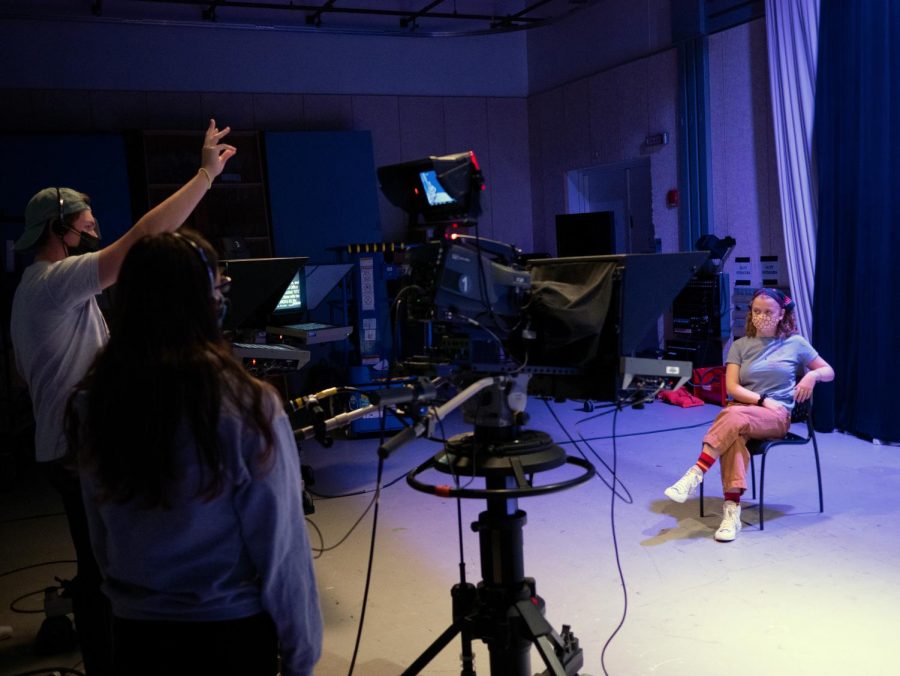
“We have that virtual production studio that I’ve only heard of two courses being able to use,” Decina said, referring to the Emerging Media Lab (where Pillis’ class will be taught). “If you think about it, that’s like a [multi-million dollar] studio. If you take that money, you probably could have bought every freshman a very basic camera.”
Out of all this confusion, I’ve developed a working theory: Emerson has adopted this controversial technology to train students for the future, but instead of starting students off with a purely ethical, theoretical baseline—or offering reasons to engage with the tech beyond claiming “it’s the future”—it sped up the timetable to match its film school competitors. Now, it advertises courses like AI Tools in Media Production that bury any real implications beneath a mountain of sexy-sounding jargon, and the school expects us to buy them at face value.
I’m no expert on the complexities of artificial intelligence, but I am a student in the School of Film, and I know I’d rather smoke my great-grandfather’s tobacco pipe than some manufactured replica. Does that mean I hate the idea of evolving as a principled, safe, and ethical creative, or that I don’t understand the wealth of viewpoints on the matter?
No matter how many times professors claim we’re in control of the machine, or that the machine is a helpful “tool,” some of us will cautiously embrace it, and some of us will continue to hold it at arm’s length. Can you blame us?
Until Emerson convinces us of generative AI’s inherent goodness, we have plenty of valid reasons to prioritize the tried-and-true filmmaking techniques we came to this school to learn.















Well said, great article. So much of the so-called “AI” malarky is not just built on flagrant theft but is doing real measurable harm to creative folks’ brains. (see reporting here:https://time.com/7295195/ai-chatgpt-google-learning-school/)