


To my Emerson family,
I came to Emerson College in 2012 in the role of an associate vice president in the Office of the Arts. I had no teaching responsibilities but I’ve always loved it, so I asked to teach a course in performing arts. The following year I was graciously allowed to create a course that I still teach, Burning Down the House: Disruptive Narratives in Theater and Life. At the time I went by a different name and a different gender marker. Openly queer and in a relationship with a woman I am lucky to still call my partner in life and my spouse in law, I began to get to know the LGBTQ+ students at Emerson.
In those early days of Burning Down the House, our final class was held at my home where my wife Lynette cooked baked mostaccioli and meatballs and served her famous fennel and orange salad. At the time, I had—and still have—too many books. I asked every student who came to the house to pick a book from our bookshelves and take it home with them for their own library—with the exception of a few sacred texts, like an early edition of Alan Moore’s “The Watchmen,” which was coveted by many students.
This offering from me to my students was a thank you for their gift to me. Emerson students come to class fully embodied, with so much energy and joy—their spirit has always deepened and brightened my own.
In 2017, I asked if I could move into teaching full-time. Through the incredible generosity of then-President Lee Pelton and then-Provost Michaele Whelan, I was offered a position as a distinguished artist in residence.
By 2017 I was in the middle of a gender transition. It was a terribly awkward moment to transition publicly later in my life. My teaching position gave me the opportunity to be with so many students who were at similar places in their lives, in their understanding of who they had been, who they were, and who they wanted to become. I’ve never felt like the “head of the classroom,” rather a fellow traveler in the journey of becoming ever more alive to the world. A gender transition was something I have shared with many students along the way, but aliveness isn’t signified in a solitary letter—F, M, or T—aliveness is curiosity, going from a state of knowing to not knowing to knowing again and then repeating that until death ceases the possibilities for repetition, change, and love.
I have heard many times from transgender students: “You are the only person I know who is living a life I could imagine for myself.” I have been the only full-time and out transgender faculty at Emerson since 2017. No place of higher education should put a student or a faculty member in that position, though I know it has not been intentional. Each year I write to the Emerson administration and remind them of this fact in the hopes that particular repetition will cease, that students will see their futures in many more bodies and lives than my own. That hope is part of my teaching philosophy as well as my artistic practice.
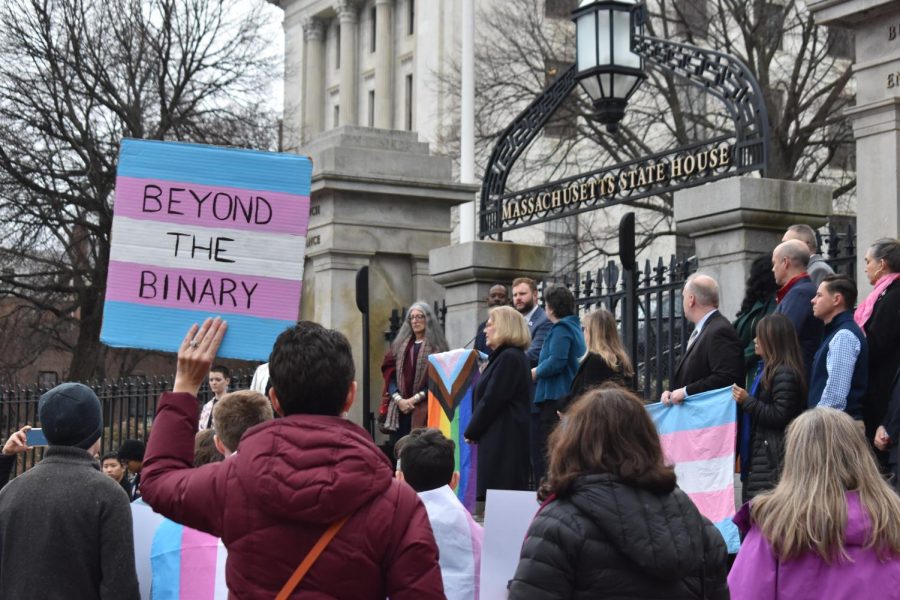
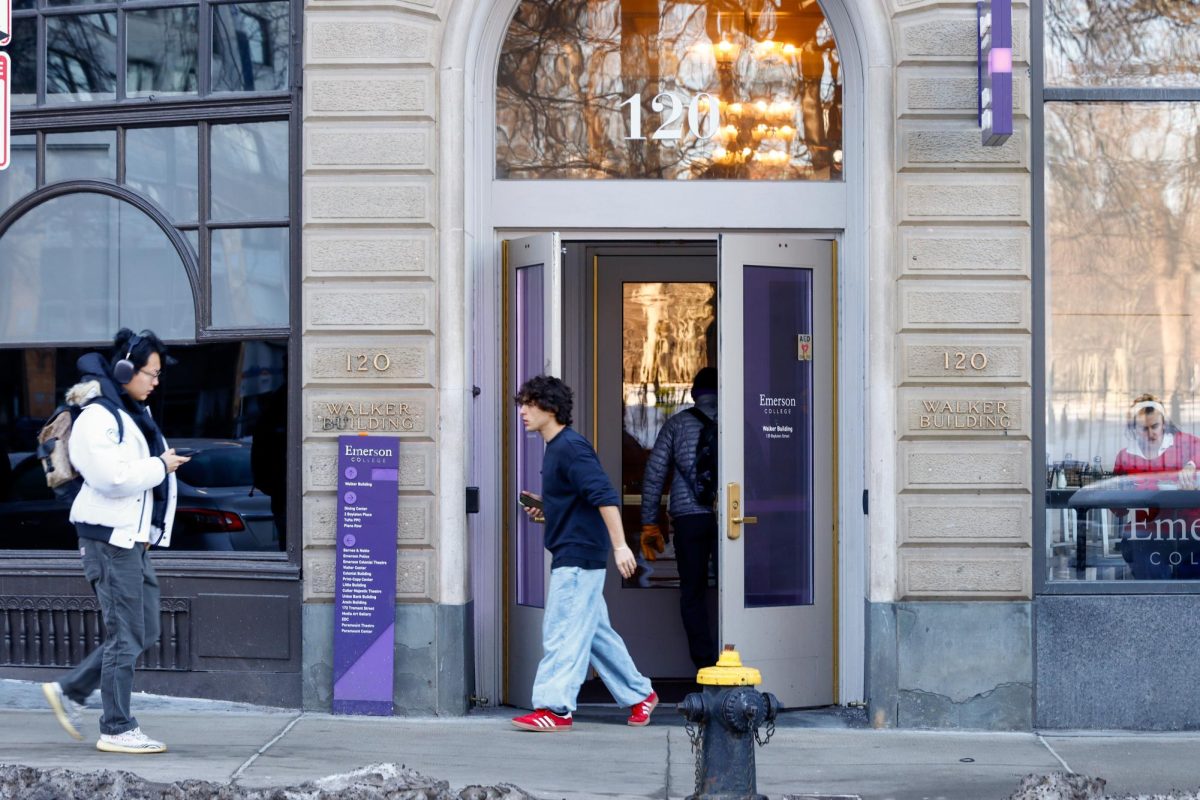
What has been intentional over these last few weeks is Emerson’s loud silence in declaring its public support for its trans students, staff, and faculty. Transgender people are having their humanity stripped from them—openly, aggressively, and with impunity—while my academic home that supported and celebrated my own transition refuses to speak publicly.
I have been told by several administrators that Emerson doesn’t want to put a “target” on its back. I get that because I actually know what it feels like, as do my transgender students, to have a target on one’s back. I want to be clear: Trans students, staff, and faculty are suffering. We are at risk. We are fearful. For the first time in many years since the early days of my transition, I wake up and hear about a new atrocity being committed deliberately and pointedly to effect the erasure and dehumanization of trans and nonbinary people and I feel like a freak, like an alien in my own life.
I am suggesting there is a lack of understanding on Emerson’s part of what it means to try and survive as a trans person in any context, not just our current one. I have shared my own story of survival in my memoir and a stage play—others have taken similar risks. Transgender people like all people may have a lot or a little in common with one another but none of us miss the turmoil, disappointment, embarrassment, and shame that is inevitable when trying to be seen, to be truly visible in the world for the first time in a gender transition. No human being should have to live a life without having that experience. To deny it is to decide one human life is less valuable than another. When a government decides to openly erase a population and institutions stand by in silence our very humanity is at risk.
To my trans students: I see you. I embrace your beauty and courage. I love you for risking everything to become alive to yourselves, to me, to this college, and to the world. Emerson: I hope you consider finding your own aliveness by letting all of us know you are here for your entire community.
P Carl is a senior distinguished artist in residence in the Performing Arts department at Emerson College.
This is such a clear and powerful statement of reality from P Carl, who has earned our respect with honesty, over many years. Courage comes in many forms and so does cowardice.
This is the moment for each person and each institution to be clear with itself: How am I acting with courage? How am I excusing my cowardice?
If Emerson thinks that avoiding vocal support for the trans members of their community will mean it gets no “target on their back,” the institution is ignoring all historical evidence and all current news.
I hope P Carl’s letter helps Emerson and it’s leaders shift toward vocal support for Trans students and community members.
Thank you for saying out loud what I’ve heard many people whisper. Staying quiet will not keep us safe.
Thank you for a such a powerful and timely letter. As the Trump administration is launching virulent attacks against Trans people, immigrants, women, and people of color, academic institutions such as Emerson must make it clear that it does not tolerate any form of discrimination. Trump’s racist and transphobic administration is targeting the most vulnerable groups. Emerson College response need to be loud and clear: The humanity of every single member of its community is not negotiable. P Carl’s powerful letter should be a call for action.
Thank you for your honesty, P Carl. May we as a community rise to this moment, just as you are asking us to.
Thank you, P Carl, it is a pleasure to know you and to have had the opportunity to read your extraordinary words. In this shocking, demoralizing and scary time, your letter is an example of courage to speak one’s truth, to call out injustice and speak truth to power. Thank you for your beautiful affirmation of the students you’re teaching.
Thank you, P Carl for prompting the school to speak in support of everyone in its community. It’s more important than ever that we come together in all of our diversity.
As an alumnus of Emerson, and an heartbroken at the silence. The Emerson I knew and loved was a place where everyone was celebrated for who they are, and a safe place for people to find out who they authentically were. My son graduated from Emerson last May, and the Emerson he experienced was a far cry from the one I knew. I urge the Board of Trustees to bring back the Emerson I knew, the place I called home, and publicly defend the transgender community and keep them safe.