


There is a certain kind of American front porch that exists now only in memory — the kind where neighbors arrived unannounced and children cut through yards without permission.
That memory is selective. The surveillance was always there, just in analog form: neighbors behind curtains rather than cameras behind glass. The porch was a buffer between private life and the street. It was, in retrospect, exactly what we gave away for the cost of a Ring Plus subscription, which is roughly $99.99 a year: Not privacy, exactly, but control over who was watching, and whether the watching left a record.
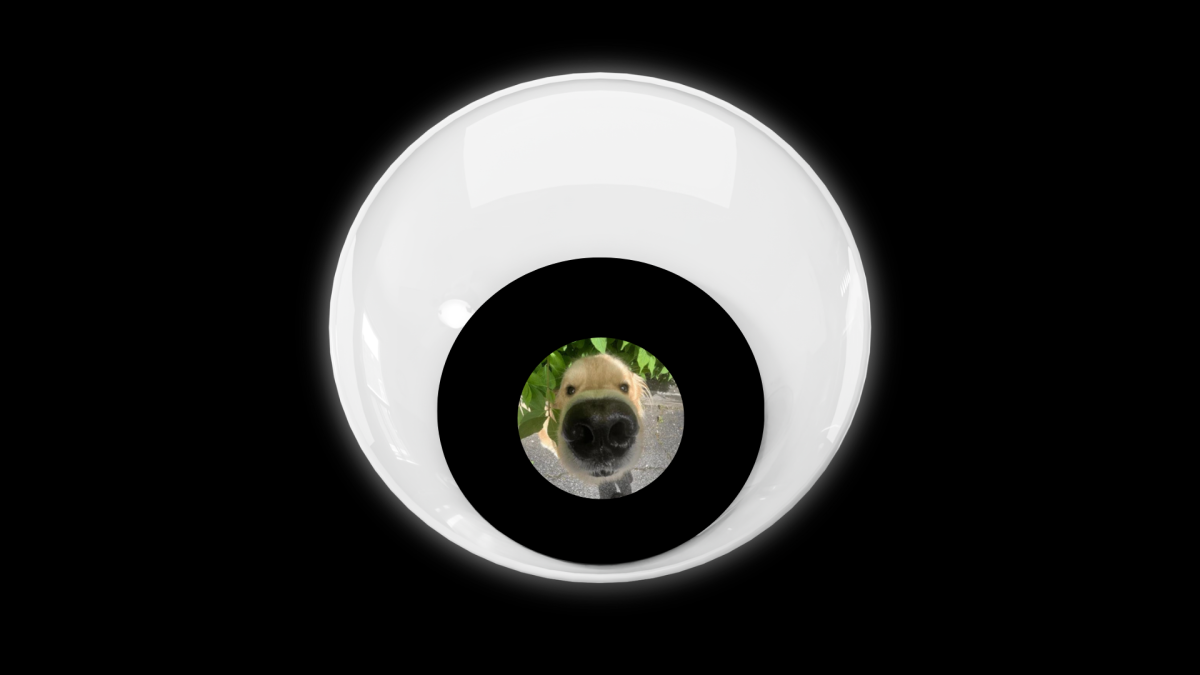
During the Super Bowl LX, Ring, acquired by Amazon for roughly $1 billion in 2018, ran a commercial called “Search Party.” The premise: Ten million pets go missing in America every year, and the way we find them hasn’t changed — until now. A network of AI-powered cameras, once activated by a lost dog report, would begin scanning every participating yard simultaneously. A bird’s-eye view showed all the cameras switching on at once, a grid of vigilant eyes blinking in unison.
The dog was found, but the cameras kept watching.
Ring has faced backlash over a planned partnership with Flock Safety, a company that operates automated license plate reader networks used by thousands of police departments. The integration would have linked two surveillance systems — doorbells and license plate databases — effectively connecting what happens on your porch to what passes on your street. Ring canceled the deal within a week of the commercial’s initial airing, but that short advertisement revealed something that backlash could not bury.
It showed us, for 30 seconds, what we have built.
By 2024, approximately 45% of American households used or had a video doorbell. Ring had long partnered with more than 2,500 law enforcement agencies, historically allowing police to request footage via its “Request for Assistance” portal. That portal was officially retired in 2024. In 2025, Ring introduced “Community Requests,” an opt-in feature in their Neighbors app that lets local police post video requests and users choose whether to share clips.
Ring has not publicly disclosed how many users have complied with these requests — a nondisclosure worth sitting with. If the compliance rate was high, it suggests a privately built surveillance network became deeply integrated into everyday policing with limited public debate. If it was low, it raises another question: What purpose did the partnerships ultimately serve?
Ring was not originally intended for surveillance. It was invented because its founder, Jamie Siminoff, missed a package delivery. The origin story is sympathetic. Package theft and burglary are real, and the camera on the door solves a genuine problem. But somewhere between “I missed my package” and “every camera in the neighborhood switches on simultaneously,” something happened that deserves examination. Ring does not merely sell cameras, but a new definition of good citizenship. Ambient monitoring is what responsible neighbors do, and that person approaching your porch requires documentation. This proposition is never stated because it doesn’t need to be. It lives in the notification buzzing in your pocket, and in the Neighbors app, where the footage accumulates.
English philosopher Jeremy Bentham’s panopticon worked because inmates could never be sure no one was watching. In Bentham’s original design — an 18th-century prison concept never fully built but endlessly influential in theory — all cells faced a central watchtower. Guards could observe any inmate at any moment, but crucially, inmates couldn’t tell whether the tower was occupied. The mechanism of control was not surveillance itself but its permanent possibility. You behaved as if watched, because you could never confirm you weren’t.
What Ring has built is structurally different, and in some ways, stranger. It is a privatized, opt-in, corporate-intermediated surveillance network. The company sits at the center of a grid of privately owned cameras, mediating access for law enforcement, retaining footage under terms most users have not read, and making architectural decisions about retention, sharing, and future capabilities that no individual subscriber controls.
“Search Party” understood something important: Fear is most profitable when it’s made communal. The commercial transformed Ring’s core anxiety — someone is at the door, but who, and why — into a collective project for care. Find the dog. Be the neighborhood hero. That reframe does not change what the infrastructure is. Under Amazon’s current terms, Ring is prohibited from proactively sharing footage with law enforcement without a legal demand, aside from limited emergency circumstances defined by the company. But those terms are set by Amazon and revisable by Amazon. The reframe changes only how it feels to participate.
The Markup’s analysis of Ring’s Neighbors app, drawing on 870,000 posts, found that “suspicious person” reports are disproportionately generated in whiter, wealthier areas, and the people flagged are disproportionately not white. Alerts flagging “unknown male, walking slowly” were not describing crime; they were describing movement — the discomfort of watching someone occupy a space where, in someone’s privately held calculus, they did not belong. The camera doesn’t produce that calculus, but it gives something analog suspicion never had: an archive. Suspicion that once evaporated now accumulates.
The Super Bowl commercial ended with the dog safe at home. It ended before the question anyone paying attention was already asking: If the AI can identify a dog by its photo, what does it do with a face? Ring pulled the Flock Safety partnership, but the cameras stayed.
The old porch was always imperfect — surveilled, exclusionary, stratified. The question is not whether we have traded community for surveillance. We had both before, tangled together, as we do now. The question is who controls the archive, who can query it, and what it will eventually be asked to prove.