


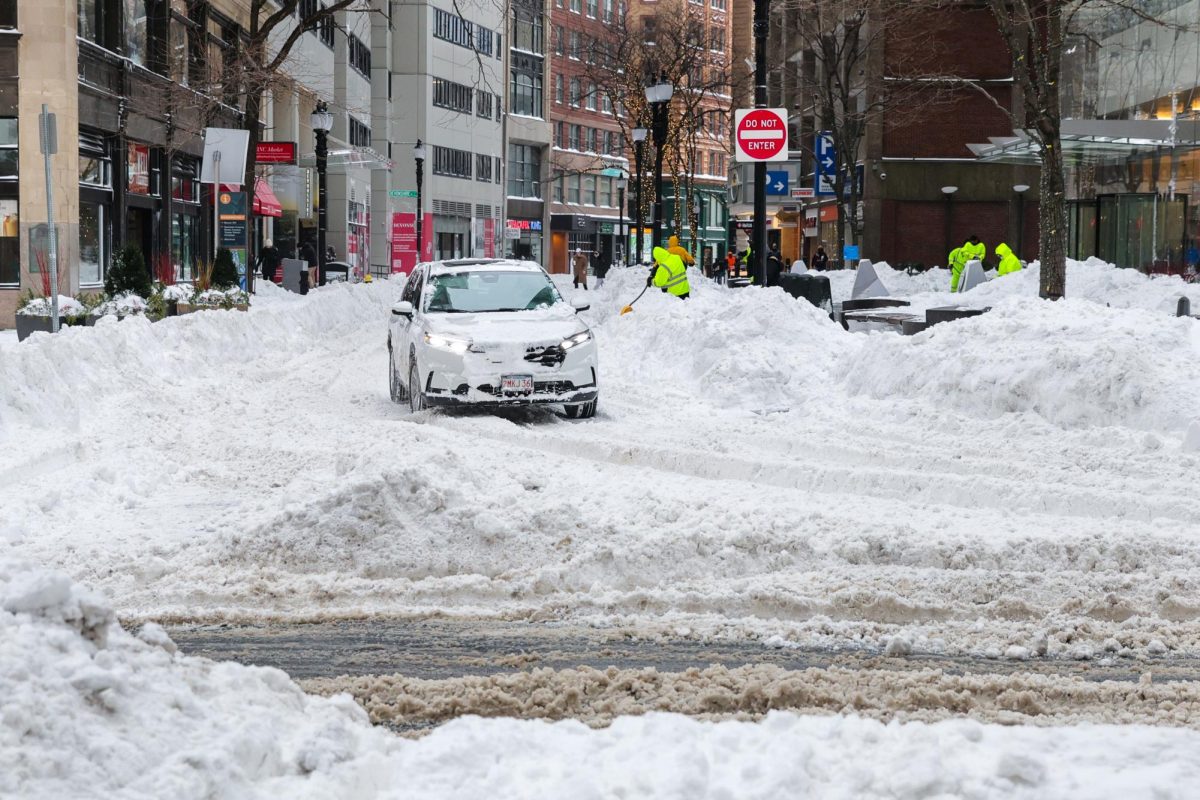
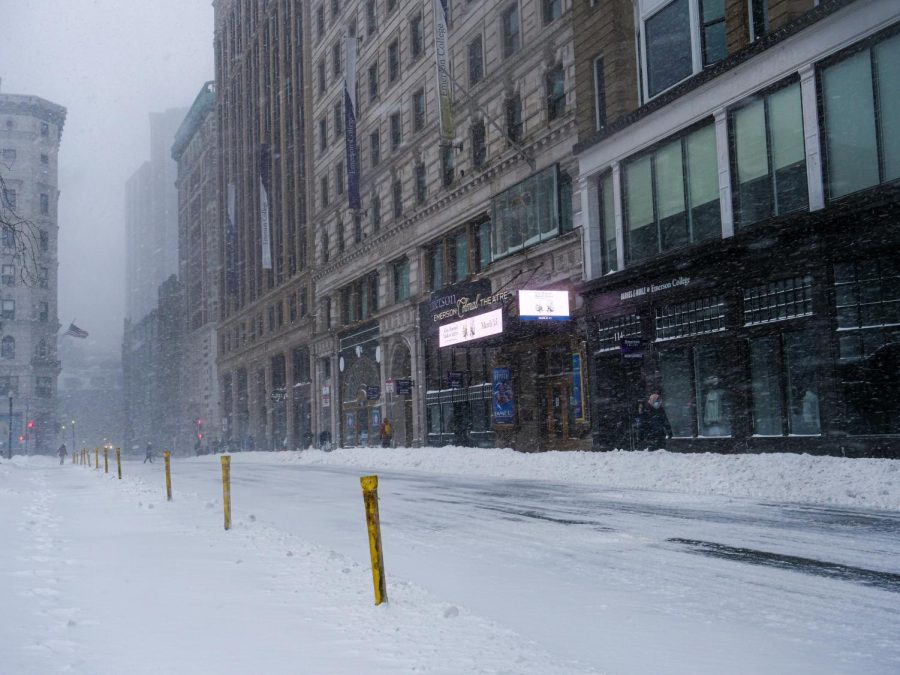
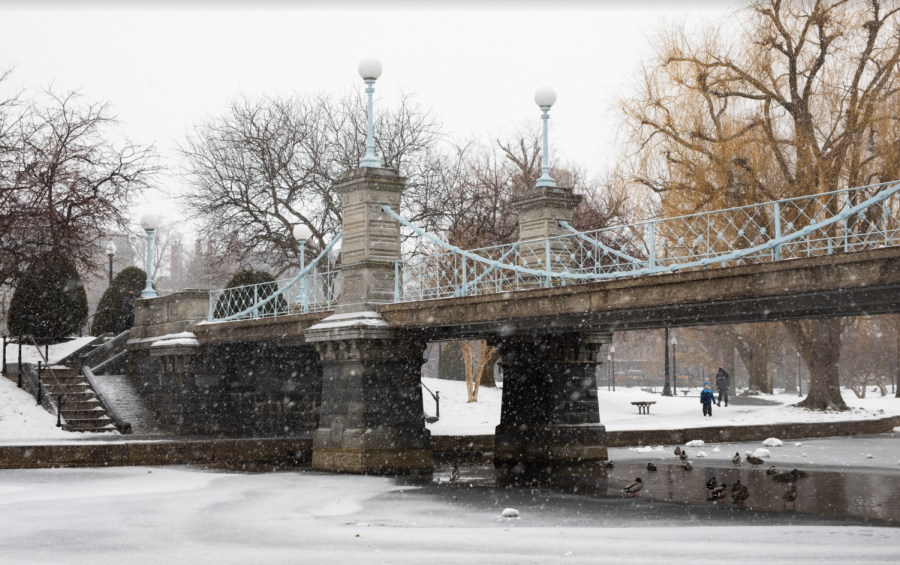
A historic snowstorm in late January blanketed Boston’s streets and sidewalks. Weeks later, the winter wonderland has turned into persistent walls of slush that refuse to disappear, despite the city’s cleanup efforts.
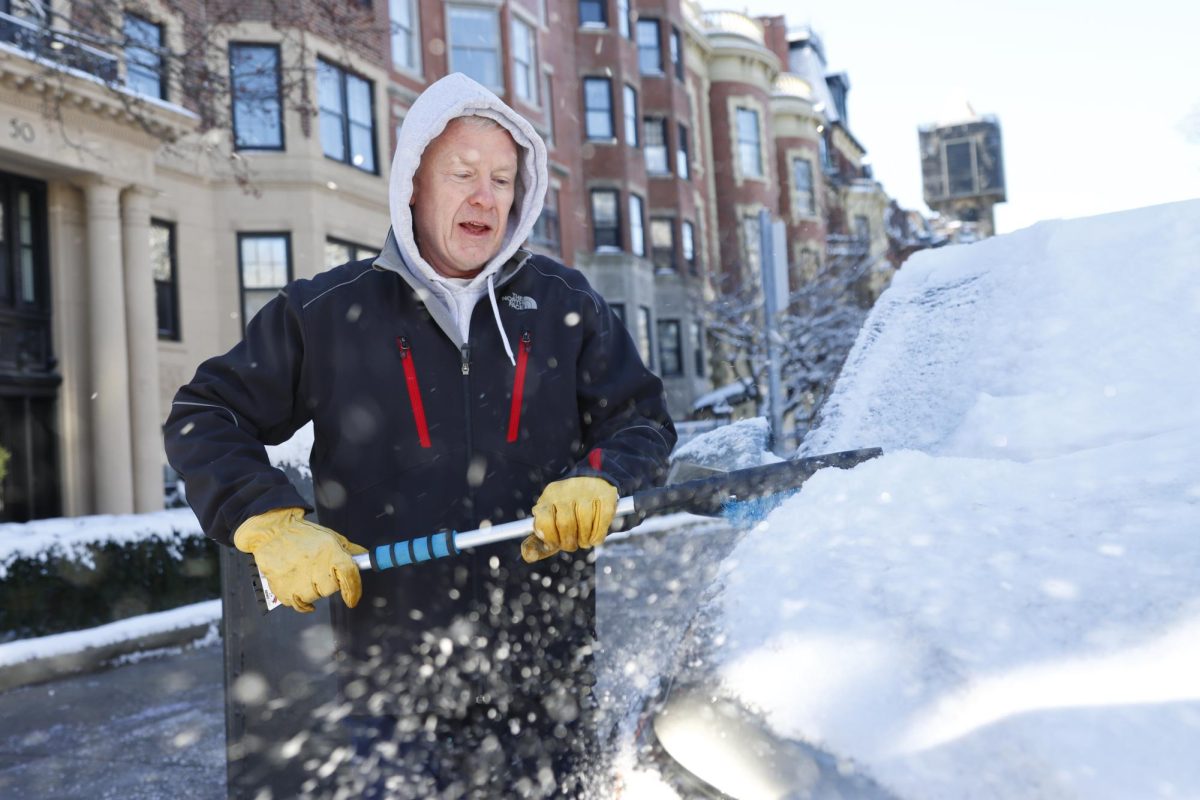
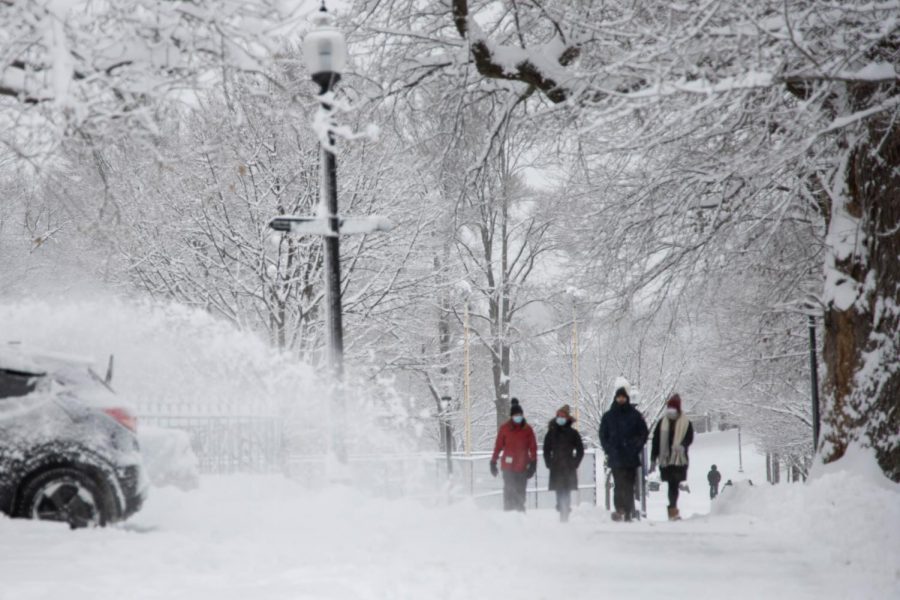
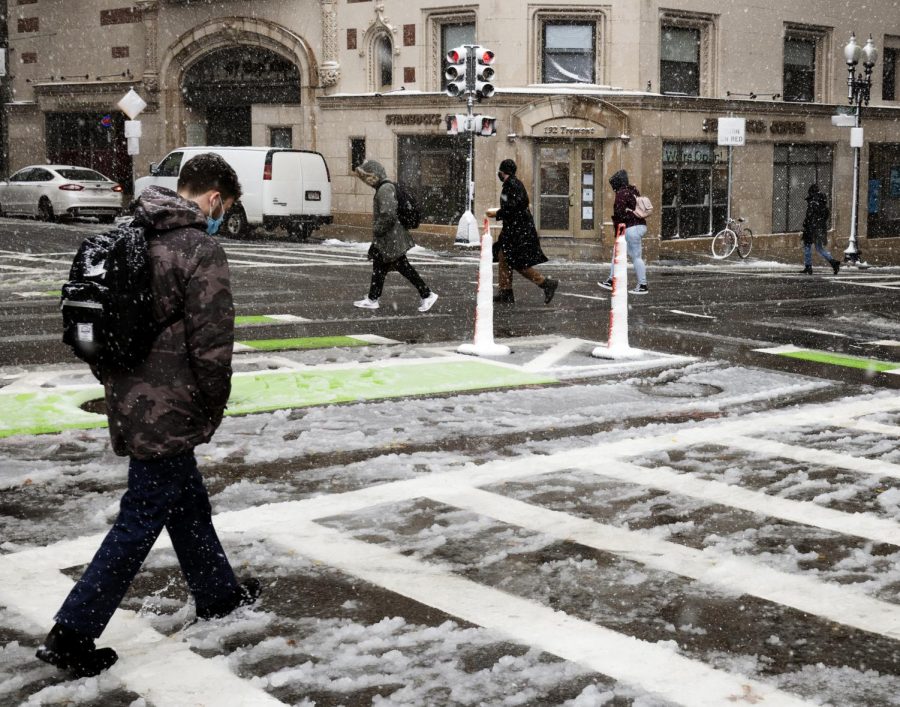
Emerson students and Bostonians rushing to work now face what they describe as an icy obstacle course, traversing through, around, and sometimes over leftover snow piles.
Alex Bisiewicz Sullivan, a freshman performing arts major, said she does not think enough efforts have been made to remove the snow.
“When [the city] plows it, they’re just pushing it against the side, so it’s all still on the road,” she said.
Nick Gove, interim Chief of Streets for the city, said there is an in depth process for cleanup operations of the past snowfall.
“The city of Boston continues comprehensive cleanup operations following the recent 23-inch snowfall event,” he said in a press statement.
At the peak of the storm, 900 pieces of equipment were deployed by the Public Works Department. According to Grove, a specialized fleet of more than 30 skid steers, used for hauling and moving snow off to the sides, were deployed. Trackless units, vehicles used to sweep the snow from sidewalks, were deployed as well.
During the storm, Public Works personnel and city contractors cleared almost 89,000 cubic yards of snow and transported it to the 11 various snow farms throughout the city. Snow farms are designated sites where the city stores the snow it removes from streets, sidewalks, and public property after heavy storms. Now, large mountains of snow can be seen across previously empty lots around the city.
In previous years, such as the record snowstorm in 2015, the city received 110.6 inches of snow. This caused one of the city’s snow farms, located in Seaport, to reach 75 feet high, according to weather reports. The pile didn’t fully melt until July of that year.
There is another method to remove snow that doesn’t involve moving the snow around. At Boston Logan International Airport, once the snow is plowed, airport personnel load it into snow melters.
According to Bell Power Systems, an authorized distributor of John Deere diesel engines, Logan Airport uses 18 industrial snow melters and 92 other pieces of snow removal equipment when managing snowfall. These melters use warm fluids, flame burners, or hot water to melt the snow.
“After the melters turn [the snow] to water, then it goes into the [storm] drains,” said Ramon Alvarez, a retired snowplow operator at Logan.
Fionntán Mac Seáin, a freshman theatre education and performance major, is used to frequent snowplows coming morning and night, having grown up in a rural part of New England. He said he has been impressed by those in Boston.
“They’re much more efficient [in Boston] than what I’m used to,” he said.
Still, Seáin expressed displeasure with the leftover snow.
“They are annoying to navigate, especially at night … When the ground is slick, it limits where you can walk,” he said.“If there could be a way [the city] could figure out how to clear the crosswalks more, that would be nice.”
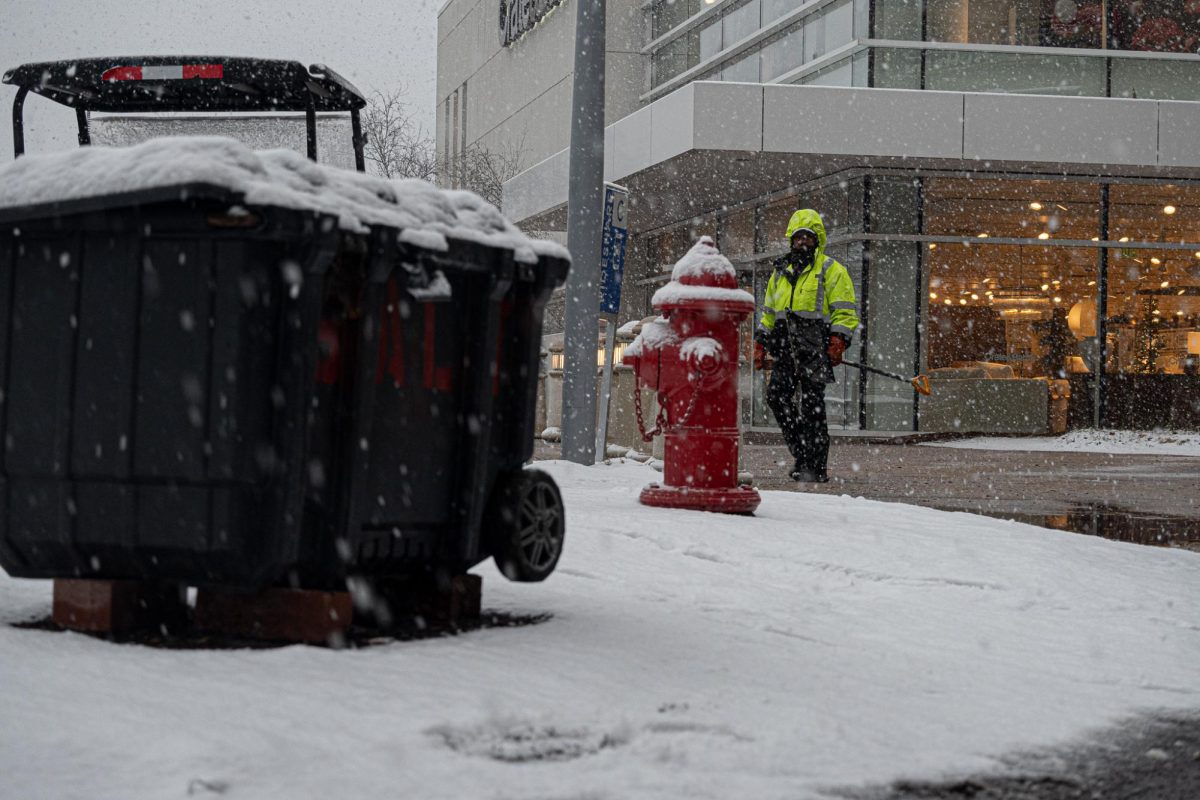
Snow clearance is in part the responsibility of private property owners, including institutions like Emerson College. Craig Strachan, the director of facilities management at Emerson, said in an email statement to The Beacon that the college is responsible for clearing snow and ice from in front of and behind any buildings owned by Emerson. This also includes adjacent sidewalks, building entrances, and access points.
Last month’s storm brought snow levels that the city hadn’t seen since January 2022. The storm ranked eighth in Boston’s top ten biggest snowstorms, and the removal process called for a large contribution from Public Works, airport personnel, and numerous workers within the city.
Gove expressed his appreciation for the Bostonians who worked hard to clear the historic amounts of snow.
“I want to thank our dedicated staff and contractors for their tireless commitment,” he said. “Our teams have maintained 24/7 operations to restore neighborhood access and ensure the city remains mobile. This is a massive undertaking that requires total coordination.”


This was awesome!! I have always wanted to know where the snow goes.