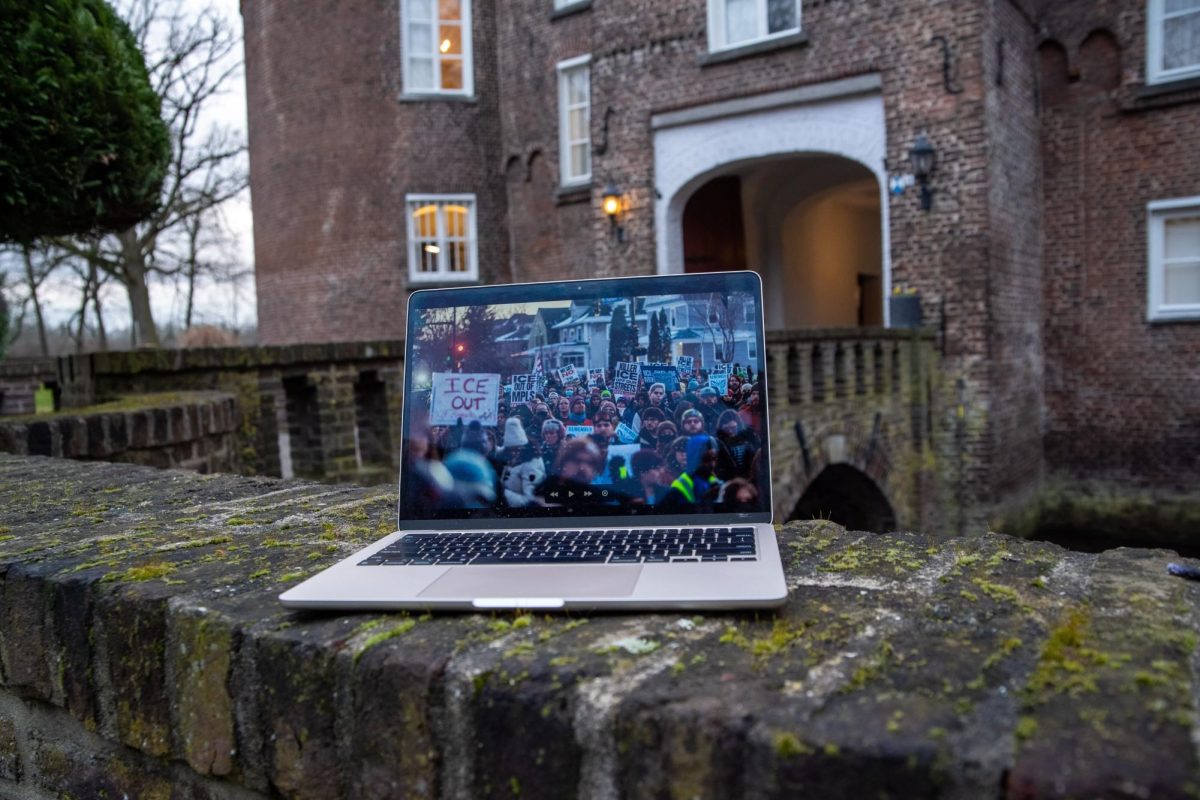



Journalism Professor Cheryl Charles has lived in East Boston for many years, adoring the neighborhood’s diversity, energy, and strong community ties.
But in the last year, the once vibrant energy has slowly turned to a cold eeriness. As ICE ramped up its immigration crackdown, Charles said fear has been sown into East Boston’s residents, who now avoid leaving their homes. As scenes of violence have emerged across the country, immigrants and non-immigrants alike worry there are not enough protocols in place to protect them from dangerous interactions with ICE.
“I actually did have a friend who was stopped. He is an American citizen; he grew up here,” Charles said. “His husband was telling me about him being stopped outside the local CVS by ICE, and the [agent] told him, ‘By your skin color, I can stop you.’”
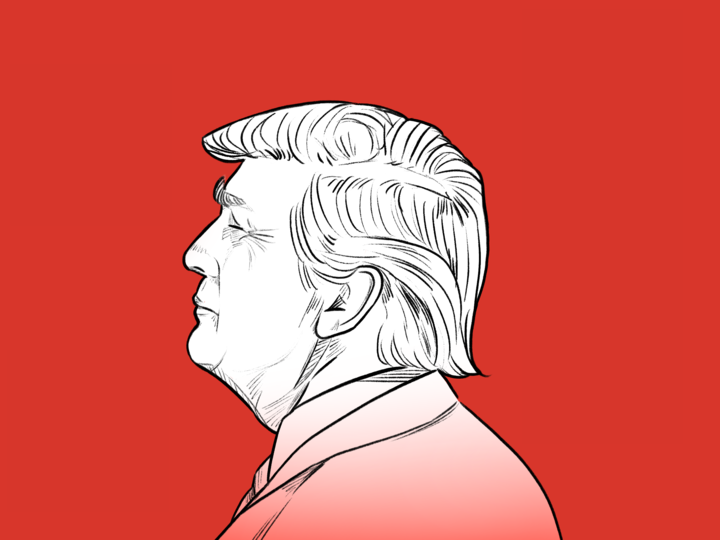
A Spanish-speaking woman pretended to be his aunt, taking the man away from the officers and bringing him to safety, Charles said. Countless situations like this have occurred sincePresident Donald Trump ordered ICE to carry out mass deportations. Trump has also vowed to undertake the “largest deportation” operation in American history.
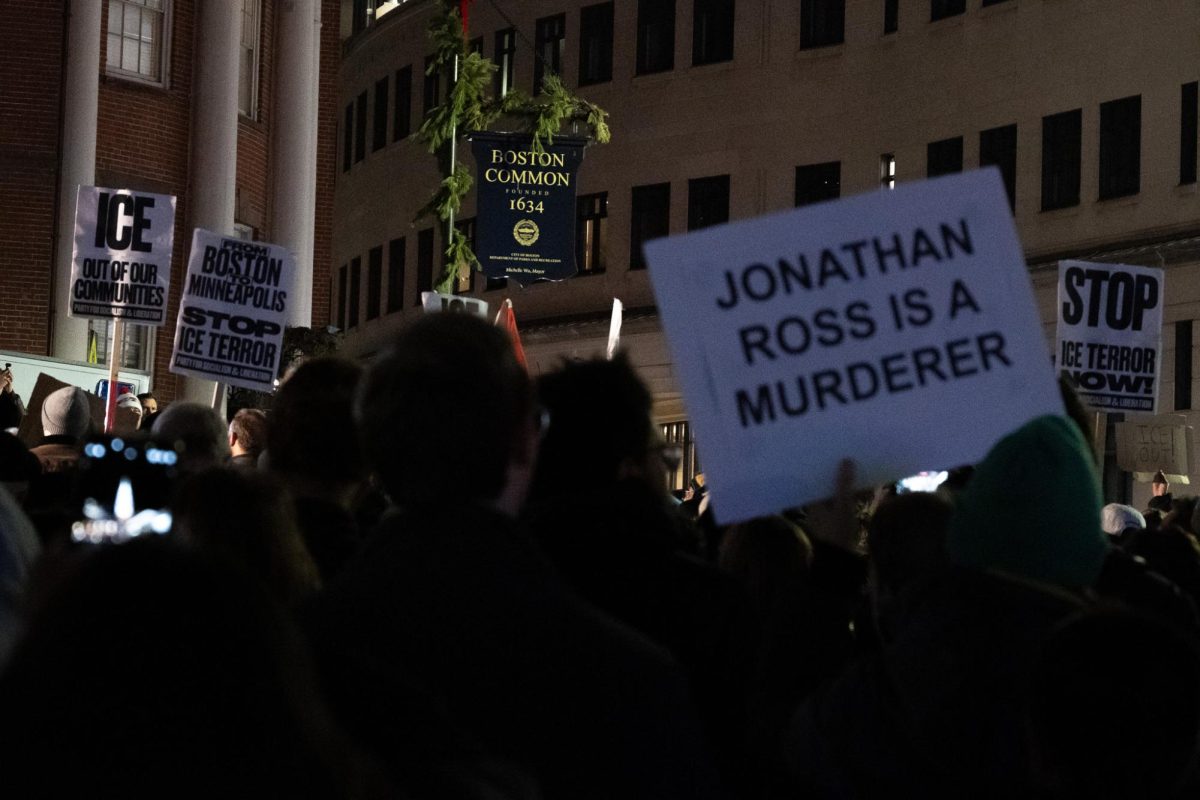
ICE’s tactics have come under scrutiny after videos of agents being verbally and physically abusive towards both immigrants and U.S. citizens surfaced. In Minneapolis, Renee Good and Alex Pretti were killed by federal agents while protesting ICE’s presence in their neighborhoods. The Trump administration has put out statements defending the killings, saying Good and Pretti were interfering with ICE’s operations.
In 2025, 230,000 people were arrested and deported by ICE. In 2024, that number was as low as 50,000.
White House officials have repeatedly said that people who are deported are largely criminals who pose a threat to the nation. While some detained individuals do have criminal charges or expired visas, there have been numerous instances where people with legal visas, including more than 175 U.S. citizens, have been detained by ICE.
Last September, ICE launched Operation Patriot 2.0, specifically targeting immigrants in Massachusetts. The agency said it deported more than 1,400 people, around 600 of whom had criminal charges. The rest were charged with the civil crime of lacking proper immigration documents.
“Operation Patriot 2.0 should send a clear and unmistakable message: If you are in this country illegally, hiding out and committing crimes, the FBI and our partners will find you, we will arrest you, and we will remove you from our communities,” said Ted E. Docks, the special agent in charge of the FBI’s Boston Division, who applauded ICE in their report of the operation.
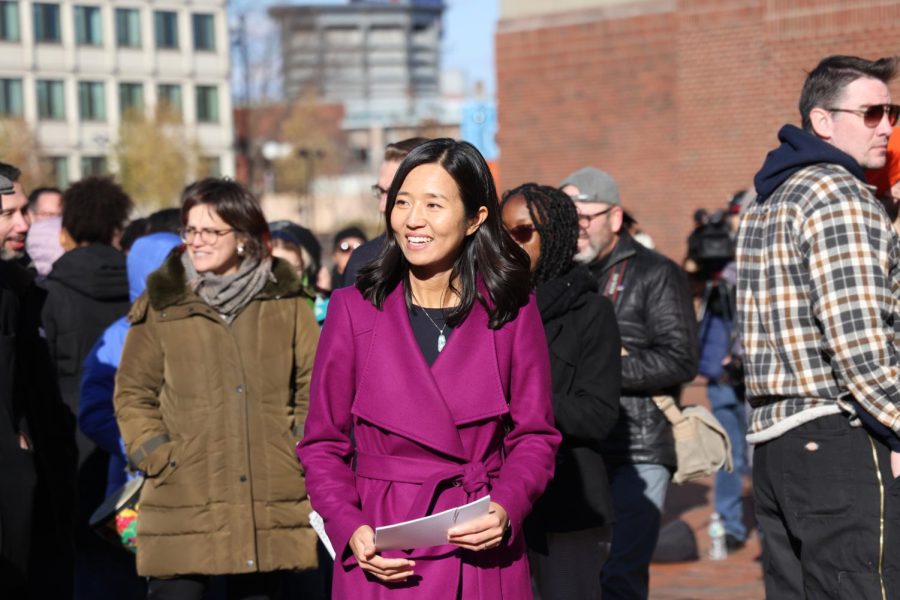
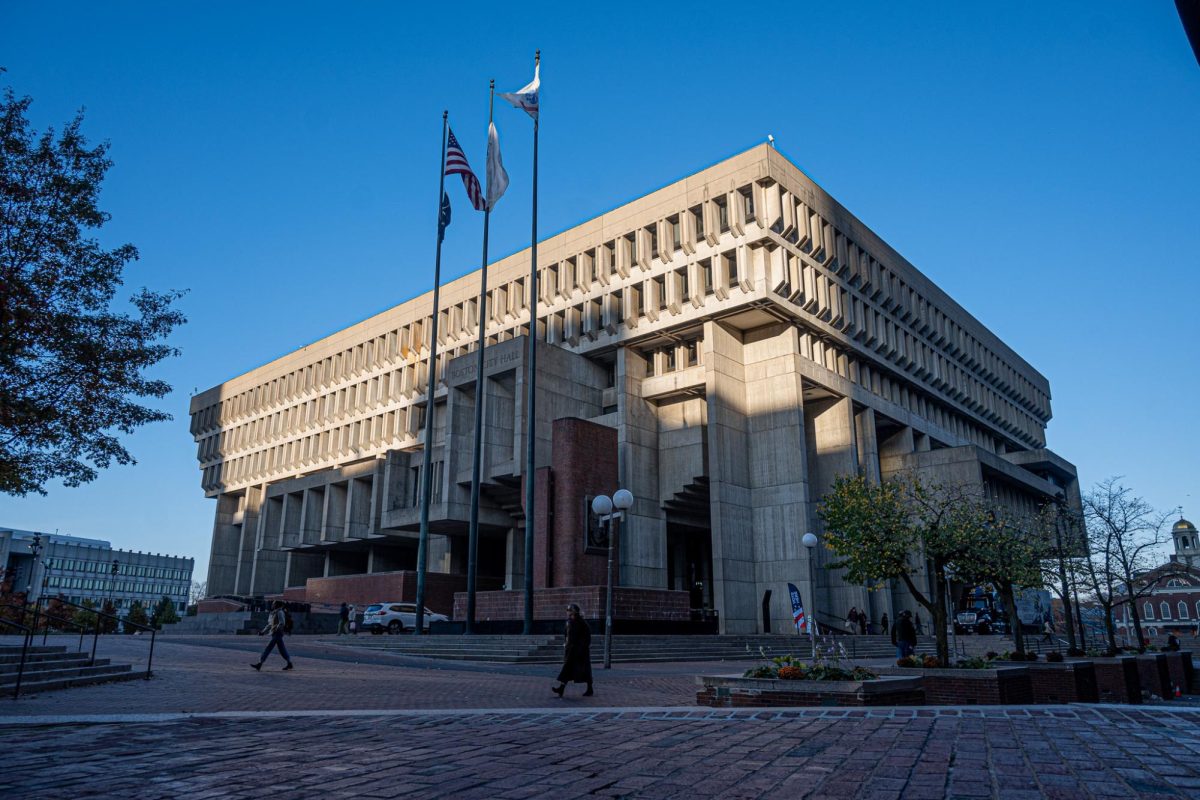
In Boston, nine Allston car wash workers were arrested in early November. Some of the workers had valid work permits, but were unable to present their documentation because of ICE’s hasty arrest. The raid was the largest ICE arrest on record in Boston and was denounced by residents and local government officials. Mayor Michelle Wu and Boston City Council have expressed strong concern for immigrants within their community, condemned ICE, and upheld laws and programs that help migrants.
Boston has been considered a “sanctuary city” since the Trust Act was passed in 2014. It prohibits the two agencies from working together to deport residents whose only crime is not having proper documentation. The act allows the Boston Police Department (BPD) to work with ICE on issues of child trafficking, drug trafficking, and other significant criminal offenses, and was reaffirmed in December 2024 by the city council.
Along with protections against ICE and the BPD, immigrants in the city have access to programs that provide job opportunities, free legal advice, and cultural activities. These services are provided by the Mayor’s Office for Immigrant Advancement (MOIA), which holds free immigration consultations every other week, as well as informational meetings about the Pathway for Immigrant Workers (PIW) nonprofit initiative.
PIW allows immigrants to locate employers who can “sponsor them” to gain work permits. Jobs in the program include those at Massachusetts General Hospital, local food service, construction, and finance institutions.
“Our purpose is to assist low-income workers in obtaining lawful permanent residence and related legal stability, and to support employers in recruiting and retaining a stable, lawfully authorized workforce that sustains economic vitality,” reads a statement on PIW’s website.
Still, these programs face federal pushback. Last month, Trump announced he would investigate Boston on account of discrimination against white people. A few months prior, the Department of Justice sued Boston over the city’s immigration policies, targeting the Trust Act as “obstructionist.”
In a city with around 182,000 immigrants and roughly 82,000 international students, Boston City Council continues to believe that protecting immigrants makes the community stronger.
“Our message is clear: You are not alone, and you belong here. We understand the anxiety that national rhetoric can create, but Boston remains steadfast in its values,” Boston City Councilor-At-Large Henry Santana said in a statement to The Beacon.
He said his office will continue to work with organizations that support immigrants despite “pressure from Washington.”
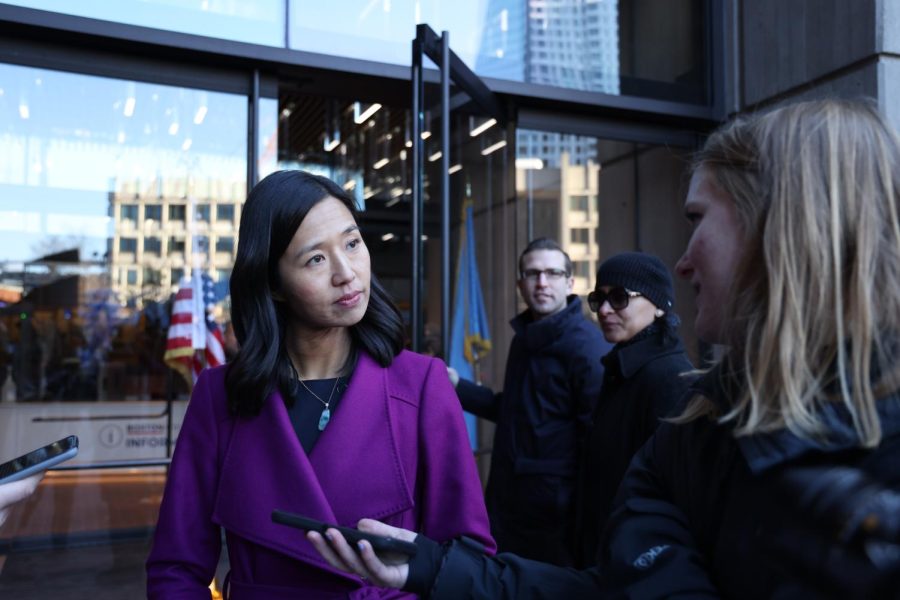
Mayor Wu expressed similar sentiments shortly after her inauguration on Jan. 5 , telling WBUR Boston will do everything in its power to protect immigrants against ICE, but the city council fears the Trump administration is planning another raid.
“Unfortunately, now, on top of the regular rhythm of what we have to discuss, we now have to think about planning for the unthinkable scenarios the federal government might bring,” Wu said in the WBUR segment on January 12.
Mayor Wu’s warning came five days after the delivery of 24 unmarked SUVs at the Burlington, Mass. ICE office, which was caught on camera by anti-ICE activists protesting outside of the facility. Although there has been no confirmation the federal government is planning to carry out a raid in Boston, residents and politicians alike are preparing for a stronger ICE presence throughout the state. An international Emerson student, who wishes to remain anonymous due to safety reasons, said they are concerned about what could come next.
“We’re scared, we don’t know what will happen in the future. We pay to be here, but [the federal government doesn’t] want us.”