




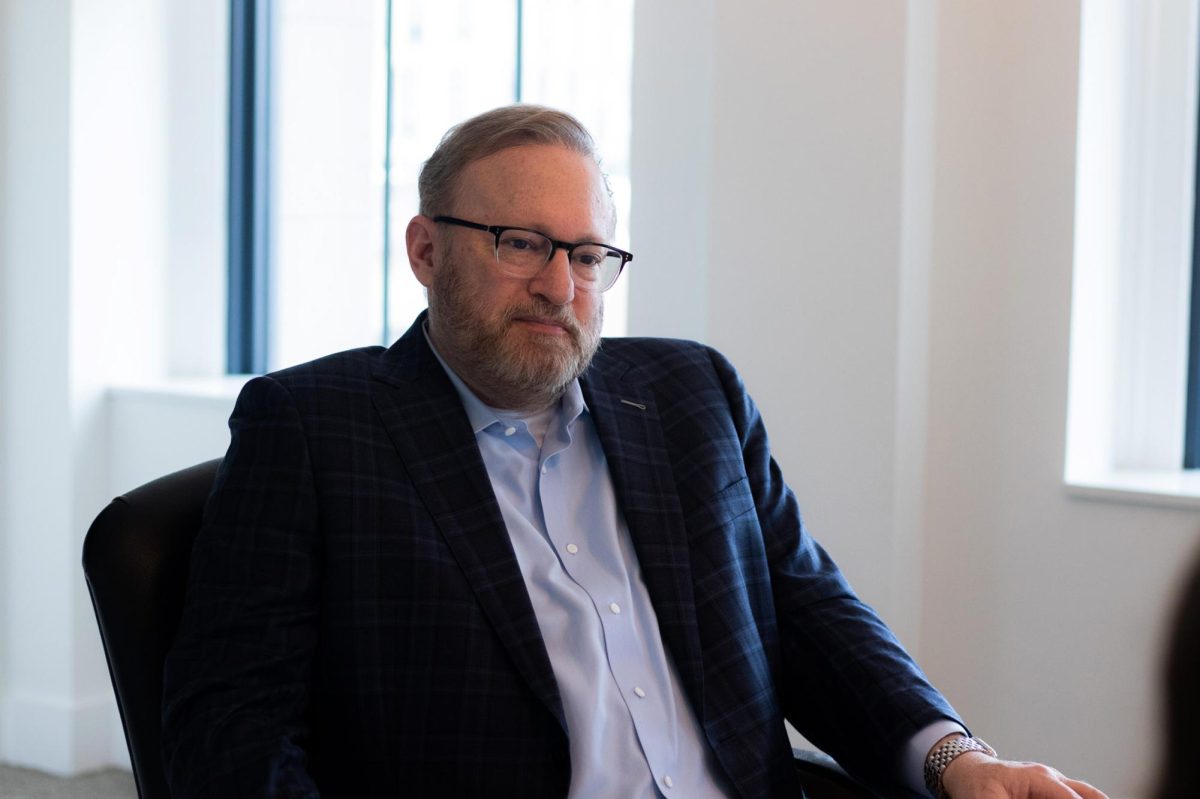
When P. Carl assumed the position of faculty representative to Emerson’s Board of Trustees this semester, he did so at the request of his fellow professors. Having been at the college for over a decade as a senior distinguished artist in residence in the performing arts department, Carl made a name for himself among colleagues and students for being a beloved professor, a staunch advocate for human rights and social justice, and an avid birdwatcher.
He came into the position with hopes of building a new bridge between the faculty and Emerson’s administration. For him, this was important in a time of such tension, both at the college and in higher education across the country. What he experienced at board meetings contradicted this spirit of bridge-building, he said.
Carl held the position for two semesters during the 2025-2026 academic year. At the beginning of March he resigned from the position, ending his service early, citing feelings of disrespect and disinterest from board members. He attended two of three board meetings throughout his liaison stint.

“They’re not only not interested, they really don’t care,” Carl said. “I think that tells you everything.”
To Carl, this treatment was indicative of a greater problem within the Emerson administration as a whole. The administration is out of touch, he said, with both Emerson and the world outside of it.
Professors who spoke with The Beacon said a lack of transparency and administrative policy changes have widened a rift and a culture of distrust between the community and its administration. This, they said, has made it difficult to come to the table in good faith and work together to move forward as an institution.
Carl and other faculty members pointed to Emerson’s adoption of an institutional neutrality policy in 2024, which codifies that the school does not take official positions on political or geopolitical issues. Some have said that such policies silence the institution on important issues, which feels like a lack of support for community members during political conflicts.
“I think the board has — very neatly, with [Bernhardt] — taken on this neutrality position … Well, human rights are not neutral, and people’s lives are not neutral,” said Carl. “I just think they have no connection to the world we’re actually living in.”
For some faculty, the cultural shift has pushed them to leave the college altogether.
Heather May, a senior lecturer in the college’s communication department who has taught at the school for over two decades, said these changes have caused her to leave Emerson. May is one of nearly two dozen professors who agreed to take the college’s voluntary separation incentive program, a program designed to encourage full-time faculty to voluntarily leave the college, including robust healthcare, retirement, and severance package when accepted.
Despite her love for students and teaching, May will be leaving at the end of the semester, and said she made the decision due to the lack of transparency from the Emerson administration.
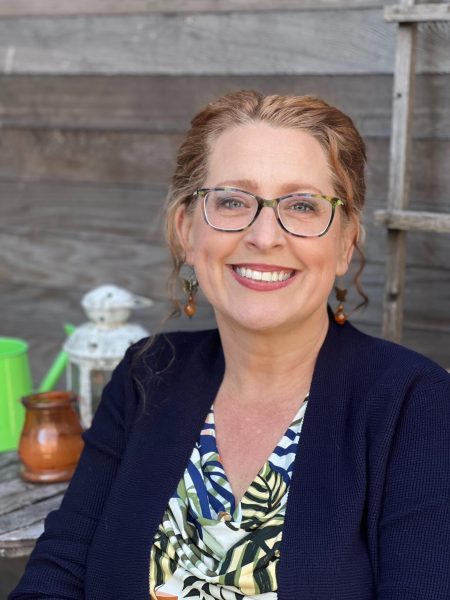
“My decision to leave now is because it very much feels like working with people — meaning the administration — who … refuse to be transparent with faculty, who don’t value what faculty do, and in fact have taken specific opportunities to devalue what faculty do,” she said. “The feelings of trust and openness and being able to meet with people, it’s just gone. It’s just not there at all, and that just wasn’t an environment I wanted to work in anymore.”
May said Emerson’s current culture is unrecognizable, and there have traditionally been greater expectations of collaboration and interaction for both students and faculty at Emerson.
“The Emerson that I started teaching at 25 years ago was not just full of students who were quirky and intelligent and creative and wanted to set the world on fire … That energy was focused around relationships [too],” May said.
In a statement to The Beacon, a college spokesperson said that while some faculty have expressed discontent, the overall faculty is “extremely positive,” and there is “a shared focus on the future of the college and a shared commitment to supporting our students.”
“The Emerson administration and Board of Trustees deeply respect, value, and appreciate the work of our outstanding faculty,” the statement read. “It is common at most colleges for some individual faculty members to have personal qualms about the administration, and that is also true at Emerson.”
Carl said he was allotted 15 minutes for the presentation of reports he authored at board meetings. The goal was to inform them of the faculty’s needs, and share recommendations about college operations with the board. The topics of these reports are left to the discretion of the representative.
The first report, presented in a meeting on Sept. 19, included information about a survey Carl distributed to faculty asking one open-ended question: “What would you like the Board of Trustees to know about your experience as a faculty member at Emerson College?”
A total of 59 Emerson faculty members responded. The report, which was reviewed by The Beacon, stated that seven respondents were “unreservedly positive” and supportive of current leadership at Emerson. The other 52 responses offered critical feedback ranging across multiple areas of concern.
These concerns centered around several themes: a desire for greater engagement with the Board of Trustees, including: “more porous” communication, shared governance, and opportunities for dialogue; concerns about President Jay Bernhardt’s leadership, which was described as an “autocratic turn” in the college and accusations of the president “isolating himself”; anxiety over a “current financial shortfall” and declining enrollment; perceived contradictions in Emerson’s identity, particularly the gap between its creative, outward-facing brand, and an internal culture of “tightly managing community expression.”
Carl said the presentation of the survey results and subsequent questions from the board were very positive, and they gave him hope for his role moving into the year.
“I think the first meeting, I was treated as you would treat someone who delivered that information,” Carl said.
In the lead-up to the second meeting, Carl said that his report came under scrutiny after two board members allegedly characterized his earlier work as biased. This prompted a series of email correspondence, which was also reviewed by The Beacon, wherein Bernhardt asked questions about the integrity of the survey’s methodology. Concerns focused on the size and composition of the distribution list, the low response rate, and whether the form was secure and limited to faculty.
In his last board meeting on March 11, Carl said his experience contrasted sharply with his first appearance. When he attempted to raise faculty concerns — particularly around involvement in decisions about curriculum, artificial intelligence, and enrollment — he said he was met with dismissal, and given only a few seconds for follow-up questions before the board moved on without discussion.
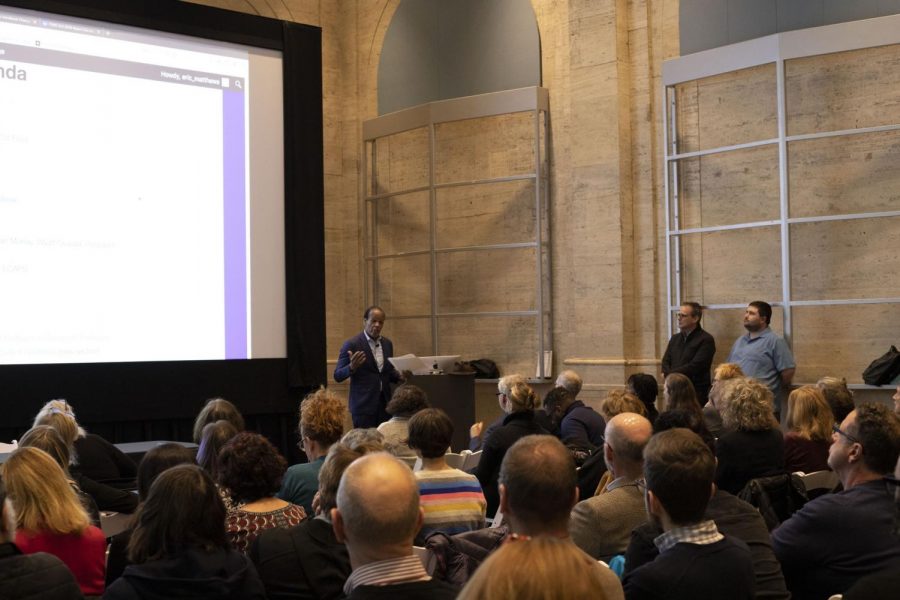
Carl later informed faculty members of what happened in the meeting at an assembly, which led to a strong reaction from those who felt his treatment was unfair and a reflection of the administration’s disinterest.
“That was so upsetting to the faculty because it’s just disbelief … that the board would have no interest in even considering a conversation with them, or what that would look like,” he said.
A transgender man living in the U.S. in an increasingly hostile environment for LGBTQ+ people, Carl said he has felt erased numerous times in his life. He said the board’s dismissal of his reports reminded him of that feeling.
“I know what it feels like to be erased in silence, and I knew exactly what happened,” Carl said. “In erasing me, they were erasing the faculty, because I’m a [representative] of the faculty.”
In April’s faculty assembly meeting on Tuesday, Carl received a faculty service award for bringing integrity and transparency to his work this semester as the representative to the trustees and efforts to engage the board with faculty.
Wendy Walters, a professor and associate chair of the Writing, literature and publishing department, has worked at Emerson for 27 years. She said the changes at Emerson are indicative of a corporatization of higher education happening across the U.S. She added that there has been a continued shift toward thinking about education as a product rather than an experience, driven by increasingly high tuition.
The tension, she said, is that the impact of education can at times be unquantifiable. To measure what students gain from is not an easy feat.
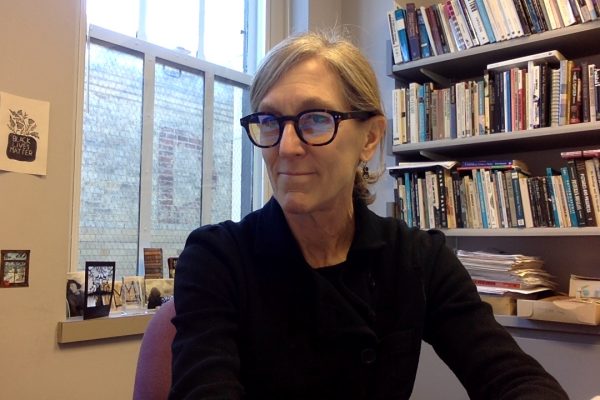
“These are the things that education, in its processual, messy, ongoing state, meets up against a culture that wants to quantify everything,” Walters said. “I think for many faculty, the acceleration of that model of quantifying what we do, turning what we do into a product, calling it a product … that’s a really big shift in how we think about our relationships.”
This, Walters said, is at the root of the cultural differences between faculty and the board, with the two groups representing different perspectives on the purpose of higher education.
“There are all these factors that have made it into a commodity, made education itself into a commodity,” said Walters. “I think that when you have board members who come from the business world, particularly, and are trying to apply the logic of capital to the process of education, then you get some disconnect.”
Nigel Gibson, a professor in the Marlboro Institute for Liberal Arts and Interdisciplinary Studies, said collaboration and communication at Emerson have changed in his more than 20 years at the college. He said that the biggest change has been a lack of access to Emerson administration.
“The concrete difference was [under previous administrations] there was more communication,” Gibson said. “It wasn’t as though the structure wasn’t hierarchical. Of course, it was …. It is still now, but the thing is, there was communication.”
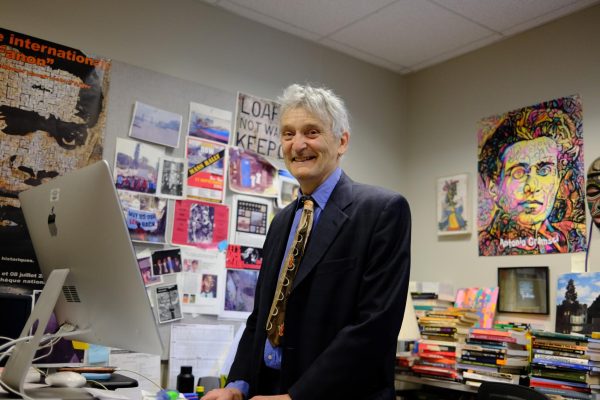
Gibson explained that with past administrations – while he would not describe them as progressive – there was more connection among stakeholders at the college.
“You could seek [former president Lee Pelton] out if you wanted to,” Gibson explained. “So that’s the real difference, because this president is different in terms of his management style, he’s not someone that really makes himself available to staff and faculty.”
Vice presidents under past administrations would also be more transparent and discuss what was happening at the college, changes in the student body, and enrollment updates, said Gibson.
“We don’t get that anymore. It’s all, ‘Oh, that’s enrollment, that goes over there. That’s in their lane,’” Gibson said. “So there’s really a kind of division which is much more profound than it was.”
According to the faculty The Beacon spoke with, this tension around transparency was intensified by the way the 2024 pro-Palestine encampment and the subsequent arrest of 118 protesters were handled.
Yasser Munif, an associate professor in the Marlboro Institute for Liberal Arts and Interdisciplinary Studies who has been teaching at Emerson for over a decade, described the encampment arrests as a turning point for the college.
“The encampment was a difficult moment for everyone, on different sides, wherever you stand, because I think it was a moment that questioned the purpose of education in a fundamental way,” said Munif. “It seemed that in the minds of some people, especially the administration, there is a strict separation between education [and] what’s happening behind the walls and the world outside.”
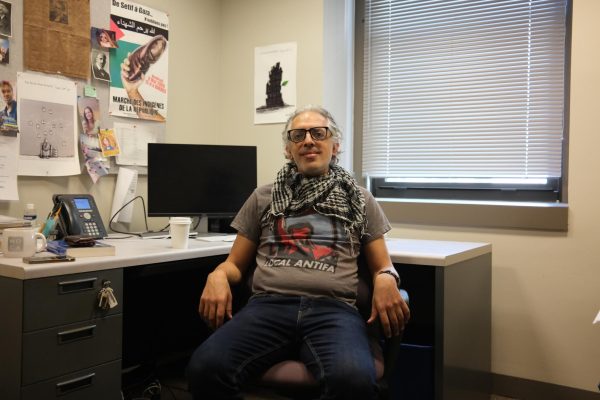
In order to create a safe environment for students, Munif said, colleges and universities have a duty to engage students in difficult conversations about what is happening outside of the college.
“If we want to educate responsible students, we have to break those rules, not build an ivory tower,” he said.
Georgia Winn, a senior political communication student at Emerson, has held positions this year as both the president of the Student Government Association and a student representative to the Board of Trustees. She said there has been a lack of clarity as to what happened at the arrests.
“I think it was kind of the hope that the less we talk about it, the less people [would] think about it,” Winn said. “I don’t think it’s something that was ever fully addressed. I don’t think the decision-making process was fully explained. And whether or not that would have brought comfort to the people who experienced it…it would have at least provided clarity.”
Without clarity, May said, the community has not been able to heal.
“The Emerson community at large needs to have reflection and healing, and then we need a reset,” May said. “I am not sure what that would look like with the current leadership. I don’t know if they are capable of repairing the damage that has been done at Emerson.”
Faculty and students have described a culture of fear on campus and a widespread feeling of being unable to speak their mind for fear of retaliation from both the Emerson administration and the federal administration. Munif said he has observed many fellow professors, both at Emerson and beyond, remaining silent in order to protect their jobs.
May said that this has “destroyed” morale among faculty members.
“We wake up every morning, and we’re like, ‘Well, what fresh hell greets us today?’” she said. In the past, she could have “gone to work and felt comfortable talking about [the political climate] to both colleagues and students.”
“Now I feel like I have to go to work and compartmentalize all of that and keep my mouth shut,” she said.
For Ken Grout, a senior executive-in-residence in communication studies and the next faculty assembly chair, gaining trust will be his primary focus.
“Establishing trust takes a significant amount of time. Breaking trust takes a moment, and it’s really hard to rebuild trust that has been damaged or perhaps shattered,” said Grout.
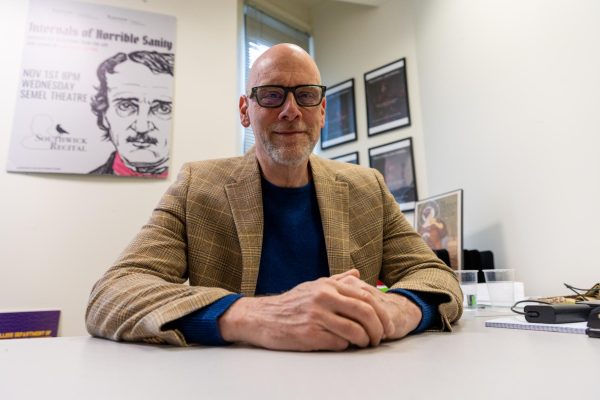
Grout said that building trust is difficult if the two parties are not coming together with open minds. To do this, Grout said he wants to focus on getting people in a room together.
“I’m a big believer in a good beverage, coffee, tea, or something a little harder … I think coming together and actually sitting at a table together where your feet can practically touch, I think … it facilitates vulnerability,” he said.
Grout said he hopes people can move away from an “us versus them” mindset and toward working together for the common goal of bettering Emerson.
“We’re all part of the same team,” he said. “I truly believe that.”





Professors Gibson and Munif were instrumental in the anti-Israel student protests that has so fractured the Emerson community and caused the distrust and division that they now lament. (See, e.g., https://berkeleybeacon.com/emerson-faculty-members-plan-to-host-teach-in-on-gaza-next-semester/; https://berkeleybeacon.com/encampment-in-2b-alleyway-enters-second-day/).
My g-d, just look at the photo of professor Munif in his office! The bigger question is why the Beacon continues to elevate these voices of division. Is it any wonder that students are fleeing liberal arts colleges like Emerson, to free themselves of illiberal anti-Western indoctrination.
“[C]olleges and universities have a duty to engage students in difficult conversations about what is happening outside of the college,” says Professor Munif while decked out in a keffiyeh and “ANTIFA” tshirt. And therein lies the problem. Professors like Munif are not “engag[ing] students in difficult conversations.” They are indoctrinating them into a specific radical ideology. If only they were willing to engage in some self-reflection, they would find the source of the fractured relationship is themselves.
As an alumni, past president of the Boston Alumni chapter, & spouse of an alumni (who was also a former employee—I thoroughly appreciate this article. Emerson quite literally changed my life, from my career to my spouse and the connections and lifelong friendships. And I think this sentence encapsulates my concerns about Emerson College right now: “…particularly the gap between its creative, outward-facing brand, and an internal culture of ‘tightly managing community expression.’” There’s “the bottom line” and there’s a community’s values. It concerns me as an alum to see an erosion of what I thought were Emerson’s values around creative expression.
Signed,
Concerned Alum