



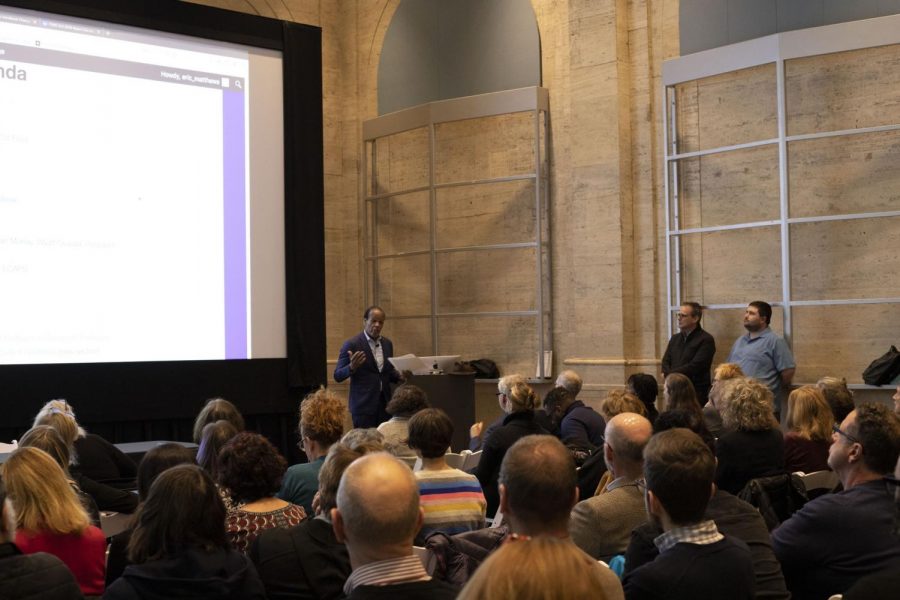
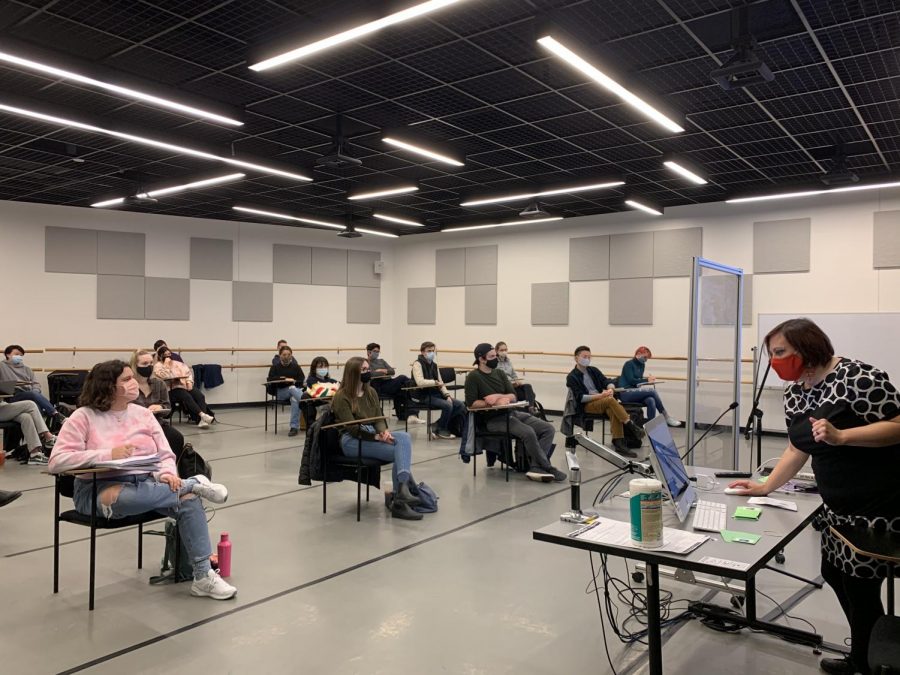
At the faculty assembly last Tuesday, multiple faculty members addressed the state of academic freedom at Emerson alongside a letter sent to President Jay Bernhardt and administrators criticizing the procedures for arrested students. Additionally, the meeting discussed the possibility of a new governance model.
Assembly members were sorted into breakout rooms for group discussion on academic freedom. They were prompted to reflect on issues of academic freedom in their work and how to preserve it at Emerson.
Some raised concerns that threats from the Trump administration to defund colleges and universities are threats against academic freedom.
Steve Himmer, a senior lecturer in the Writing, literature and publishing department, summarized the discussion from his group, in which they encouraged clearer communication and guidelines from administrators regarding when academic freedom is at risk in the classroom.
“[We want to know] when our students are at risk, and what guidance we can work with to know when we want to be more cautious or advise students to be more cautious … Not nationally, not overall, but specifically within our institution,” Himmer said in the meeting.
Some faculty members highlighted the importance of conversation on this topic not only to have a space to voice their concerns, but also to connect with other faculty who might be experiencing similar apprehensions.
“Staying silent is not the course of action, and we should join with other colleges who are pulling together to reject the current situation,” said Rosario Swanson, an associate professor within the WLP department, summarizing points made by others in her group’s discussion.
“I feel less alone now having that conversation with colleagues,” said Nancy Lyons, a senior executive-in-residence at the Marlboro Institute, who teaches courses on infectious diseases and public health. “I feel other folks are also teaching content that the federal government does not want us to teach, so I feel less alone.”
Wendy Walters, a professor and associate chair of the WLP department, said her group spotlighted the importance of students’ academic freedom and its relation to students’ right to protest.
“We want academic freedom to also extend to the rights of our students to express their political views and to protest. We see academic freedom as bound up with our students’ own political freedom as well,” Walters said. “We would want the administration to support our students in their rights to protest and to not discipline and punish them.”
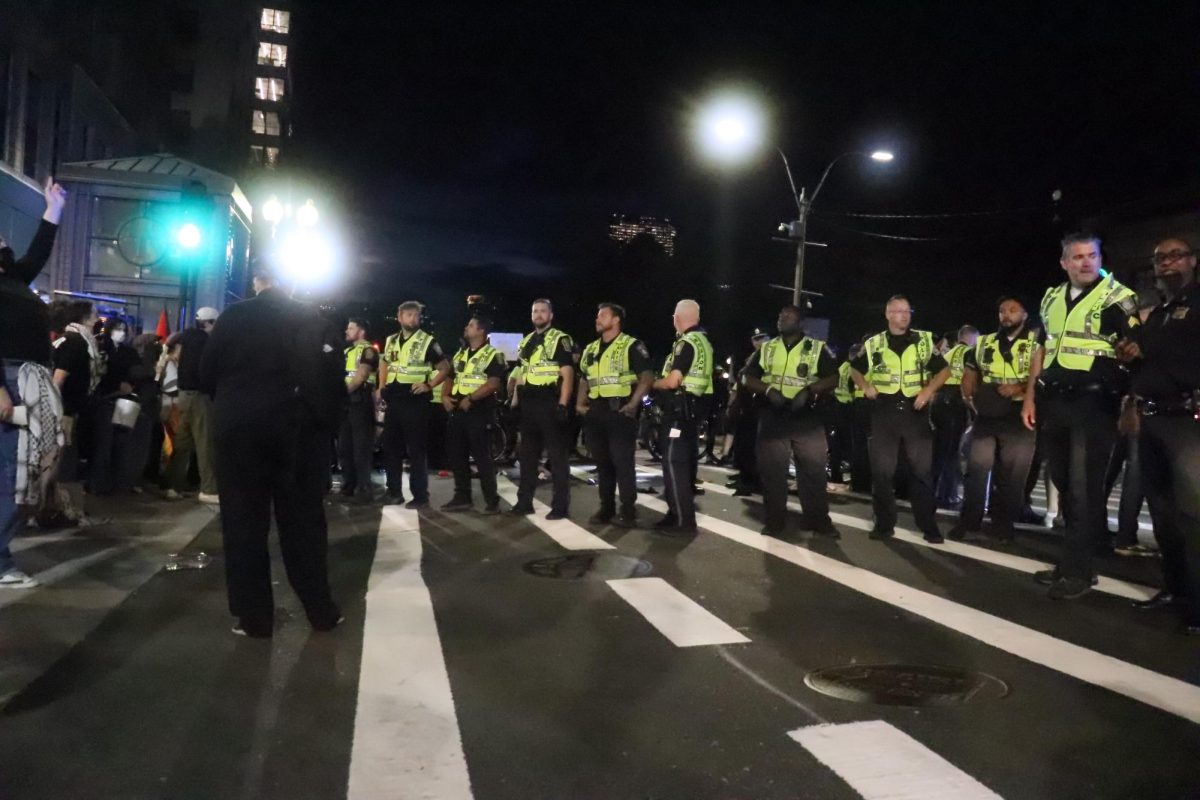
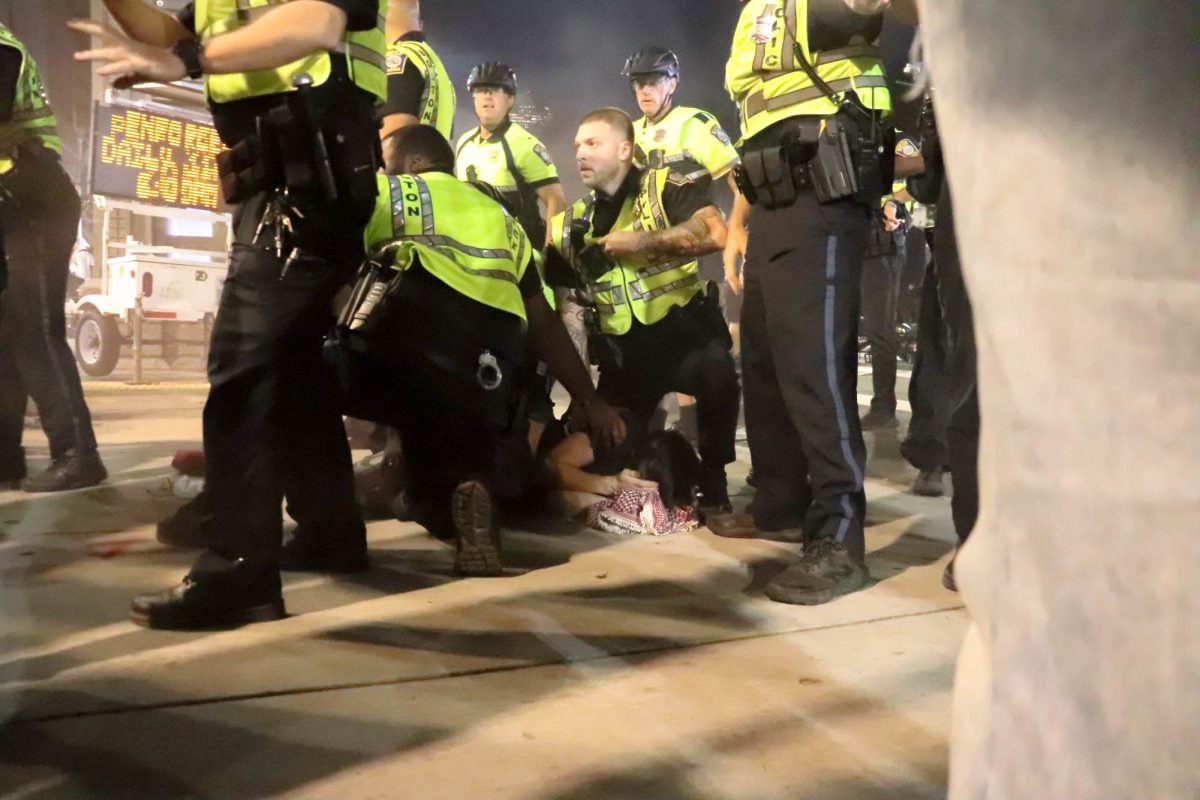
This call for the administration to protect students’ right to protest comes after the arrests of four Emerson students during an Oct. 7 pro-Palestine protest in Downtown Boston earlier this month. These concerns were represented in a letter sent to the College administrators regarding concerns about the punishments towards the students arrested.
Leadership within The Emerson College Chapter of the American Association of University Professors and some in the faculty assembly penned the letter to Dean of Students Will Petrick, Vice President Christie Anglade, Provost Alexandra Socarides, and Bernhardt.
In the letter, the group emphasized their “grave concern over possible campus punishments” for the students who were arrested. They emphasized the systems and procedures set in place that could be utilized if the College felt the students violated community standards or made other students uncomfortable.
“If students have been charged with violating the law off-campus, and in actions not related to their studies on campus, we cannot prejudge the outcome of external legal trials,” the letter read. “Such events are still governed by the U.S. Constitution, and we must assume, as we must for all illegal acts, that the individuals are innocent until proven guilty.”
The letter concluded: “These policies impact the entire community; interim policies that keep students out of the classroom and the perception of arbitrary action do not create an environment conducive to teaching and learning.”
Two faculty members, who asked not to share their names, expressed concerns during the meeting that the faculty council was not looped into the process of the letter. Nelli Sargsyan, vice-chair for the assembly, later confirmed with The Beacon the letter was only sent to the faculty council and the union governing council after it was sent to administrators.
The administration did respond to the first letter, and Sargsyan said the second correspondence regarding meeting with the administration was sent to the faculty council and union governing council before being sent back to the administrators. The content of the administration’s initial response was not shared upon request during the meeting.
Heather May, a senior lecturer in the Communication Studies department, said she supported the ECCAAUP leadership and leaders of the faculty assembly in their move to send the letter, citing the urgent need for such communication.
“When things are moving quickly, and when we have students who are missing weeks’ worth of classwork and having their academic careers ruined, I think, yes, process is important because it can be used to stay oppression, [but] it can also be used to increase it,” May said. “We need to make sure we are trusting our leadership to work for the good of our students and faculty assembly because the students’ academic life is within the purview of that leadership.”
The assembly dedicated the opening portion of the meeting to discussing the circumstances around adopting a new shared governance model. Over 30 minutes of the meeting strayed from its original focus—members voted twice on when and where the vote on the governance model would take place, and after a final amendment of the vote’s language, discussion returned to its original focus.
One faculty member, who asked not to be named, highlighted the current shrinking of the faculty body, and questioned if a change to the governance model was needed, citing layoffs, the Voluntary Separation Incentive Program, and retirements. According to Socarides, the faculty will number 20 fewer full-time members between now and next fall after adding new full-time hires.
In an email to The Beacon, Socarides said the drop in the number of full-time faculty is a response to declining enrollment. She said there is an effort from administration to ensure there is “no negative effect on students.”
The council voted to keep the current faculty governance model, which includes the faculty council and assembly, while making some modifications to improve productivity, with 71 of 144 faculty members voting in favor. Sixty-five members voted to investigate different models of faculty governance, and eight abstained.
The meeting adjourned after final comments regarding the letter. The next faculty assembly will take place on Nov. 25.








Since when is violence academic freedom? How low are the standards? Apply the policies, Emerson, to the fullest extent!