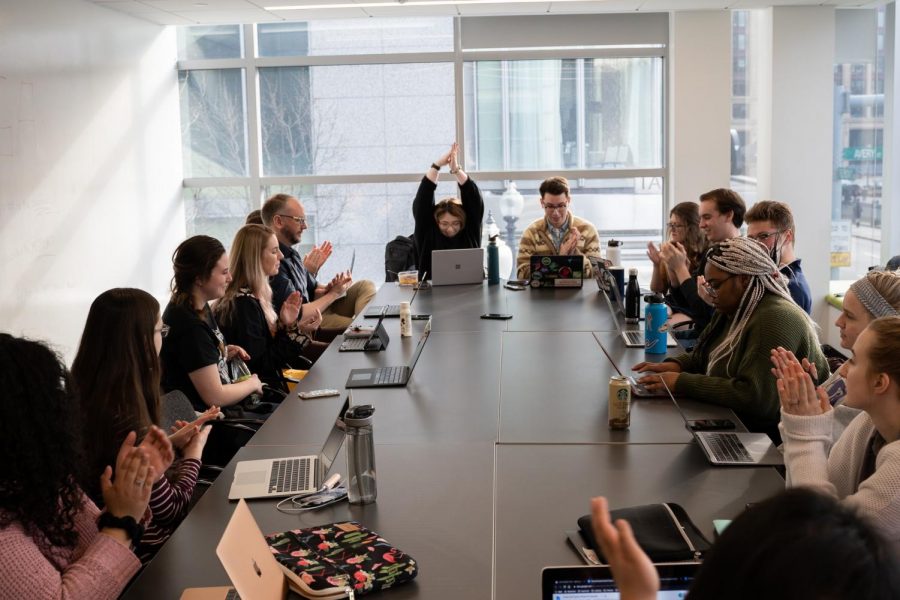



In their first meeting of the semester, Emerson College’s student government met to establish a public campaign financing program and pass an amendment recognizing the need for an international student senator.
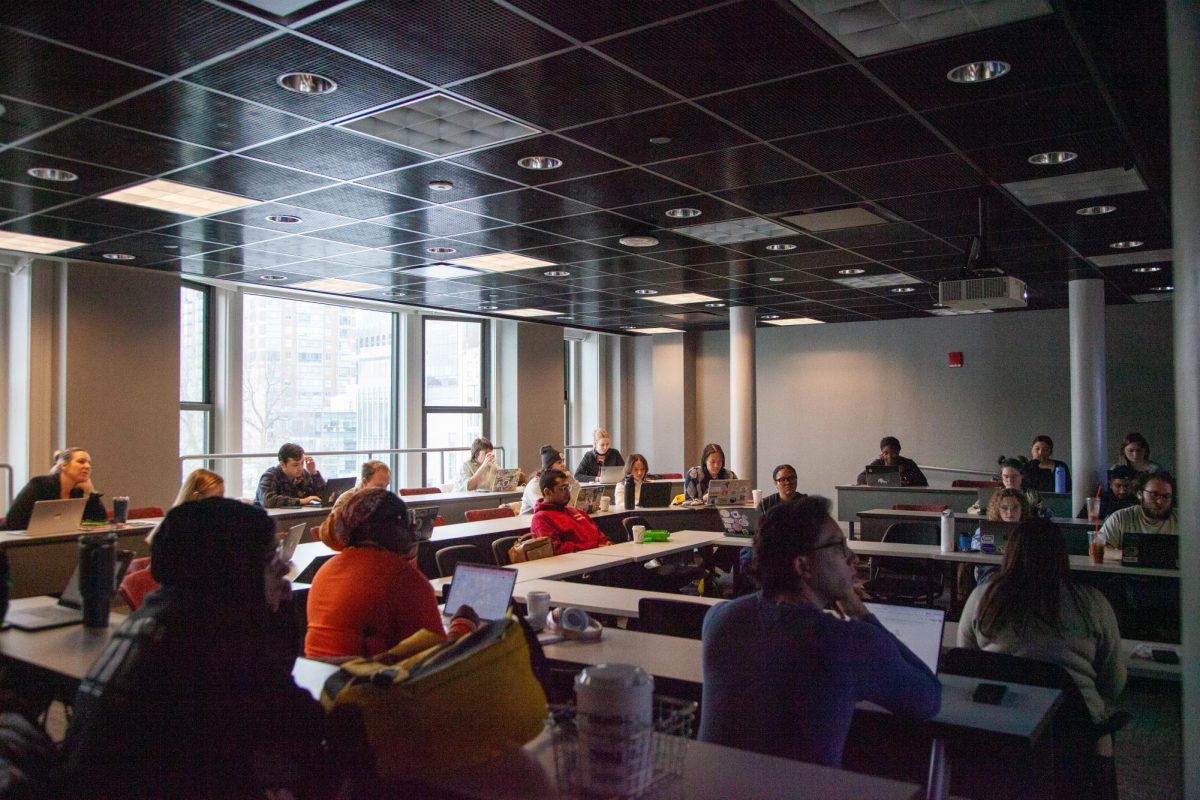
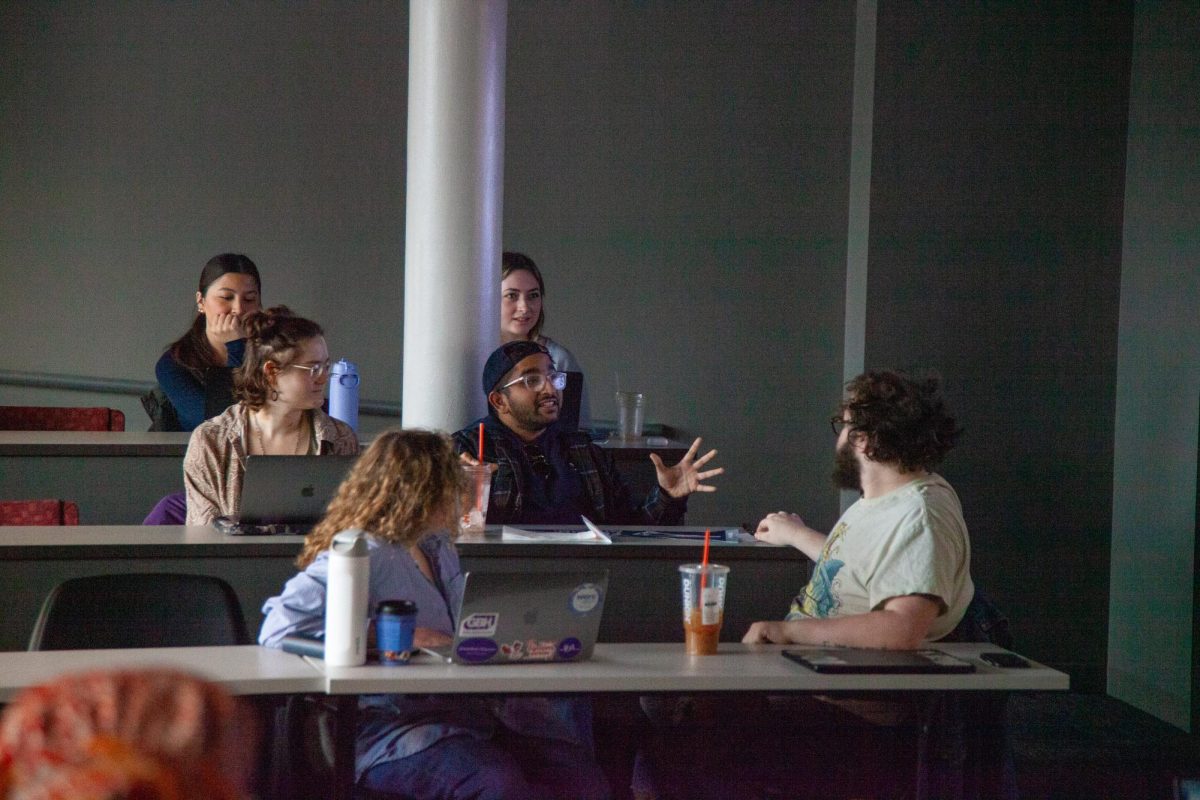
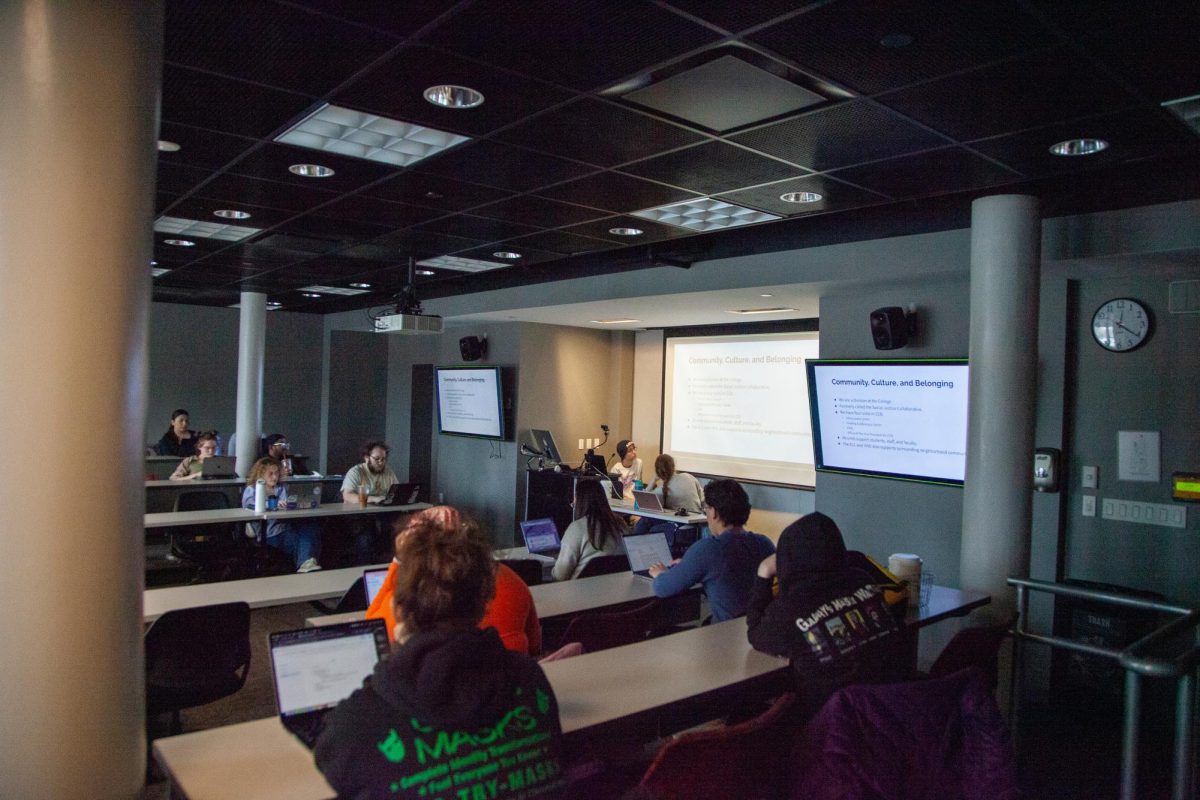
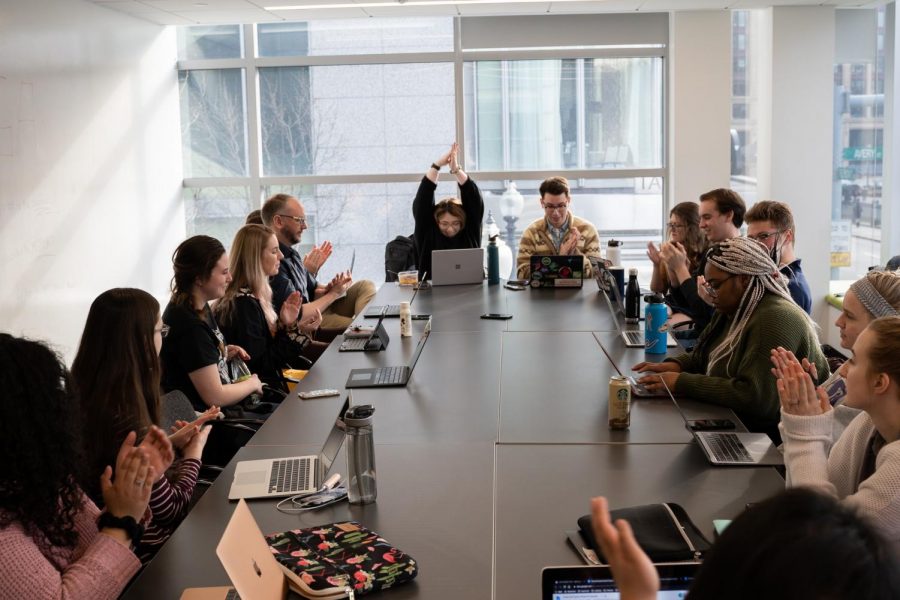
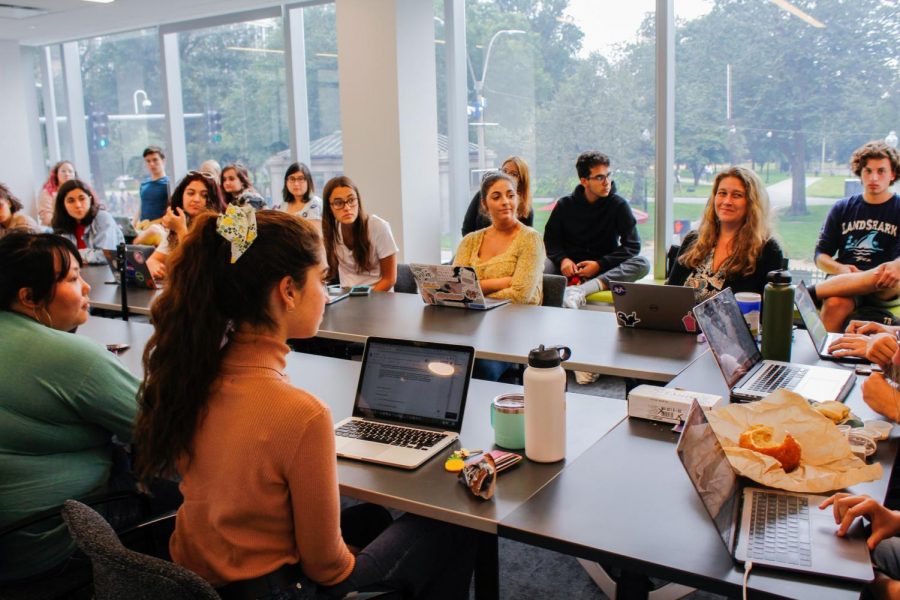
Nearly 20 students gathered in the Walker 4th Floor classroom for SGA’s first meeting since Dec. 12. A motion made by Georgia Winn, the executive president of SGA, midmeeting to amend the Composition of the Student Experience Senate passed — with a caveat. The amendment would replace the non-traditional senator role with an international student senator role. Winn went on to say that SGA has reached its set limit for student experience senators, who are voting members, but sees the need for an international student experience senator.
Winn continued, emphasizing the need for someone to represent this population of Emerson students, and the need to “[provide] a specific place for representation in SGA [that] might empower people who don’t typically think of themselves as leaders,” Winn said.
Oliver Katz, who helped create the non-traditional student senator position with former president Charlize Silvestrino in the academic year 2023-2024, made an amendment to instead replace the sustainability senator role. Katz’s amendment to Winn’s amendment ultimately passed unanimously.
The non-traditional student senator role, Katz said in the meeting, seeks to represent a part of the student body who do not fit within the typical demographics of Emerson students.
Non-traditional students may include Emerson Prison Initiative students, students older than 24, students with children, and students who are military veterans.
“I don’t believe sustainability represents a broader community on campus, rather, it represents a value … that we all wish to embody,” Katz said.
In an interview with The Beacon, Max Brady, a junior and communication studies senator, said he “completely understands” the need for an international student senator, and the purpose of a non-traditional student senator.
“However, I think [removing] the sustainability senator in place of keeping the non-traditional senator, completely undermines the fact that we have students on campus that are not only passionate about the environment,” Brady said, “but possess greater knowledge and resources than some.”
He said that he believes the number of students capable of fulfilling the sustainability position is greater than the number of students capable of filling the non-traditional student senator position.
“I don’t think we should have removed that position,” he told The Beacon.
Winn suggested exploring the option of a sustainability liaison in the future, to represent these interests “in a non-voting capacity.”
When the time came for Winn’s amendment to be voted on, a discussion arose about the definition of an international student.
Jackie Yun, Assistant Vice President of Student Experience, said that “international student” is an institutional definition referring to someone’s visa status, and Angus Abercrombie, the vice president of SGA and a senior political communication major, confirmed that this is the definition the association is operating under. Yun said they must be a degree candidate, per Emerson’s definition, and thus cannot be, for example, a student from Blanquerna, a school in Spain, transferring in for the semester.
Additionally, First Generation and Low-Income Sen. Jazzy Compton, a sophomore political communication major, made a motion that S. Res 3 be adopted, establishing a campaign financing pilot program for the Spring 2026 election, which passed unanimously. The program would allow students up to $50 to print campaign material, so long as they don’t spend more than $50 of their own money in addition to the money from the program. The funds total is $2,000.
Compton said this motion is an effort to “level the playing field.”
“It shows [students] the resources that are immediately available,” she said.
In an interview with The Beacon, Abercrombie echoed this same sentiment, saying that he believes the issue of campaign money is “a real potential barrier” that many students face when considering running for student government.
“I’ve run for SGA positions more than once, and it’s always been a bit of a question of, ‘How am I going to pay for this?’” he said. “Because it’s not a ton of money, but it is real in the daily life and the daily budget of a student.”
At the end of the spring semester, Compton, Chief Justice Solidad Augustin, and Executive Treasurer Oliver Katz, will present the results of their findings from the pilot to the body, including, but not limited to, the level of participation.
A motion by Augustin to approve election packets then passed unanimously. The packet is an overview of how the elections are going to run and what’s going to happen.
Augustin asked if an information session about elections would be beneficial, given the lack of attendance in the past. Winn agreed, and said a virtual information session would be good to pilot in the fall for new students who’d like to learn more about the process. Levi Armstrong recommended making information sessions mandatory for those who run, and Compton recommended free food to incentivize students to attend.
After approving minutes from the Dec. 12 general assembly at the outset of the meeting, the body launched into a motion to approve freshman Jules Telfort as the journalism senator for SGA. Telfort, who serves as deputy copyeditor for The Beacon, was present at the meeting as Class of 2027 co-president Armstrong moved to allow consideration for her nomination and approval.
Abercrombie then moved that the rules be suspended to allow consideration of the nomination, and confirmation, of first-year Mya Wurie as the deputy visual and media arts senator. Both confirmations passed with unanimous approval.
Lastly, a bylaw amendment for meeting frequency proposed by Abercrombie passed with unanimous “ayes,” save for one “present.” Prior to the recent meeting, the bylaws said that SGA meetings would occur every Friday unless the general assembly voted to cancel the next meeting — they made no provision for days when Emerson did not have school. Abercrombie’s amendment sought to ensure that, should classes be cancelled on Fridays due to school closures, SGA would still be able to meet. His proposal would allow SGA to meet at the discretion of the student government leaders, rather than the administration.
“If you were on campus in April 2024, there was a very troubling event, and classes were cancelled the next day,” Abercrombie said. “If there was action that this general assembly needed to take … we wouldn’t want to give [the] administration the discretion to cancel our meetings.”
The event that Abercrombie is referring to is the encampment raid of Spring 2024, where 118 protesters were arrested in the 2 Boylston Place Alley for protesting for Palestine’s liberation. Classes were subsequently canceled that Friday to allow the community time to grieve, according to Abercrombie. An SGA meeting to discuss next steps, he said, was a necessary part of that bereavement.
The meeting concluded with an open forum, where Compton brought up recent transitional changes to the Office of Student Success. She made a call to SGA to ensure resources are made consistently available for first generation and low income students. The pantry, Compton said, was just restocked last Thursday, Jan. 22 for the first time since Dec. 3. Compton added that the pantry and headshot photobooth are still available to students, despite recent organizational changes. The meeting adjourned after an hour and a half.
Abercrombie spoke to The Beacon about his hopes that the campaign finance resolution and student senator amendment will energize Emerson students who may be considering running for student government, emphasizing a widespread desire for more student involvement.
“Can we get more competitive races, can we get more contested races in general … and can we see SGA become an even stronger representative of the student voice?” Abercrombie said.