

A couple of weeks ago, a friend of mine posted a suspicious picture of what was undoubtedly the back of a man’s head to her Instagram story. At the bottom of the picture, in the tiniest font possible, a username and a heart emoji taunted me as I tried to decipher this mystery man’s name.
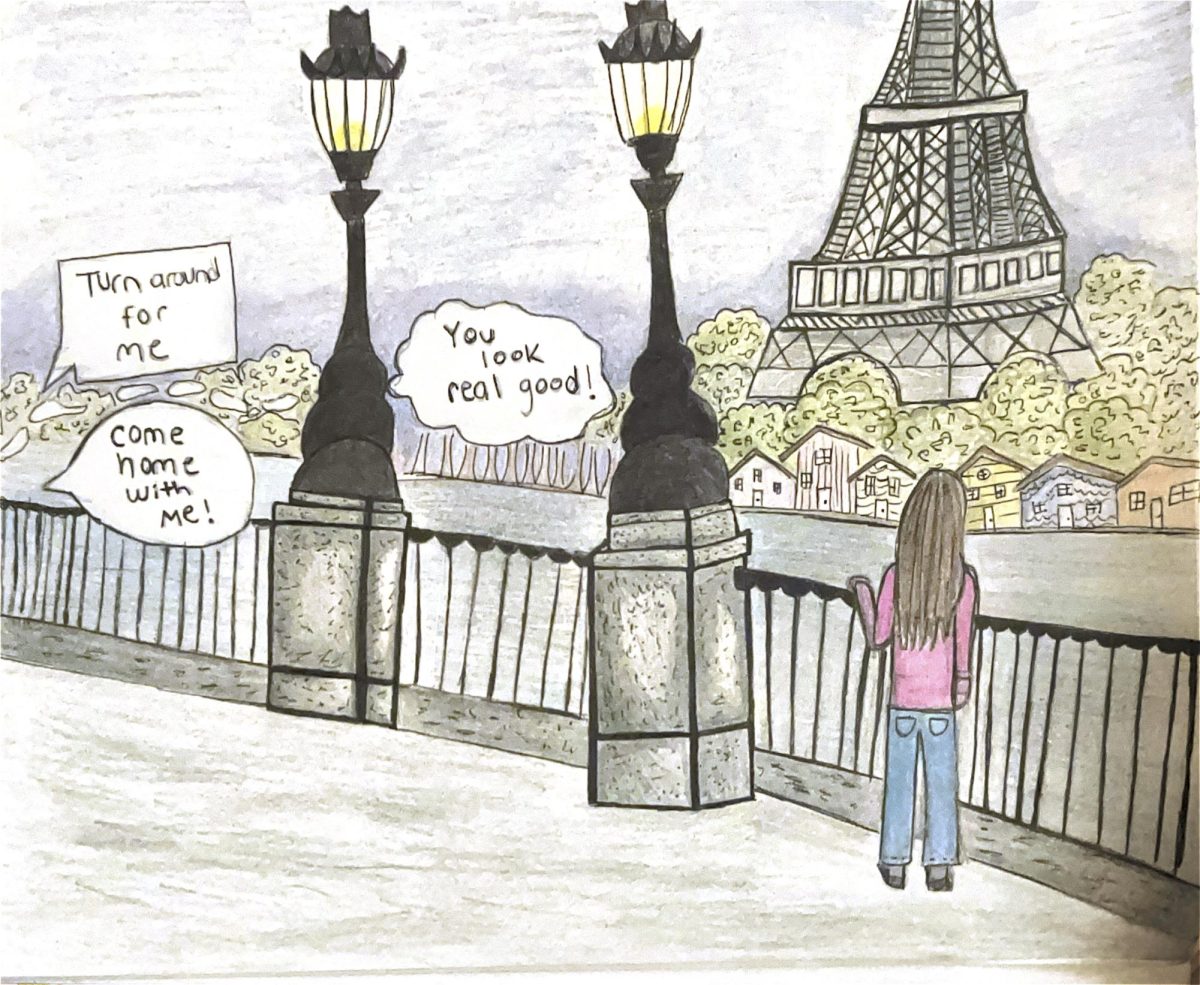
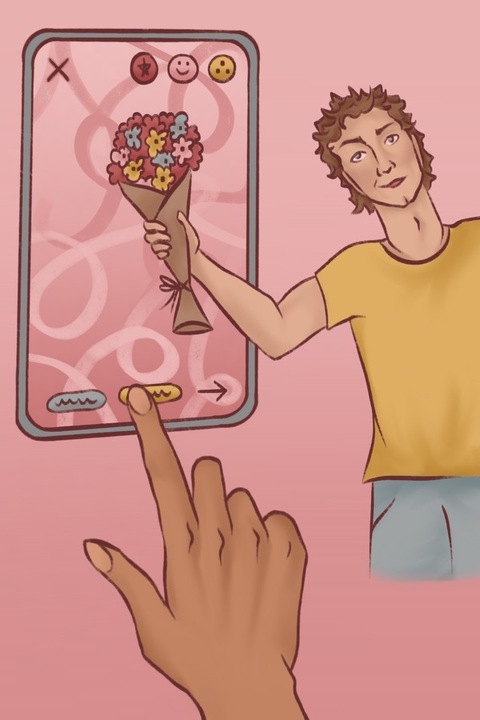
As I screenshotted the image and zoomed in, I realized this was a “soft launch”—which has become the most widely accepted way to post your relationship without making it all about the man in question. Though optically, it often has the opposite effect.
The concept of soft launching, stemming from the marketing strategy where a new product is tested in limited markets to gauge consumer reactions, is a way to hint at a “new romance” on social media. Through a picture of a hand, a bouquet of flowers, or something equally inconspicuous, people are carefully calculating just how much of their partner they want to show online before eventually hard launching them. It’s the ultimate statement on nonchalance, suggesting that a new romantic entanglement is as incidental a detail as the picture of their partner’s shadow on their Instagram story.
Yet, this act isn’t about showing off one’s relationship in a private way, but the shame that accompanies posting a significant other—especially when a woman posts her boyfriend.
A buzzy new British Vogue article by Chanté Joseph titled “Is Having a Boyfriend Embarrassing Now?” explores the idea that many straight women nowadays find having a boyfriend embarrassing and somewhat lame. Joseph remarks that women “are obscuring their partner’s face when they post, as if they want to erase the fact they exist without actually not posting them.”
In simple terms, some women choose not to post about their significant other because, while they love and cherish their partner, they want to evade the negativity that surrounds having a boyfriend. This is especially true in a world where women feel that “it is now fundamentally uncool to be a boyfriend-girl,” as Joseph explains.
Perhaps soft launching provides an alternative to simply declaring to the world that you’re off the market, committed, or otherwise “taken”—which places pressure on the girlfriend to prove that she isn’t just someone’s flame.
“I wanna be known as myself, I don’t want to be known as someone’s girlfriend,” says Takara Bayley-Gale, a sophomore visual and media arts major who’s currently single.
When it comes to soft launching, Bayley-Gale remarks that it feels almost self-preservational, protecting the relationship from a world that, according to Joseph, sees dating a man as a “guilty thing to do.”
With the rise of decentering men in an endeavor to fight the patriarchy—especially following Trump’s re-election, which caused the idea of 4B movement to gain traction in the US, encouraging women to abstain from dating, sex, marriage, and having children with men to fight gender equality gained significant traction—straight women are becoming intentionally more cryptic about their relationships and dissociating their lives with their male partners. As Sherese (Charlie) Taylor, the writer of the 2019 book “Decentering Men,” told Cosmopolitan, to sideline men “is to actively interrogate and undo the ways the patriarchy has taught us to center them in our thoughts, decisions, and self-worth.”
Women have taken this initiative and begun to center themselves in their lives, working toward deprogramming themselves from the archaic notion that men must be at the forefront of our minds, and that everything we do has to have them in mind. However, when it comes to romantic relationships, especially in straight relationships, decentering efforts become muddy.
“People don’t post their boyfriend, not because the boyfriend is embarrassing, but because the perception of having a boyfriend is embarrassing,” Bayley-Gale concludes. That doesn’t necessarily stop these relationships from existing, but it proves that we care much more about the way people respond to our relationships than the relationships themselves.
“I don’t agree with the concept of soft launching, because it almost seems performative,” remarked Chloe Prandi, a sophomore VMA major who just recently got out of a relationship. Looking back on her relationship, Prandi expresses that she would post her boyfriend every couple of months, only when she felt like it.
“I have a very public Instagram page,” Prandi continued, “My boyfriend was a very big part of my life, so he was a part of my feed.” Simple as that.
And yet you can’t settle with a soft launch, just because you want to post your boyfriend but don’t want to deal with negative blowback from followers.
“You can’t have your cake and eat it too,” Prandi remarked. “Just post your boyfriend, it’s not that deep”
In this era where having a boyfriend is no longer central to one’s womanhood, treating relationships like PR campaigns feels wrong. It almost produces the opposite effect, implying that while you may not want to place too much emphasis on your relationship with a man, you are prioritizing other people’s opinions with your hesitation to post him. The focus around the man, and constantly thinking of people’s reactions to him with every post, is still there, because it’s fear of a relationship’s perception that continues to dominate.
It’s true that having a boyfriend is the least interesting thing about you, but it’s still a part of you. If you want to share it with the world without having to encode it for social media, you can and you should.