


I’ll never forget crying in my bedroom after a boy in high school told me nobody wanted to be my friend, that everyone found me annoying, and that it would be better if I never talked to anyone. Up until then, I had been desperate to find friends during my freshman year and was failing at making any. I cried all the time because I just wanted someone to like me.
Yet his comment marked a turning point. I realized I had a choice: I could either keep trying to appeal to people who would never care about me, or I could gain an advantage over my peers by working toward my goals instead. I could use my loneliness as a strength rather than suffer from it.
Loneliness is not uncommon in the United States. A 2024 poll by the American Psychiatric Association found 30% of Americans ages 18–34 were lonely either every day or several times a week. The issue is considered so significant that the former U.S. Surgeon General Vivek Murthy released a health advisory addressing loneliness in 2023, noting health risks such as depression, anxiety, and early death. In other words, many of us feel disconnected from others and it hurts.
However, loneliness can be turned into an advantage when you use your time intentionally. Experts Thuy-vy T. Nguyen, who has a doctorate in social psychology, and Netta Weinstein, who has a doctorate in clinical psychology, discussed on the “Speaking of Psychology” podcast how solitude can be beneficial by decreasing intense emotions and creating a sense of calm.
“We tend to just see that the emotions that are high in arousal drop after we spend those brief periods of solitude,” Nguyen explained. “Solitude can also help us to calm down those strong negative emotions.”
Although you don’t have to be lonely to benefit from solitude, it can be helpful for those who are struggling.
A Harvard Medicine article reported that spending time in nature has significant mental health benefits, such as a decrease in cortisol levels—which biologically signal stress—and less rumination. Outdoor walks can help us become mindful of our surroundings and appreciative of nature. It can be a soothing remedy for loneliness.
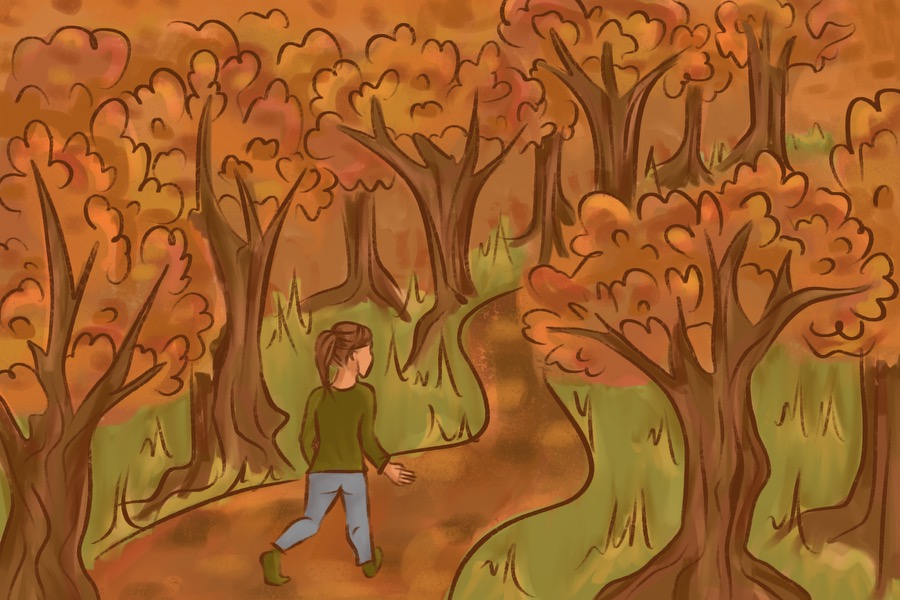
So, rather than viewing my loneliness as a miserable fate, I repurposed it as a meaningful period of solitude for reflection and growth, doctor recommended and everything. I went on long outdoor walks, wrote poetry, and meditated. I also utilized this time to boost my grades and take hands-on roles in clubs I would eventually lead. Solitude taught me to take joy in my own company and become an attentive observer of life.
Loneliness shouldn’t be the end goal, but it can be a useful self-growth period. What I’ve learned in college is that people are welcome to new friendships if you ask to hang out first. If you are lonely, I recommend saying hello to people in the hall, or even making conversation with the cashier at The Max. Go to school events and join organizations on campus—seriously, no one cares if you are weird. These small interactions will show you that people are more receptive to conversation than you think.
While you take the time to grow connections, make loneliness your best friend. Use it to understand yourself and what you want in life. It will teach you to love yourself before you worry about someone else.




So insightful!!!
If need is the mother of invention, then being alone is the loving womb where ideas gestate, excel and disseminate.
Helpful and encouraging of enjoying activities solo and being your own best friend.
Good point.
As a lifelong loner, thank you so much.
I love being alone, so that I can reflect on myself and improve to be better. I’m afraid of solitude because it helps me to slow down, think deeply while my inner peace circulates, make good choices, recharge energy and stay healthy and happy mentally, psychologically and physically.