


Like many, I grew up being subjected to my parents’ favorite music. My dad constantly offered up all of his alternative and progressive rock selections: Rush, They Might Be Giants, and that freak Morrissey. But the parental put-on that stuck with me the most came from my mom, in the form of a high-heel wearing, often-glittered man from Minnesota.
If 2026 has brought anything good with it so far, it’s been the resurgence — and for some, outright discovery — of Prince. The virtuoso responsible for hits like “Kiss,” “Raspberry Beret,” and “1999” tragically rode the elevator to the afterlife in 2016 at the age of 57.
Ten years after his passing, His Royal Badness has seen a huge boost in listening numbers across all music streaming platforms. This has been thanks in no small part to two of his masterpieces from the “Purple Rain” album being prominently featured in the series finale of “Stranger Things,” effectively ringing in the new year.
While my first instinct has been to revel in the glory of my favorite artist getting more recognition, I can’t help but be overcome by a bittersweet realization: Prince is really gone. And right now, he may be needed more than ever.
In case you don’t already know, Prince absolutely rocked. He had more music in his left pinky than most do in their entire body; his 39 studio albums — on many of which he wrote, produced, sang, and played multiple instruments himself — won him seven Grammys and one Oscar. But these merely scratch the surface of his impact. He pioneered new directions for pop, rock, funk, and R&B music throughout the late 20th century. His biggest superpower, however, came from his ability to simultaneously be an immovable beacon of individuality, and the coolest person in every room.
Prince Rogers Nelson was tiny in stature, effeminate in nature, and he was sexually fluid, playing with gender identity in an age when that was anything but normalized. He was unflinchingly himself. He was also as undeniable of a star as the music world has ever seen. Nobody has ever possessed his combination of talent, charisma, and straight up sex appeal.
Imagine if Bruno Mars could shred like Jimi Hendrix, and you get Prince.
Maurice Wilkey ‘95 is the operations manager at WERS, where he also hosts “The Secret Spot,” a late-night radio show dedicated to Black artists. Wilkey, who’s been a longtime DJ, remembers Prince’s music soundtracking the beginnings of his career in the 1980s and ‘90s.
“I’ve always been a fan of Prince,” he said. “He took artistry to a higher level. He did a lot of impressive things with sound and bent a lot of rules.”
Younger generations have had more difficulty discovering Prince — partly because his music wasn’t easily accessible on the internet until after his death, since the artist was in constant dispute with distribution companies over the copyright of his work. I’m hopeful that increased access will continue to spread awareness, especially at Emerson College.
“I hope Gen Z still finds him and appreciates the live instrumentation,” Wilkey added. “He’s literally the definition of ahead of his time.”
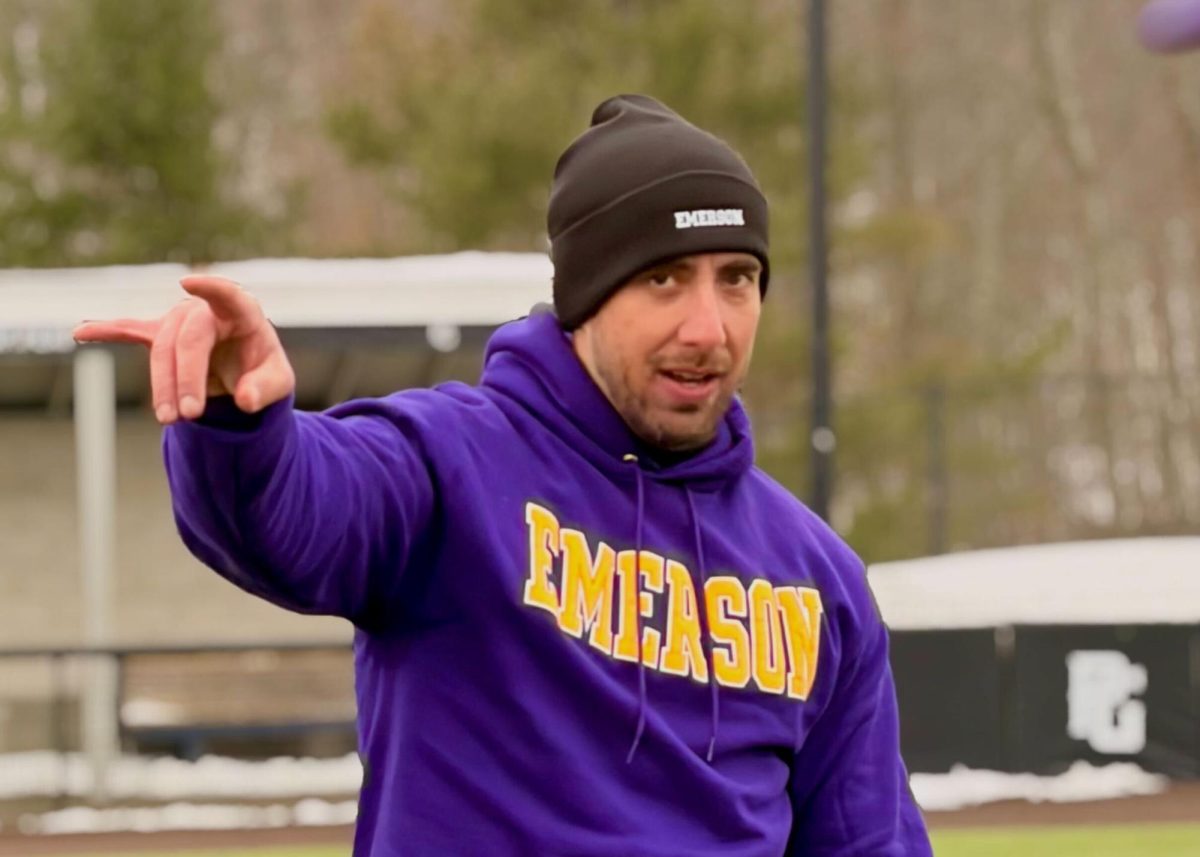
I like to think that the Minneapolis native would approve of our student body’s dedication to creativity and authenticity, as well as our primary color.
But if Emerson purple doesn’t completely sell you, just go watch his entirely live, entirely badass Super Bowl halftime show during a Miami downpour in 2007. Or watch him make Tom Petty’s jaw drop with one of the sickest guitar solos ever during a George Harrison tribute at the 2004 Rock & Roll Hall of Fame induction ceremony. Or watch him effortlessly command an audience with nothing but a piano and a microphone during his 2002 One Nite Alone tour. But I digress.
I obviously miss Prince’s artistry and showmanship, but more than anything, I miss what he represented: a complete unwillingness to be anyone other than who he was at all times, in spite of what anybody else may have said about it; the uplifting of all artists, but particularly women, people of color, and the LGBTQ+ community; and a total commitment to the trailblazing art he was making, regardless of how many copies it sold. All of it feels scarce in today’s popular culture.
In an America where art is being constantly devalued by those in power, entire identities are being censored, and ICE agents are killing civilians in the street, the hole left by the loss of someone like Prince — who anonymously donated millions to causes such as education, climate change, and social justice throughout his life — feels extremely large.
All of this isn’t to say that there aren’t people carrying the torch. Wilkey said that he sees parts of The Purple One in several modern artists, from the sexy yet political R&B sounds of Janelle Monáe and Erykah Badu to the fierce talent and identity-based activism of Lady Gaga. Not to mention Prince disciple and visionary in his own right, D’Angelo, who passed away last October.
And still, nothing quite compares to him.
“He spoke truth to power in a rhythmic way,” Wilkey said. “He was just a unifying musical force.”
Prince wasn’t perfect. His complicated turn into a Jehovah’s Witness was a knife in the back to an LGBTQ+ community who’d championed him throughout his career, though he’d mostly retreated from any homophobic stances by the end of his life. Those faults shouldn’t be ignored, but ultimately, the best of him was the best of all of us.
So thank you, mom, for introducing me to a truly one-of-a-kind artist. An artist that I hope people continue to celebrate and learn from, even if the rain doesn’t feel quite as purple in his absence.
“Let’s go crazy, let’s discover who he is,” Wilkey said. “Maybe we’ll get a chance to bring more souls to the altar of Prince, and maybe that’ll bring us together as a human race.”