


Emerson College’s Student Success food pantry, once a consistent resource for students, has struggled to maintain regular stock this semester following administrative restructuring and staffing changes, according to student employees.
Since the dissolution of the Office of Student Success (OSS) on Dec. 11, the pantry, now housed under the office of Associate Vice President & Dean of Students Will Petrick, has seen noticeable declines in food supplies and variety. This reduction in availability has been a subject of several discussions at Emerson’s weekly student government association meetings.
Decker Harris, a freshman media visual arts major and Student Affairs assistant working in the pantry, said the reduced pantry stock directly impacts students.
“The demand for the pantry has always been kind of greater than what I’m able to stock it for based on what we’re given,” he said. “When students are coming to the pantry, and they’ll just kind of go in, they’ll stand there, they’ll scan it, and they’ll realize that there’s nothing that they’re looking for and just leave.”
Harris said that emptier shelves have led to a decline in student use of the pantry. He added that the Student Care and Support office is in constant communication with the dean of students about what needs to be restocked.
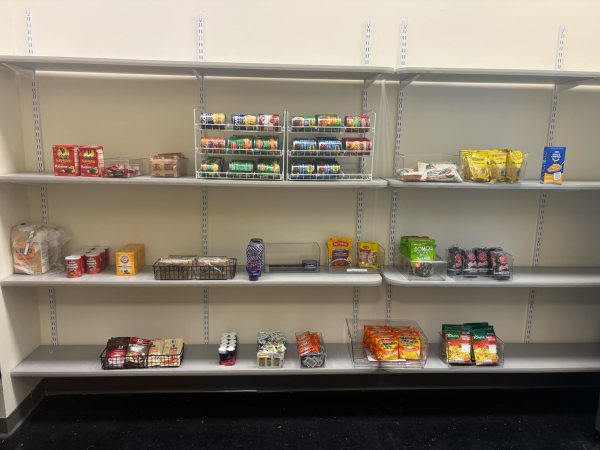
The Beacon obtained several photos from the course of the semester that show the decline in restock. One photo from last summer shows shelves stocked full of microwaveable meals, snacks, oatmeal, canned goods, Barilla pasta, rice, and spices. In comparison, photos from the last few months show a vastly different pantry: empty shelves with scant options.
Jazzy Compton, a Student Affairs office assistant and the SGA First Generation and Low Income Senator, speculated that staffing changes negatively impacted “the culture around the pantry.”
She said the person who managed the pantry before the reorganization of OSS had strong relationships with the students who relied on it, particularly first-generation and low-income students. Since the staff member was replaced by Petrick, that tradition has changed.
“I can’t even blame [Petrick], because when the whole transition happened, he had his own job dealing with campus policies,” Compton said. “So for them to also dump the role of operating the student pantry, he obviously didn’t have time for that … and you can kind of see that.”
Petrick declined to comment, deferring to the college for a response.
A spokesperson for the college said that Emerson is committed to ensuring that the pantry is available for all students.
“As part of the transition of the pantry to Student Affairs, we identified several practices and processes that are being improved to ensure the pantry continues to meet the needs of our students in a sustainable and accessible manner,” the statement read.
The spokesperson said that the college is currently stocking more than 50 different items in the pantry and are consistently assessing what other items they should bring in. Different items are added and removed based on goals of consistency.
Since Student Affairs took over the pantry, the college identified the need to develop stronger inventory and stocking processes. The spokesperson says that they’ve developed a partnership with the student staff in the office, a twice weekly inventory tracking process, and increased purchasing to minimum once per week.
They also said that key times throughout the year, such as the week before spring break, result in higher traffic in the pantry and that the process of stocking the pantry will continue to be evaluated to ensure that offerings are consistent and holistic.
Compton reiterated that these issues cannot be attributed to any one staff member, rather, “the college planned it so poorly that there’s no efficient system to have these restocks.”
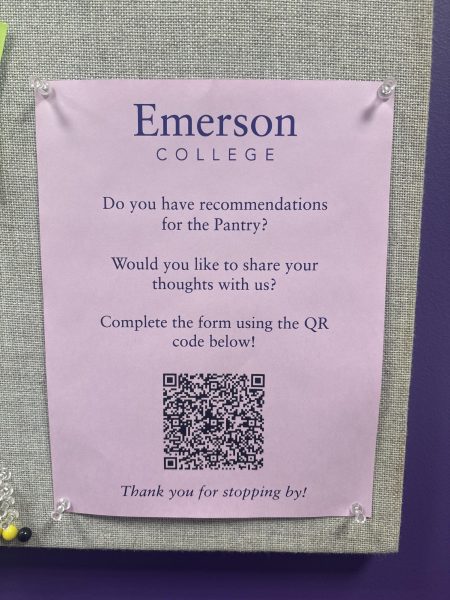
According to Compton, last semester, students could request specific items through an online form, helping tailor pantry offerings to community needs. She said that form was inactive for three months earlier this semester and was reinstated in March, but that few students are aware it exists.
OSS partnered with Misfits Market last semester to stock produce for students. Since the restructuring, that collaboration has lapsed, and the closest thing the pantry has had to fresh produce is applesauce, both Compton and Harris said.
Compton and Harris also noted that a former partnership with the coffee shop and restaurant Tatte helped stock the pantry with leftover pastries. They said that deal has also ceased to exist, though the reasoning is unclear.
Employees also feel that plans to expand food options have stalled. Compton was told in January that the dining service provider, Bon Appétit, was working on a program to donate pre-packaged meals made from leftover food. Those meals were intended to be stored in freezers and made available to students seeking more complete, ready-to-eat options. Months later, the program has yet to materialize.
Compton said she followed up with Petrick two weeks ago about the program, and was told the delays were due to “the dining hall [figuring] out the container situation.”
“I think it’s pretty hurtful that the college is telling us that they have the ideas of enhancing this resource and then they never actually do it at the end of the day,” Compton said. “It kind of feels like a lead on.”
Alongside food, Compton is pushing to stock the pantry with essential hygiene items. Compton is also an advocate at Emerson’s chapter of Planned Parenthood Generation Action, a student organization that raises public awareness about reproductive rights and health.
“We’re not just thinking about fighting food insecurity. We are also thinking about fighting period poverty,” she said.
For Ava Kevitt, a junior writing, literature and publishing major, the pantry is a resource that ensures she doesn’t have to spend money at places like CVS.
“Boston is so expensive, and our meal plans and board bucks, we already are so limited on that, and then we’re spending so much money to be here,” she said. “It’s nice to have something there [to help]. It’s a good crutch.”
Harris echoed a similar statement, stating that the pantry was created to serve low-income and off-campus students. He said that Emerson is a “prohibitively expensive school,” citing the college’s historically low financial aid.
“It’s important that the school keeps up that financial assistance outside of just the classroom setting, and outside of housing,” Harris said. “It’s important that students have the independence when it comes to what they eat … the pantry should give them that.”
Kevitt said that she would appreciate the Emerson administration showing more care for their low-income students.
“Even if it’s not the pantry itself, [there are] other ways to support their students and take into account that everyone here comes from different backgrounds and different support systems,” she said. “I think they just need to support their students more, who are disadvantaged financially.”
Compton urged students who are concerned about low stock to fill out the pantry’s feedback form so that administrators and staff see tangible numbers of users and needs.
“If we don’t give them those numbers, if we don’t make our presence known that we are here … then they’re just going to completely neglect us,” she said, citing Emerson’s phasing out of First Generation and BIPOC Student orientation. “But because we’re making a ruckus and because we’re being loud, we have first-gen orientation back. We’re going to get the Student Success pantry back on track.”
Other resources previously offered under the Student Success Office are still available to students, including the Student Assistance Fund, an emergency relief initiative for students experiencing unexpected economic hardships, and the free-to-use headshot photo booth on Walker Building’s second floor. Compton said there are efforts to collaborate with Housing and Residential Education to revitalize the pantry, although she did not offer specific details on what that would look like.
“We will do whatever it takes to make sure this pantry is up and operating,” she said.
Catalina Mena contributed to this report.