

Editors note: This article has been updated to add context and clarity.
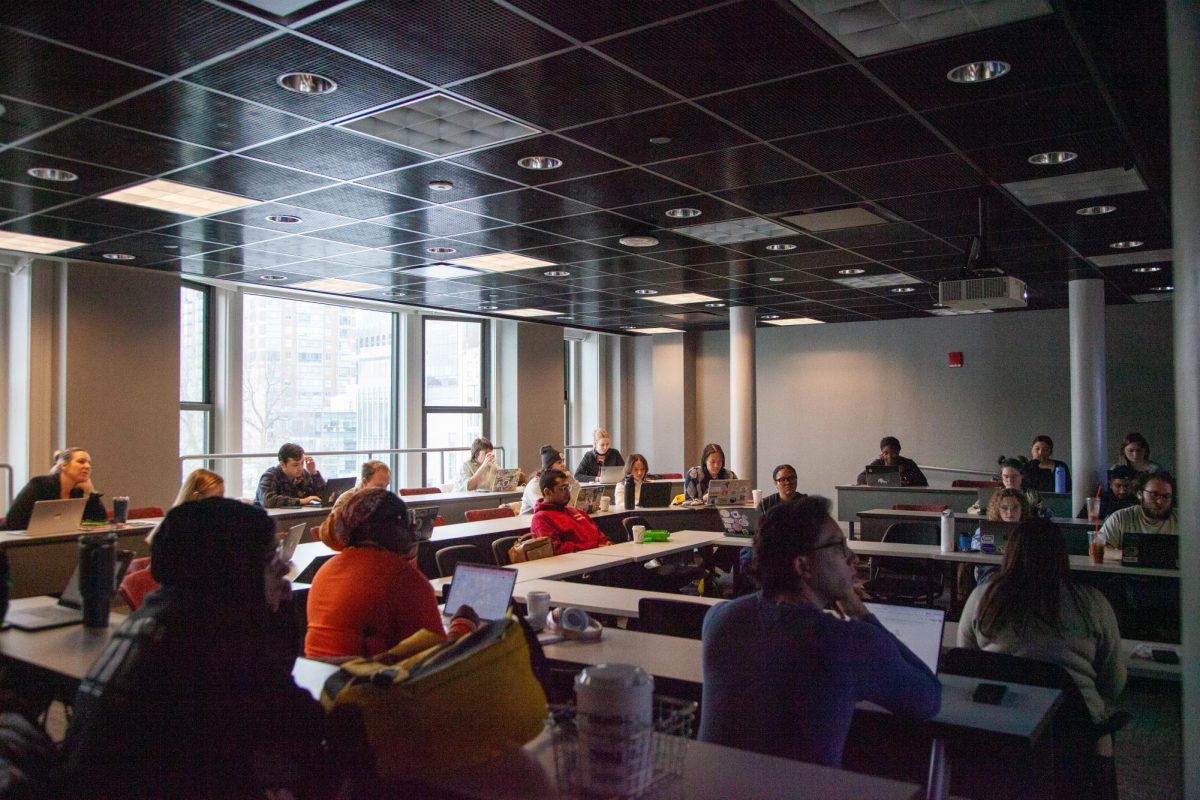
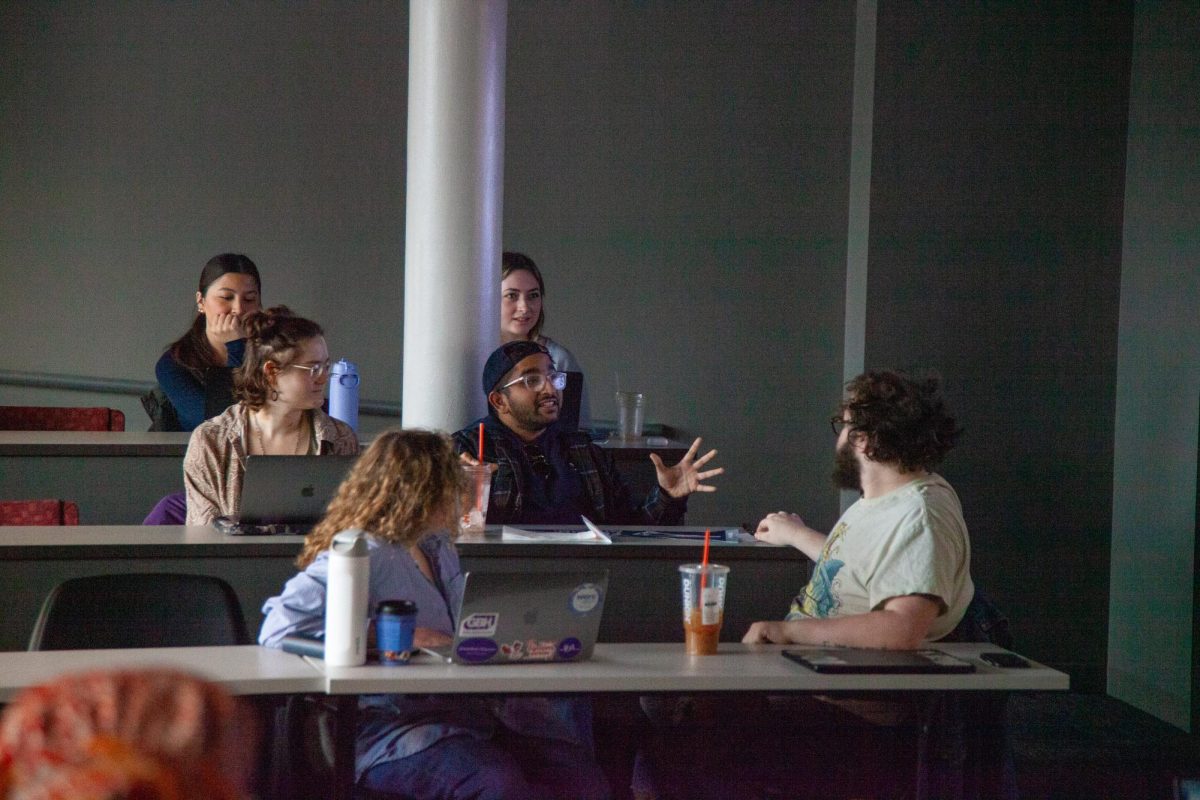
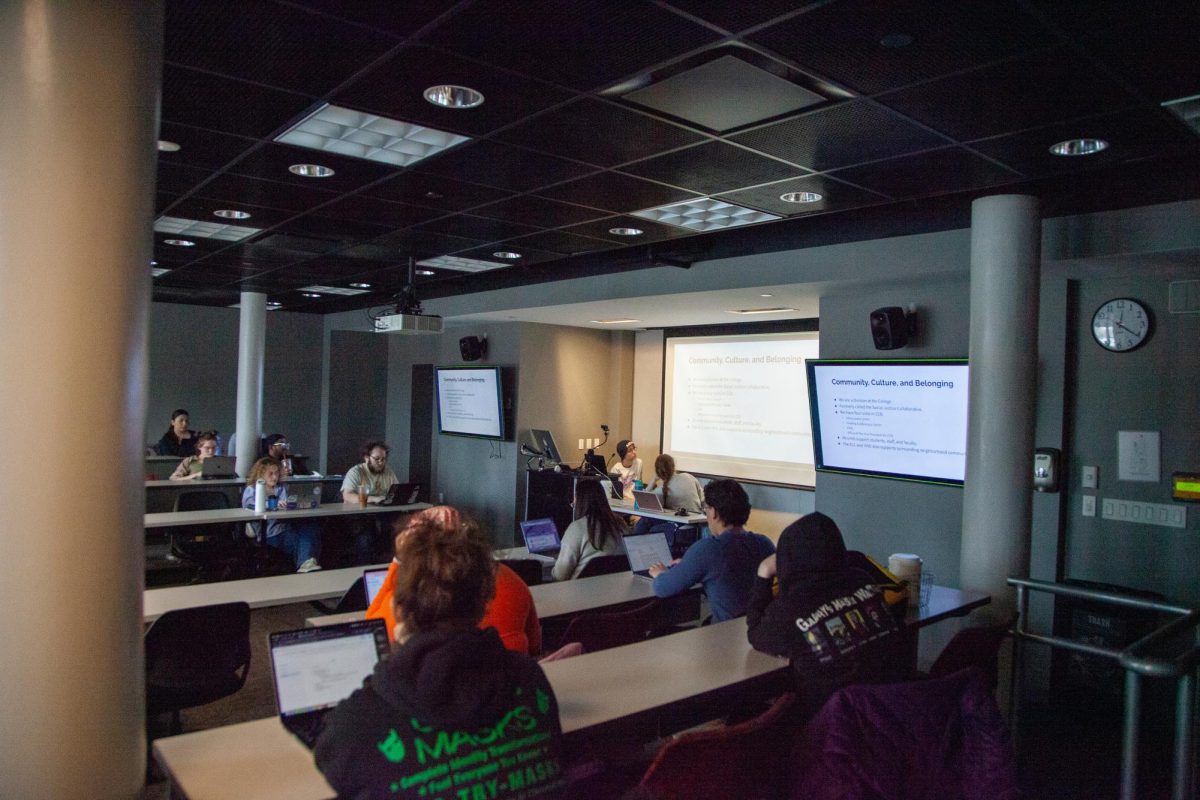
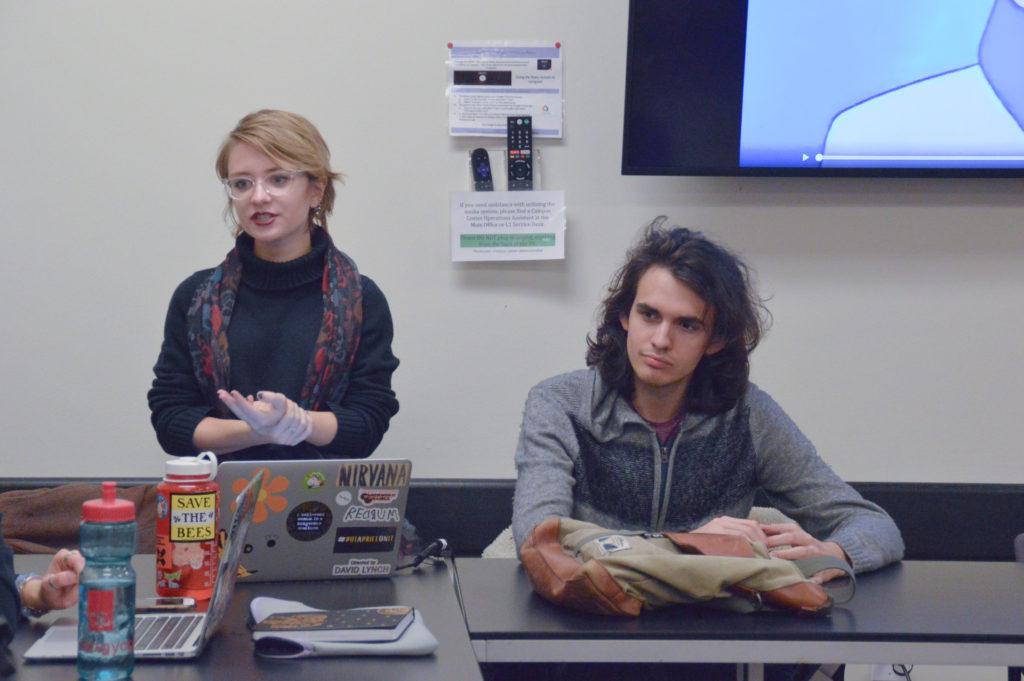
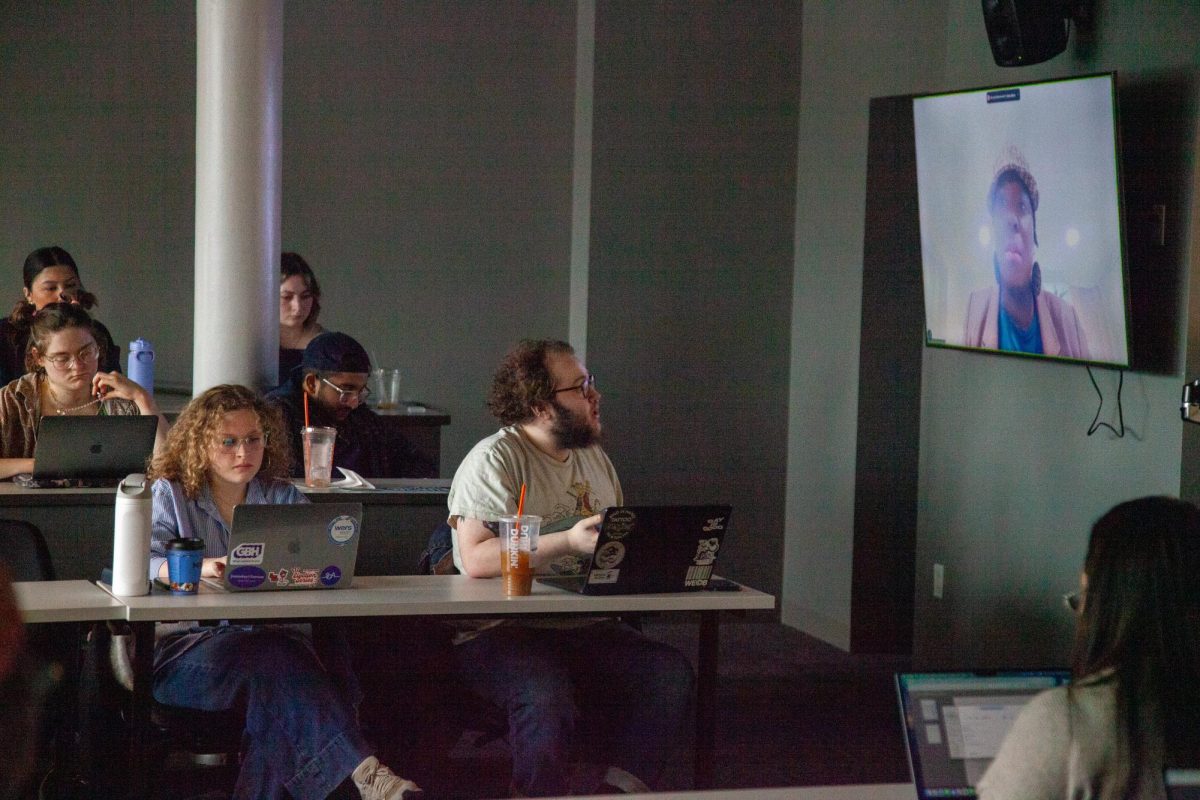
Vice President of Community, Culture, & Belonging Shaya Gregory Poku attended the Student Government Association’s (SGA) meeting last Friday to discuss the recent name and program change of the Teach-in on Race, now the Teach-in on Timely Topics.
The change was introduced in a community-wide email last month, the latest in a slew of name changes related to diversity, equity, and inclusion at Emerson College.
In August, Poku’s division changed its name from Emerson Social Justice Collaborative, Intercultural Student Affairs became the Cultural Engagement Center, and the Internationalization and Equity office is now named the Office of Global Engagement and Programs. In an interview with The Beacon at the time, Poku said the change was made to better align with the strategic plan.
“The college did decide … to sunset the former Teach-In on Race,” Poku, who attended the meeting remotely, said. “But it was the Teach-In on Race that really shaped this [new] iteration.”
Poku’s office oversees the Elma Lewis Center, the Healing and Advocacy Center, and the Hub for Inclusive Visionary Engagement (HIVE). She said her division aspires to “[build] a vibrant community, culture, and experience that fosters creativity, curiosity, belonging, and accessibility.”
The annual Teach-In on Race, which began in 2016, hosted a variety of presentations and events related to social justice and equity. This year’s Teach-In on Timely Topics centers on the theme Public Knowledge, Memory, and Legacy.
Poku touched on the timeliness of the theme, and its intersection with the “tension in our world about what … it means to document.”
The Teach-In’s theme will continue to rotate annually, though the lead planner — which was once the Global Engagement and Programs — has changed to Poku’s division. The Teach-In will consist of a panel, as well as community archival work in order to “preserve reflections on the former Teach-In On Race” in partnership with Emerson Archives, whose personnel were affected by recent layoffs.
She said this is an “homage to what the Teach-In has meant to the institution, while viscerally grappling with what this topic means [now].” This preservation, she said, is “deeply important for our institution.”
SGA President Georgia Winn asked Poku about the intention behind the name change, acknowledging both the effort to align with the strategic plan and the federal pressures at play.
Poku responded by saying the Division of CCB is “always [trying] to funnel up … and reamplify what the needs are,” while conceding that the name change is “concerning for members of the community.” She also emphasized the need for student participation in the Teach-In.
Poku said the Teach-In will grapple with how archival work and documentation “sustain democratic life.”
Panelists in the Teach-In will include Boston-based playwright Michael J. Bobbitt and John and Margaret Bard Professor Roosevelt Montás, and will be moderated by Writing, Literature, and Publishing professor Amber Lee.
In an interview with The Beacon, Winn said she understands the efforts to preserve the previous Teach-In’s intentions under federal pressure, but worries that removing the word race from the title also loses the meaning of the event.
“It’s important that when we talk about racism, we say we’re talking about racism,” she said. “I understand both perspectives, and I completely understand why there is a portion of our community that’s really disappointed by it.”
When asked if the name change made to the Division of CCB was necessary, Winn said that she doesn’t think the college wants to be in a spot where they must make these changes out of necessity.
“We have a vibrant queer community, a vibrant international community; we want that to be protected,” she said.
She said the name change speaks to a larger conversation in higher education about whether institutions should comply with crackdowns from President Donald Trump’s administration in an effort to protect students.
Poku then redirected the conversation to the recent changes to the Office of Student Success, where four roles were eliminated and four more were moved to other departments in mid-December. Three of the four employees whose roles were eliminated have moved to other departments.
Executive Treasurer Oliver Katz noted that the food pantry hasn’t been stocked as well as it was in the past, and asked what the long-term goals were to support student needs.
Poku said there will be a community-wide email sent to students soon about the changes to student support services.
She then explained where certain services have been moved to: the food pantry has been moved to Student Affairs, along with the Emersion transition program; first generation student affairs is partially housed under HIVE and partially under Student Affairs; and the Student Assistance Fund is now being administered in Student Affairs instead of Student Success.
Katz, however, said this seems like a “lack of a long-term plan.”
In response, Poku said that a plan is being developed and that more information on it is to come.
The meeting also included a presentation from Katz on Annual Budget Requests (ABR), the process by which funding will be allocated to student organizations.
The process will commence with the Financial Advisory Board (FAB) — consisting of the executive treasurer, the deputy treasurer, and a representative from each Class Council — looking at each budget, deciding on a recommendation for said budget, and reviewing, with the General Assembly, every organization’s proposed budget, before voting on final allocations.
Katz emphasized that SGA will “take every metric into consideration to get the most holistic perspective,” encouraging the assembly to consider and inquire further about things like organization membership, budget usage, purchase types, and community impact.
This year’s total ABR allocation is $920,155.70. Next year’s expected student fee revenue is $1,000,000, with an estimate of $100,000 unallocated funds. This leaves some leeway for situations such as appeals.
Katz then touched on SGA’s lack of a formal conflict-of-interest policy, asking the assembly to “leave all biases at the door.”
Katz said that while SGA does not anticipate any major cuts, they will likely not be granting any increases. Apr. 3 and 10 will be review days, with approval for budgets for the full academic year wrapping up by the last meeting of the semester.
During the open forum, Chief Justice Solidad Augustin noted that elections are coming up, encouraging the assembly to “be prepared” that all positions are up for re-election.
Vice President Angus Abercrombie, Katz, and Winn will all be graduating, so their roles will be open. Augustin also noted that, per First Generation and Low Income Senator Jazzy Compton’s recently approved campaign financing pilot program, SGA has the ability to finance campaigns.
Intent to run forms are live on EmConnect and will remain open until Mar. 4. Campaigning will begin on Mar. 16 and close on Mar. 29. Voting will take place on the morning of Mar. 31 and close the morning of Apr. 1.