

Emerson College students have gotten used to seeing troves of political videos on their TikTok feeds. From scenes of chaos during ICE raids on Minneapolis streets, to conflicts in Iran, the app’s algorithm registered users’ interests and pushed similar content.
But things took a turn two weeks ago, when the social media platform’s Chinese holding company, ByteDance, sold more than 80% of its U.S. operations to several different American investor companies to avoid a U.S. ban.
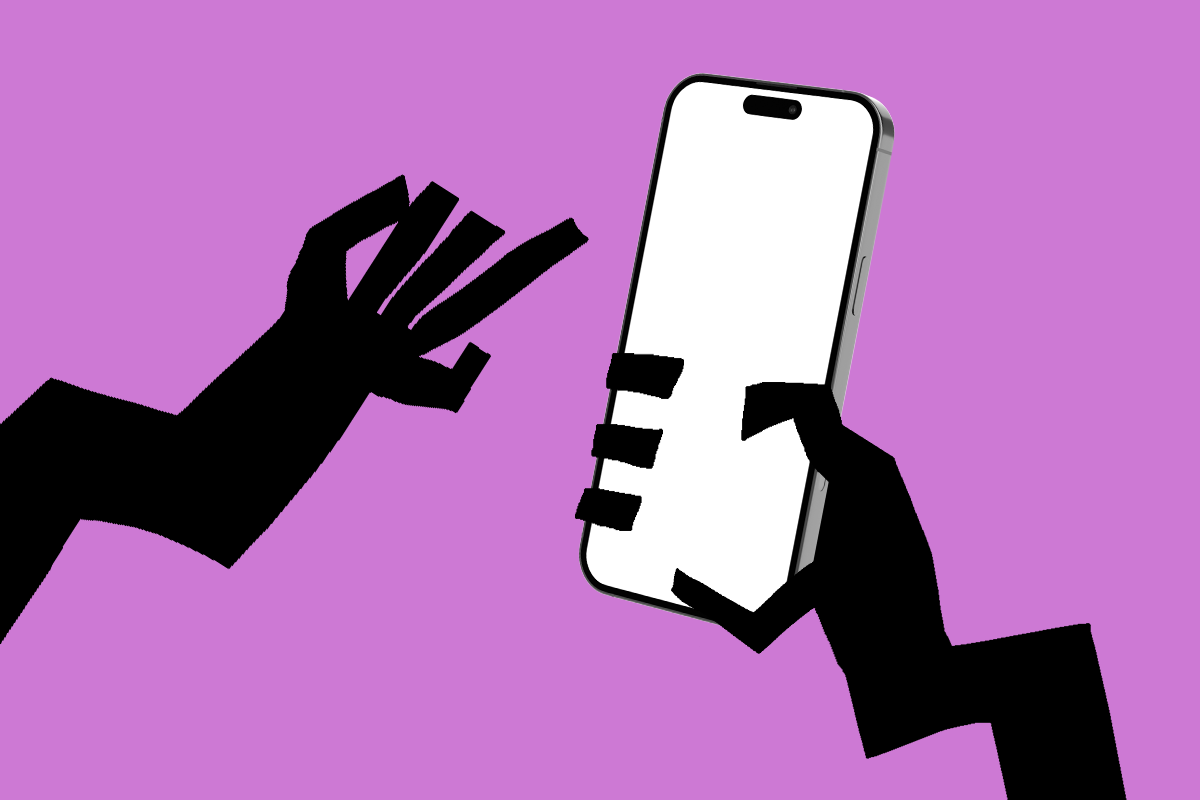
App users, including a number of Emerson students, have since reported that they’ve seen changes to the app. This includes inaccurate algorithms and reduced content related to ICE or sentiments against President Donald Trump’s administration.
Annie Ferguson, a freshman writing, literature and publishing major, opened the app shortly after the sale. She said the content she was presented was vastly different from before the update.
“My ‘for you’ page is not to my liking … my algorithm is not an algorithm I’m interested in,” she said.
According to Ferguson, while she still sees some videos that are related to politics, much of what she sees are general viral videos that do not align with her interests.
In addition to viewing content, there have been reported issues with users trying to post their own content. Ella Hamilton, a freshman political communications major, said that she discovered she had been shadowbanned — meaning she could post, but no one could see the content — after trying to repost a video.
“I was talking about how you shouldn’t be afraid to talk about abolishing ICE, and … they just shut me up because I [tried to] repost one video about that,” she said.
Hamilton, who has 200 followers and a public account, said she did not initially anticipate issues since her follower count was quite low, so the shadowban took her by surprise. She said that when another user she knows tried to repost the same video, the app would not let her repost it either. However, with other videos she has made or reposted, there have been no issues.
Claims of shadowbanning and other restrictions have been shared by many creators on the app. Prominent TikTok news creators, such as Aaron Parnas and Dylan Page, have reported that their usual videos are getting drastically reduced views, even though they each have millions of followers and average tens of thousands of likes per video posted.
The TikTok ban was initially proposed by Trump in 2020 out of concern that ByteDance would allow the Chinese Communist Party access to Americans’ personal data. The social media app went offline on Jan. 18, 2025, due to the Protecting Americans from Foreign Adversary Controlled Applications Act. This law, signed by former President Joe Biden in 2024, was set to take effect on Jan. 19, 2025 if TikTok hadn’t been sold to an American company. The app came back online a mere 14 hours later.
Trump said at the time that he would pause the ban and allow the app to continue in the U.S. if TikTok was acquired by U.S. companies. The new stakeholders include the major cloud computing firm Oracle, the Emirati-owned investment firm MGX, and California-based tech investment company Silver Lake.
Vincent Raynauld, an Emerson College professor who teaches global communications and social media, compared the change to TikTok’s algorithm to Twitter’s after it was acquired by Elon Musk and rebranded as X.
He said Musk was vocal about the transition, speaking about it on his personal account at the time. While the change with TikTok was much more subtle, the effects were highly visible.
“Some content was not being shared as widely as it should,” he said. “Especially content relating to what’s happening in Minneapolis … [and] a lot of left-leaning political creators. [They] posted videos about their content not having the same spread as it used to.”
Larry Ellison, the owner of Oracle, attributed the algorithm issues to the winter storm causing data center outages.
Some users said they tried to reset their algorithms by blocking Oracle’s account on TikTok, although Raynauld said he was doubtful this would work long-term.
Hannah Bambach, ’25, an Emerson alumna and content creator now based in the United Kingdom, began using TikTok when the social media app was called Musical.ly as a way to find community. After some time on the app, Bambach started creating content mirroring some of the videos she saw.
“My initial content was … kind of just capturing day-to-day mundane moments,” Bambach said. “But it started becoming more about lifestyle and books.”
When Bambach relocated to the UK last September, she noticed that her views came from random users on the app, rather than her followers. After the group of investors acquired TikTok, she noticed that she had either significantly less views on her videos or none at all.
“A lot of my views were going to zero immediately and staying at zero for hours and hours,” she said. “And I have 47,000 followers, so … I know one person, in theory, would see it.”
On her algorithm, Bambach also noticed that she could not repost political posts or videos about ICE. She was doubtful that cold weather was the true cause of the problem, stating that other storms have not affected her experience on the app.
“I feel like that’s absolutely ridiculous that [TikTok] was claiming that,” she said.
While her algorithm has gone back to normal, that does not seem to be the case yet for some users in the states, despite TikTok saying all operations had been restored. Still, Raynauld said it’s unlikely that people will move to another social media app to get their content.
“What I know is that TikTok … has properties that are very much liked by members of the public,” said Raynauld. “I’m seeing TikTok having a robust growth, or at least a robust usership, for the foreseeable future.”