

Spoilers ahead for “Wuthering Heights” (2026).
Since its publication in 1847, Emily Brontë’s “Wuthering Heights” has captured audiences with its psychological depth as it explores social class and the all-consuming need for revenge.
To Emerald Fennell, reading the book at 14, the novel screamed sexual fantasy, as her story goes. And now we have her version, in all its freaked-out glory.
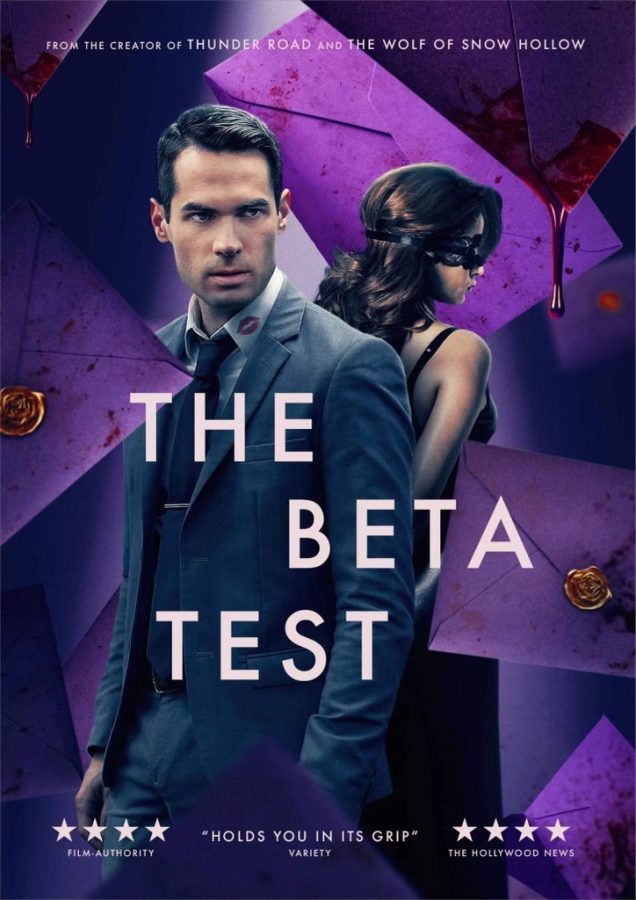
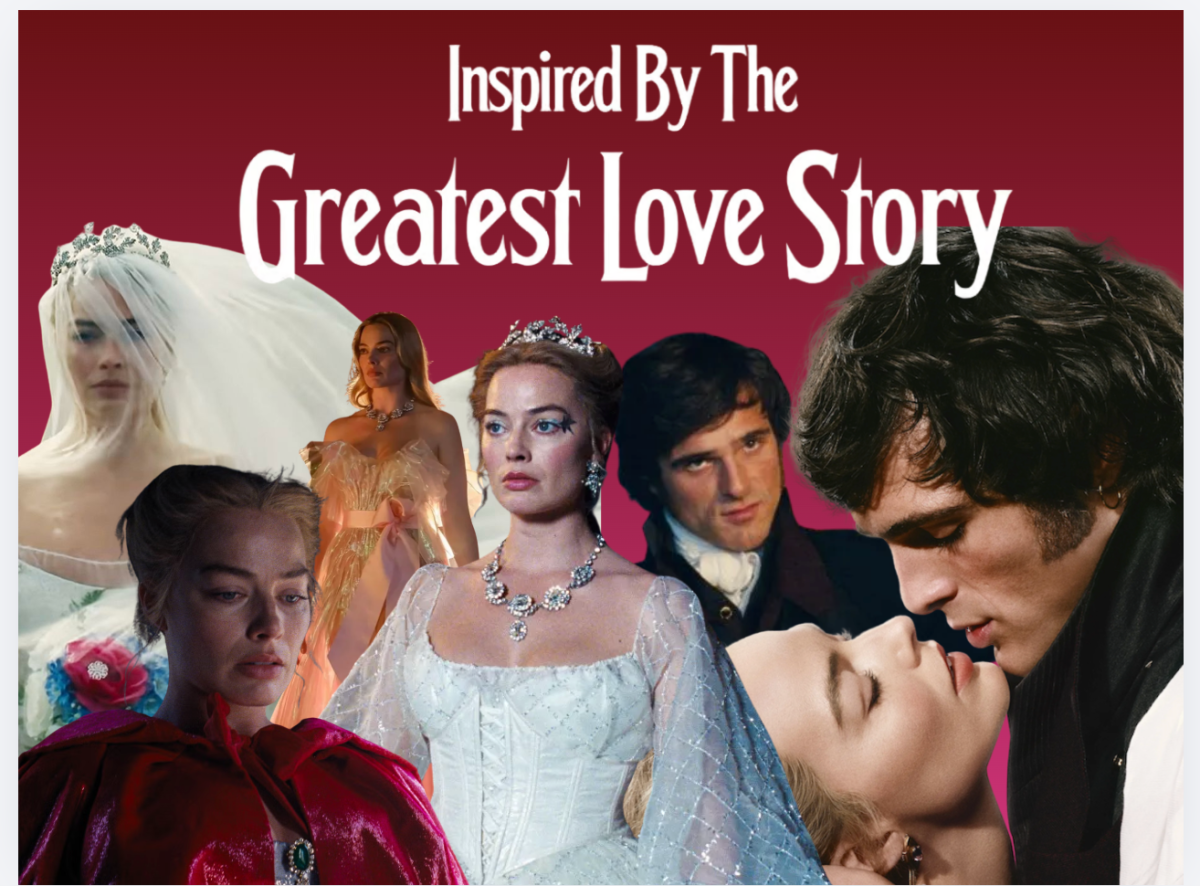
“Wuthering Heights,” directed and written by Fennell and starring Jacob Elordi as Heathcliff and Margot Robbie as Catherine, uses the bare bones of the original book and throws the rest out the proverbial window.
The film begins the same way as the novel, with a young Heathcliff (Owen Cooper) being taken in by young Cathy’s (Charlotte Mellington) father (Martin Clunes), prompting the two to become close friends. Mellington, in her breakout role, captures the screen with her mischievous young Cathy, and Cooper continues his streak of spellbinding and emotional performances as young Heathcliff.
Soon enough, Elordi and Robbie appear on screen. Elordi, coming off of the success of Frankenstein, continues to prove his talent, leaving his teen drama past firmly in the rearview mirror with each new role. Robbie succeeded in making me hate Cathy’s character, but I guess that was the point. Both successfully portrayed the many flaws of their characters alongside their strengths, and had better chemistry than I was expecting when I first heard the casting announcement.
However, I wish there had been more to make me feel that their characters were actually in love, rather than just obsessively trauma bonded from childhood. If the movie had been more true to the book, that connection would have been enough, as there would have been more to the story than their relationship. But if this was truly supposed to be “the greatest love story ever told,” as the trailer purported, I would have wanted more actual love between the two throughout the whole film, rather than half of it consisting of their vicious bickering.
Even with convincing performances, it is difficult to really take the characters seriously when every possible moment of the film is unnecessarily sexually charged. From “food-porn” style close-ups of bread dough and broken eggs, to gratuitous depictions of BDSM, the viewer is more inclined to laugh at these overdone moments rather than feel for the doomed romance between Heathcliff and Cathy.
As for the romance itself? It was difficult for me to care about, for various reasons. Honestly, every character is insufferable, other than Cathy’s husband Edgar Linton (Shazad Latif), who I was forced to feel bad for by the end of the movie.
From the moment they meet, Cathy treats Heathcliff as a pet rather than a fellow human, marrying Edgar to avoid “degrading” herself by entering a relationship with Heathcliff, prompting him to disappear for five years and return rich and refined.
Perhaps there could have been more to say about their dynamic if the film had given any credence to the themes of socioeconomic inequality that somehow still manage to break through Fennell’s ignorance. This is especially shown in Heathcliff’s initial indifference to Cathy when they are adults. He recognizes that they are no longer children who can play together with no consequence, as he is a servant and she is the daughter of the man of the household.
Speaking of ignorance: the biggest issue with making this an adaptation rather than a sexy gothic film divorced from any source material is that Heathcliff, in the book’s canon, is not white.
Though Fennell claims to have come at the story wanting to make her own version, and apparently places the title in quotation marks to signify that, it begs the question of how much a director can adapt source material until the original becomes superfluous.
Does an adaptation justify changing a character’s race to cast her favorite leading man (Elordi was also in Fennell’s previous film “Saltburn” (2023)), or is it just whitewashing? What is the point of connecting your adaptation to a novel with almost two centuries of history and acclaim if that novel is not going to be in any way honored?
Despite internet backlash, Fennell stood by her casting decision, saying that there could be endless takes on the story, and that his casting resonated with her specific vision. Even after the film’s release, the casting remains a divisive subject for critics and viewers alike.
As if to give viewers a consolation prize for such bastardization, the film has a lot of eye candy. Jacqueline Durran’s costume design adds to the fever-dream atmosphere of the Lintons’ house, throwing out any ounce of historical accuracy to dress Robbie, in the most egregious example, in a naked dress that looks to be made of cellophane as a nightgown. The cinematography stuns, from shots on the endless Yorkshire moors to the multicolored, fun, house-like palace that is Thrushcross Grange, where Catherine lives after marrying Edgar.
These visuals combine with a synth soundtrack by pop sensation Charli XCX, with the opening song “House” featuring John Cale becoming a meme before the film even released. The rest of the tracks are suitable for both a sprint on the moors and a club set. I will give Charli the credit that her music is good, but it often creates more of an ambience than the dialogue does.
And because of this, it is safe to say “Wuthering Heights” is a film far more concerned with looking good than being good.
That is, until the ending.
The sequence is long, bordering on being drawn out, silencing the audience and drawing their tears. Elordi shines here in his grief, as the visuals finally quiet down to focus on the moment at hand. The final shot provides no consolation for viewers that Heathcliff will be alright after Catherine’s death.
It’s a gut punch, but one that would have hit even harder had the rest of the film been easier to take seriously. That final scene got me to stop laughing, but caused me to throw up my hands and say “That’s it?” when it was over. It felt like the film was finally getting somewhere, but ended before it could capitalize on it.
In the tradition of “Wuthering Heights” adaptations, the movie ignores the second half of the book where Heathcliff is bent on revenge. It might have been interesting to see how Elordi would have been in such a part. But then it couldn’t be this sexually saturated, greatest love story ever, and anything other than that is simply not Fennell’s brand.