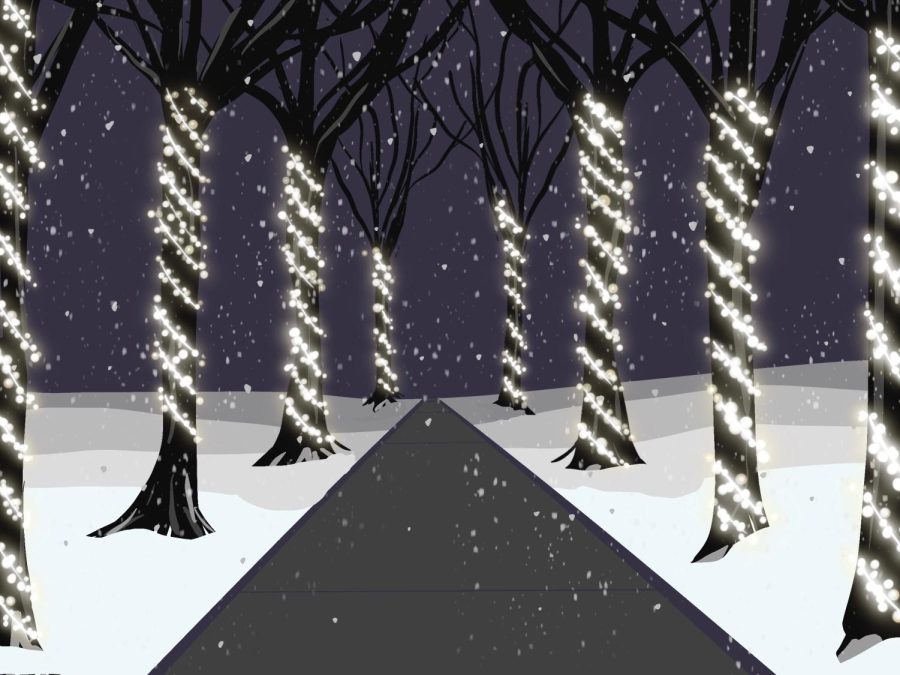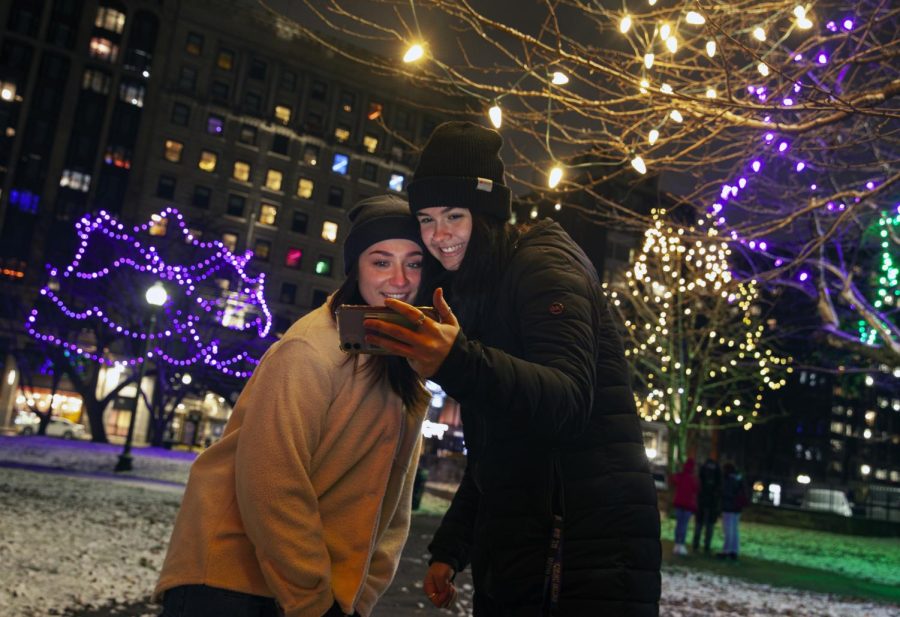


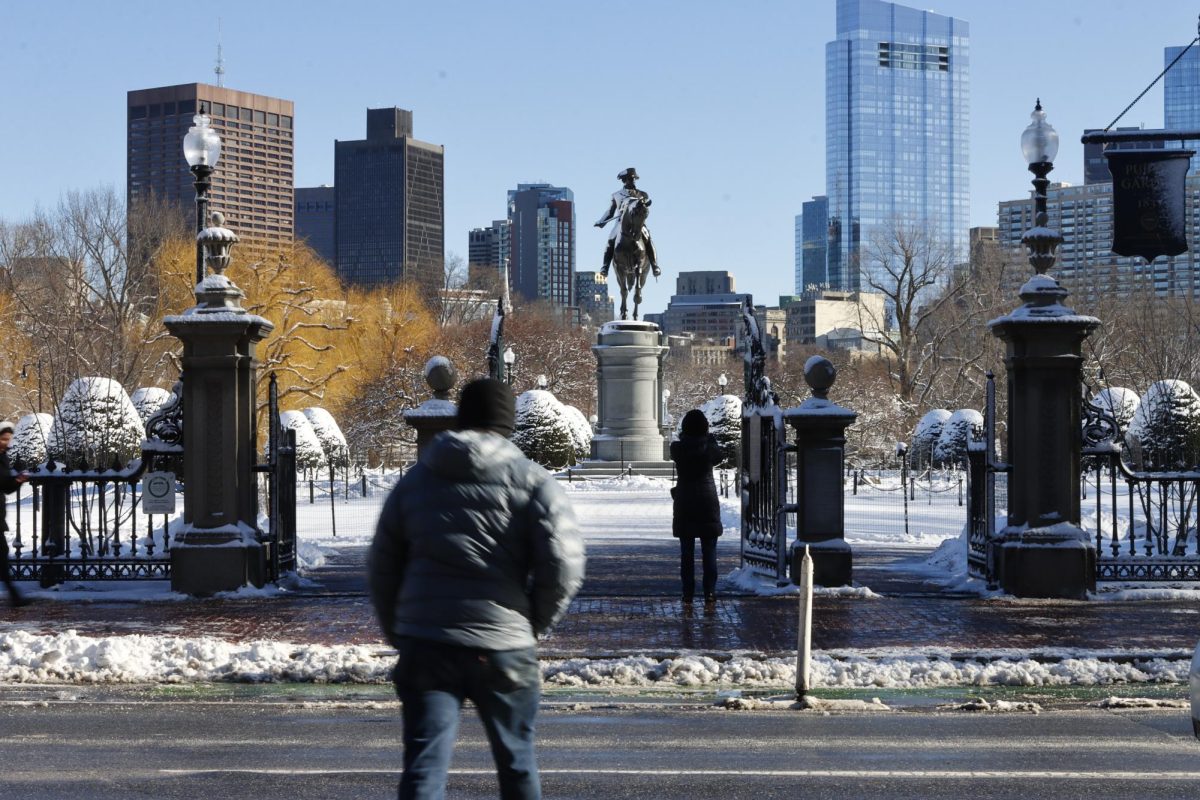
Winter has followed Emerson students back from Thanksgiving Break this year.
Although astronomical winter (based on the earth’s position relative to the sun) won’t arrive until Dec. 21, meteorological winter (a fixed point on the calendar based on weather patterns) started on Dec. 1. For many students, motivation and energy levels can be a challenge in the winter. While only about 5% of the U.S. is estimated to have seasonal affective disorder, winter weather and fewer hours of daylight can still cause mild versions of its symptoms in many people. Students say that this, combined with the pressure of finals, illness, and reluctance to brave the harsh weather, can make the liminal space between Thanksgiving and winter break a trying time.
Senior writing, literature, and publishing major Izzy Claudio described how she feels paralyzed by the colder weather and shorter daylight hours.
“I have less motivation, I feel like I’m doing everything at a slower pace,” she said. “I think it’s just a reflection of it being so cold outside.”
The difficulties of winter can exacerbate the stress of finals season, added Patricia Smallwood, another WLP senior.
“It’s just that I don’t have any motivation, really, to do them [finals], because it just gets so dark so early,” she said.
Many students also find the diminishing amount of light challenging, as daytime shortens by up to nearly six hours. This can be especially challenging for students with classes that end after or near sunset.
“Say I get up at 11:00 and the sun sets at 4:30; it feels like I have no day,” said Claudio.
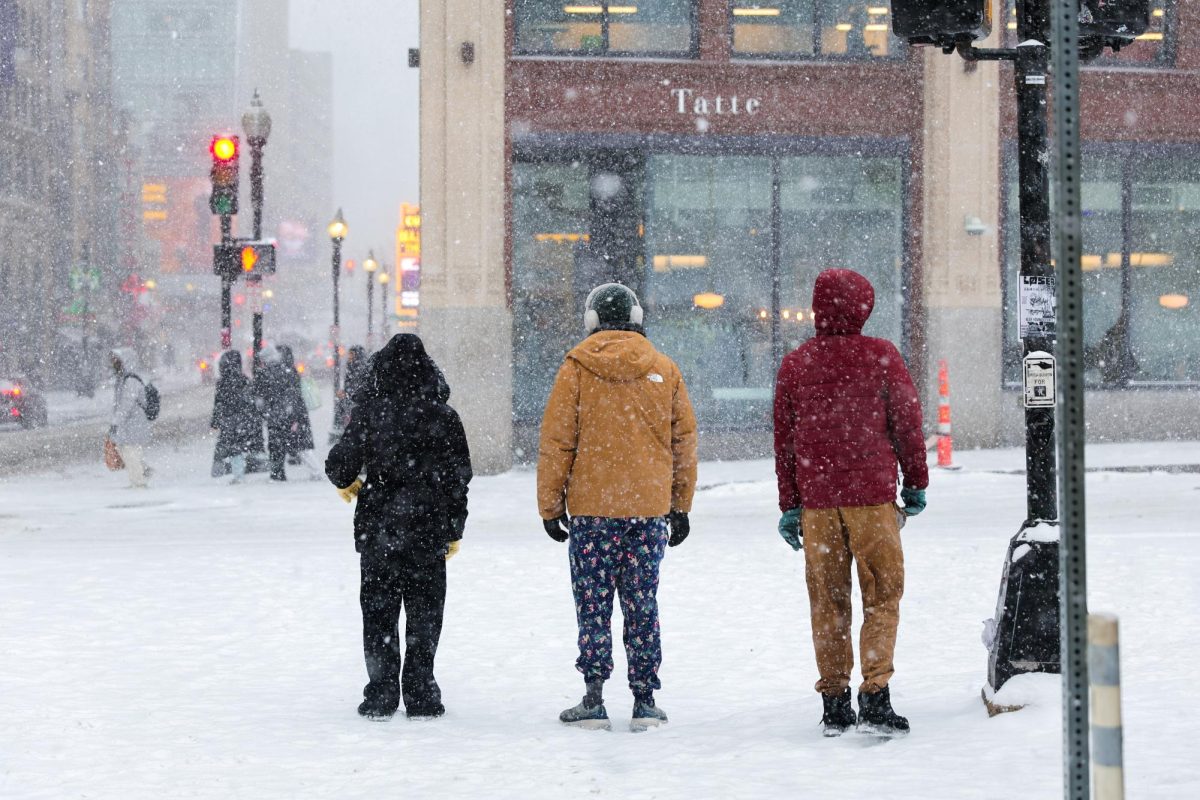
The colder, darker months are also a barrier to outdoor recreation. Many students choose not to go outside or even to other indoor locations because of the cold and wind.
“If I’m not walking every day, I’m walking every other day when it’s nicer out,” said Jenna Benson, a junior creative writing major.” But now, taking walks is a lot harder now for Benson, who said she is dissuaded by the cold and isn’t comfortable walking in the dark as a woman.
Benson said that being in nature is one of the best ways for her to calm down, reset, and take a break from technology. It’s also a social activity that she likes to invite friends to, but they stop saying yes in the colder months because of the cold and wind.
“It’s ridiculous; you’re walking, and you can barely breathe,” she said.
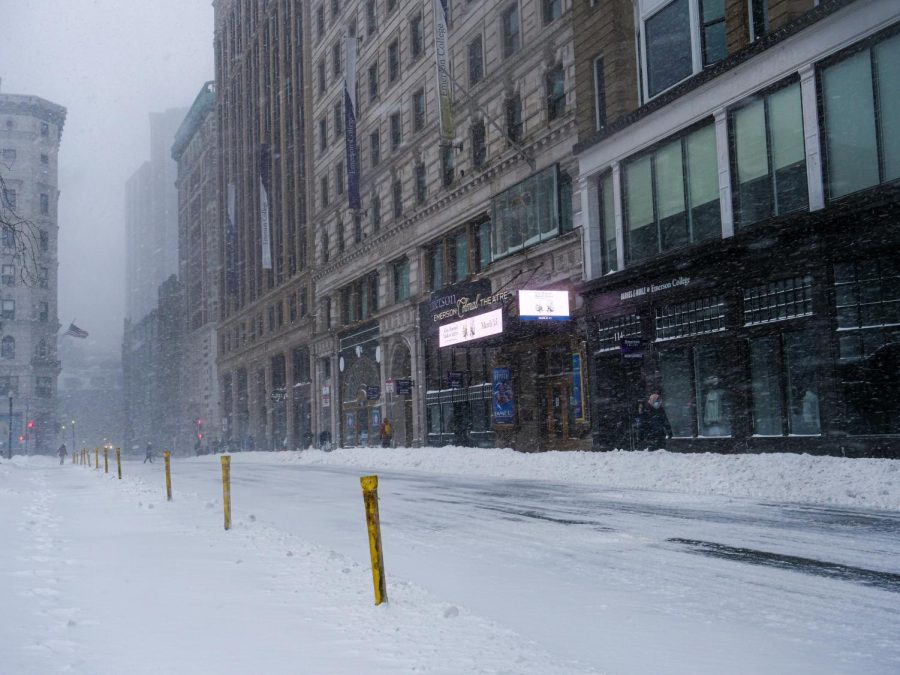
Boston is one of the windiest cities in the U.S., with an average wind speed of 11.5 miles per hour and a highest recorded wind speed of 90 miles per hour,and the discomfort can last even after returning to the safety of the indoors.
“Especially in Boston, when the entire city’s just a massive wind tunnel, I get such terrible headaches,” said Endo Crist, a junior VMA major, who was born in Hawaii. “I was wearing multiple layers of thermals and then a sweater and a jacket, and a scarf on top of that. Everything gets so bulky.”
For Claudio, who is from Chicago, it’s not so much the bulky layers as it is the unpredictability.
“I don’t mind bundling up, but I feel like I am either too bundled up or not enough, and when I’m not bundled up enough, it’s brutal,” she said.
But some students have found their own ways to combat the consequences of the cold weather. To cope with the dark and cold, Smallwood said that she likes to light candles and have lots of blankets.
For Crist, it’s important to switch his bedding to flannel, crank up the heat on the thermostat, and drink lots of tea and hot chocolate. However, it’s not just about sheltering in place—it’s also about finding beauty in the dark.
“I try to find excuses to go out because even if it’s dark outside, that doesn’t necessarily have to limit me in the things that I do: going to bookstores, going to places where I can be inside but still out and having a good time,” Crist said.
Claudio agreed, saying that getting out of her room is important for her productivity.
“My friends and I have been going to cafés or the Lion’s Den or the library to really lock in and do work, and that’s been really helpful because it gets me out of cozy mode.”
Rather than seeing it as only an obstacle, Claudio thinks it’s also important to take advantage of the colder months as a time to rest and recuperate.
“It’s the holiday season, and we’re seeing snow again, and there’s like a specific energy in the air,” she said. “It feels like it’s okay to stay inside and recharge.”
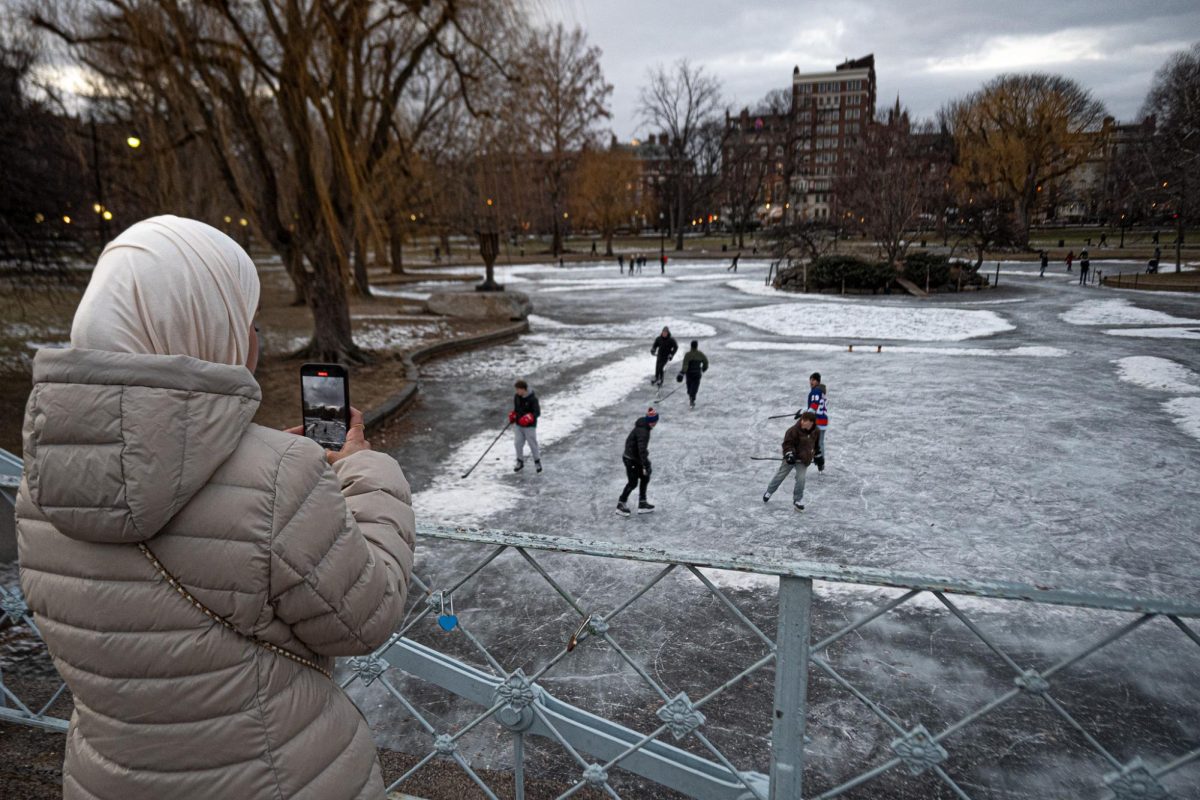
Benson agrees that the winter months should be a time of fun and rejuvenation, but for her, recharging might also look like playing outside. She explained that she enjoys the snow, the atmosphere of the holiday season, and pretending to still be a kid by having snowball fights and playing outside.
Still, this is not always practical in the reality of school. For Benson and others, it’s not laziness but the need for rest.
“I want to just be cozy and chill, and that’s not conducive with the workload for finals,” she said.