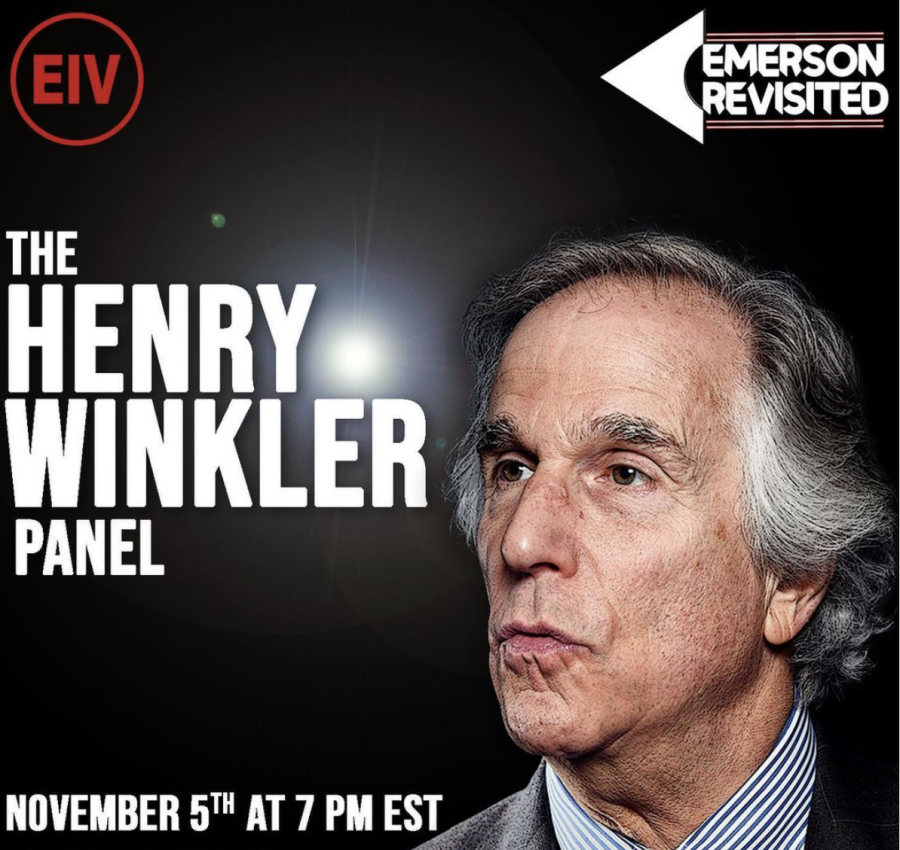



Award-winning actor, producer, director, and author Henry Winkler ’67, will return to Emerson College’s Boston campus in May to deliver the 2026 commencement address, the college announced in an email Monday.
Winkler will deliver a speech at the main commencement ceremony on the evening of May 9 at the Wang Theatre.
Winkler rose to fame in the 1970s playing Arthur “Fonzie” Fonzarelli in “Happy Days.” He later captivated audiences as Barry Zuckerkorn in “Arrested Development” and as Gene Cousineau in “Barry,” the latter of which won him an Emmy Award in 2018.
Robby Waters, a senior video media arts major, expressed both his and his parents’ excitement in Emerson’s choice for keynote speaker.
“I told my mom, and within two minutes she reposted it on her Facebook, and she was like ‘The Fonz, ah!’,” Waters said. “It’s pretty cool that I get to see this fella who’s pretty popular do a speech.”
Elizabeth Tippins, a senior stage and production manager, had a similar experience with her parents. While she had little opinion upon hearing Winkler’s announcement, she said her mother was thrilled, noting his past success at Emerson’s commencement in 1995.
“I wasn’t mad because I know he’s important, but I didn’t really care … He is just some old guy,” Tippins said. “My mom texted me, and she was like, ‘Oh, he’s so cool.’”
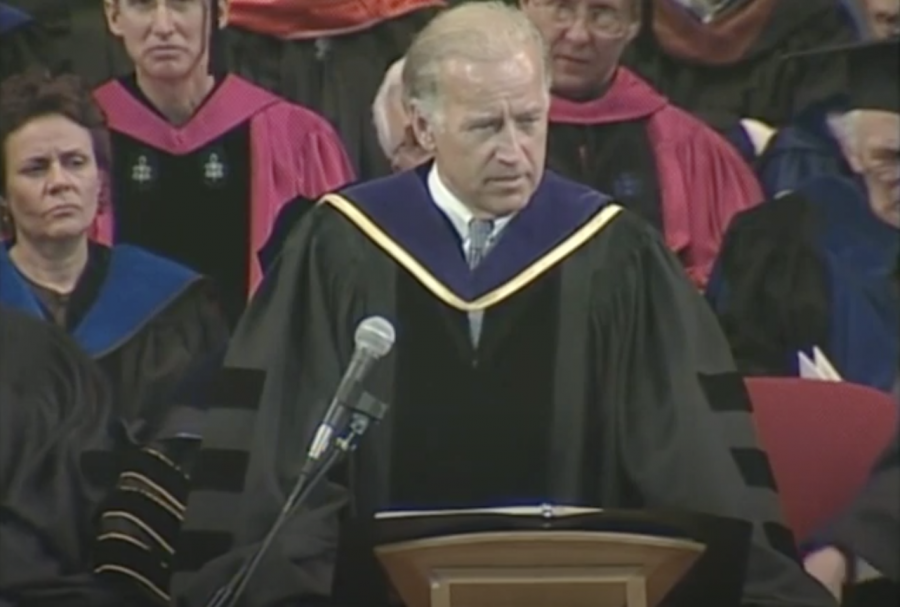
In his last commencement speech, Winkler began with comical anecdotes of his struggles to stay awake in class and ended with an impassioned message addressing the United States’ problems with supplying nutritious school lunches, gun violence, and unnecessary brutality leading to senseless killings. He ended the speech preaching to the graduates to insert positivity into the world and to never doubt their sense of selves.
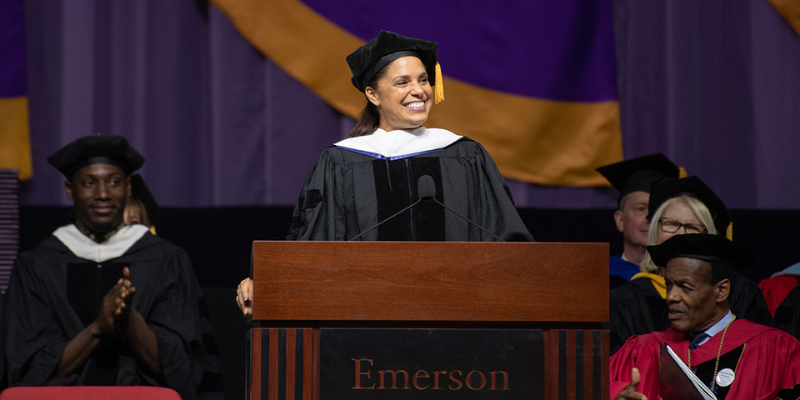
Last year, Winkler was also a commencement speaker at Georgetown University, where he had a similar comedic tone and an uplifting message, however omitted any political content.
Brendan McNamara, a senior business of creative enterprises major, didn’t immediately recognize the actor, but upon hearing of his role in “Arrested Development,” expressed enthusiasm.
“I’m excited, it’s very exciting, it’s a great representation of Emerson,” he said. “Having a good commencement speaker goes a long way.”
Tippins disagreed, saying that she had hoped for a graduation speaker who was more well-known to her generation.
“I would have preferred someone who was geared more towards our age group than maybe our professors,” she said.
Another student, Noelle Leslie-Morgan, a third-year MFA student who is graduating in May, said she wishes Emerson had chosen someone who could speak to today’s political climate.
“I feel like we could have had a more impactful speaker, maybe a person of color, during the time that we are in right now,” she said.
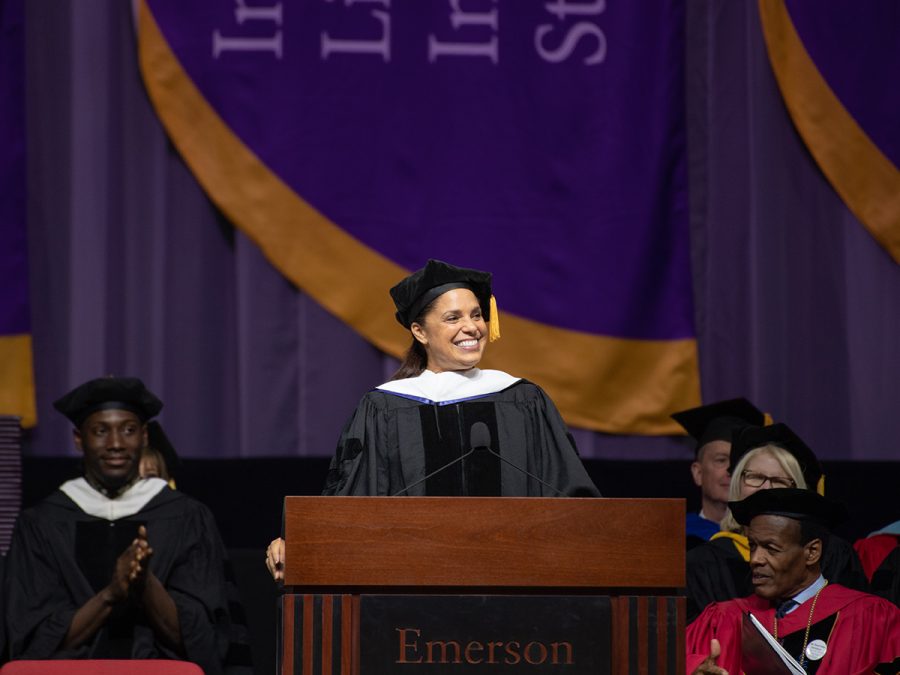
Last year’s keynote speaker was Emmy and Golden Globe-winning artist Jennifer Coolidge, who went viral for highlighting the school’s queer community in her speech. She left some students with higher hopes for this year’s speaker, including Bailey Carr, a senior interdisciplinary studies major.
“I’m sad that I didn’t graduate in 2025 because I wish I could have seen Coolidge,” Carr said.
Fiona Paige Brown, a senior theater and performance major, felt differently. She watched Coolidge’s speech online and said she found it “boring” and less thought-out than she hoped.
“It just felt ill-informed to me,” Brown said. “I feel like Henry has had more of a connection with Emerson, so I’m hoping that he can speak more on the Emerson experience and connect more with the students.”
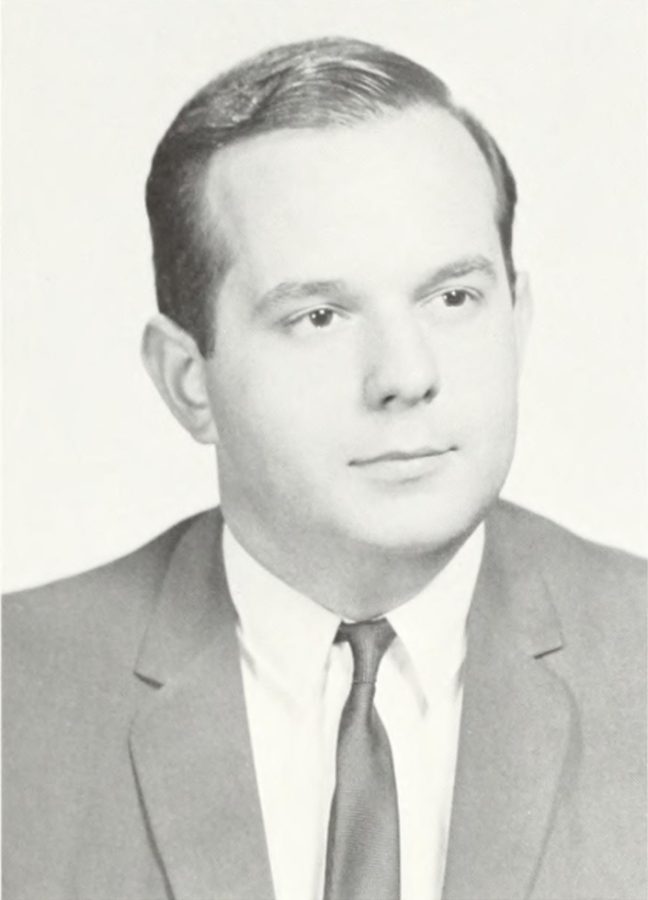
Winkler began his acting studies at Emerson in 1963. He was a member of the Alpha Pi Theta fraternity, acted in various student productions, and was an active member of the student-run WERS radio station. He received his honorary doctorate in humane letters in ’78.
Outside of acting, Winkler co-wrote the Hank Zipzer children’s book series, which centers around a child with dyslexia, a condition that Winkler also lives with. The series, according to the college’s announcement, is written and published with a dyslexia-friendly font and increased spacing to make it easier for those with the condition to read and digest.
Due to his efforts to support children with dyslexia and special needs, Winkler was appointed by Queen Elizabeth II as an honorary officer of the British Empire in September 2011.
“Henry’s extraordinary career has been a commitment to Emerson’s values of creativity, curiosity, and expression,” Emerson President Jay Bernhardt said in the community-wide email. “I know our entire community will be inspired by his example.”
In the presidential communication, Bernhardt gave a nod to The Beacon’s Deputy Projects Editor Meg Richards, who included Winkler in their commencement speaker predictions article earlier this semester.
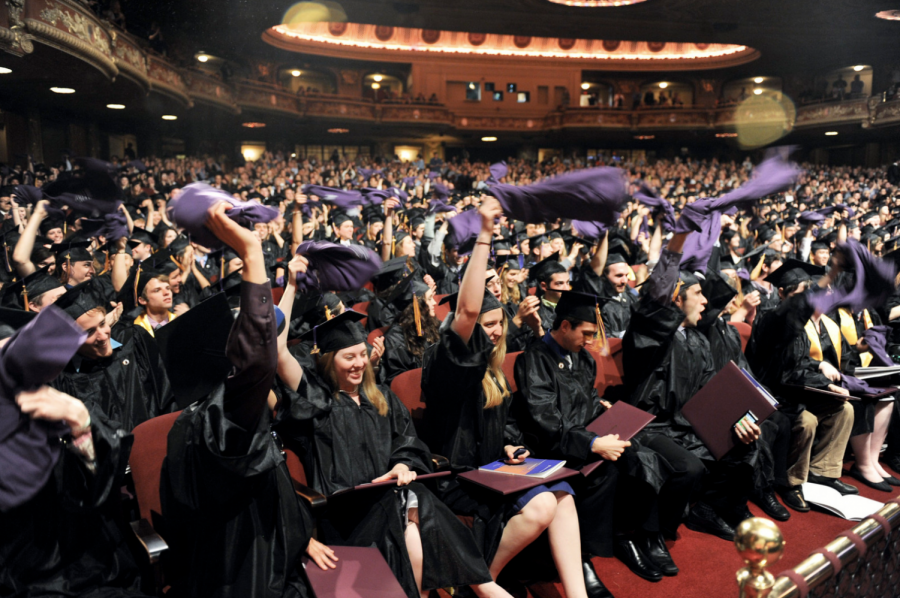
Around 1,000 undergraduates will receive degrees at their respective departments’ ceremonies during the day on May 9. At 7 p.m., the college-wide commencement celebration will feature Winkler’s address, honorary degree recipients, and performances, according to EmersonToday.
This year’s commencement ceremony was moved from Boston University’s Agganis Arena to Boch Center’s Wang Theater. While the Wang is closer to campus, it seats half the capacity of the Agganis Arena. The college hasn’t cited a reason for the change in venue.
This reduced capacity will result in three separate diploma ceremonies for each school throughout the day, for which students will receive five tickets for their designated guests. Later, Winkler and other featured speakers will take place at the all-college commencement. Each student is allowed two tickets for the in-person ceremony and three for the livestream viewing.
These changes drew varied responses from graduating seniors. Brown said that the separations of ceremonies and impacts on attendance were harmful to the ceremonies.
“We’re spreading it out so much, it feels a little exclusionary. The point of Emerson is that we’re such a community, and we’re supposed to be such an inclusive school,” she said. “I would like to be inclusive and supportive with my peers that I’ve been collaborating with for the past four years.”
Waters agreed, stating that separating the keynote ceremony from the diploma ceremony felt “strange” to him.
“If someone is speaking at a graduation that’s not really an event, it’s in addition. It shouldn’t be its own thing,” he said. “I don’t know how much I like it.”
Despite the changes to commencement, Brown remains hopeful about Winkler’s speech.
“It could be a flop, but I am very hopeful that he will do his research, and it will be very inspiring,” she said. “I’m excited for it to be a symbolic way to end my time at the school.”