

Everyone wants to be chosen. They want to be the applicant who gets the job, the person who wins over their crush, or the favorite in their friend group. But this desire ends the moment you receive a jury summons in the mail. Suddenly, being rejected becomes your main priority.
I received my summons for the first time last summer while working as an orientation leader here at Emerson, despite being a permanent resident of New York. Massachusetts is one of the few states that requires out-of-state college students to serve on its juries—even if they have class. According to the Commonwealth of Massachusetts’ website, these students live in the state for at least 50% of the year, making them temporary residents, which, in the state’s eyes, just means they are residents eligible to serve. Potential jurors can defer service for up to a year, which is what I did.
But my year was up, so last Wednesday I found myself reluctantly showing up at a Boston courthouse at 8 a.m., determined, just like everyone else, not to be chosen.
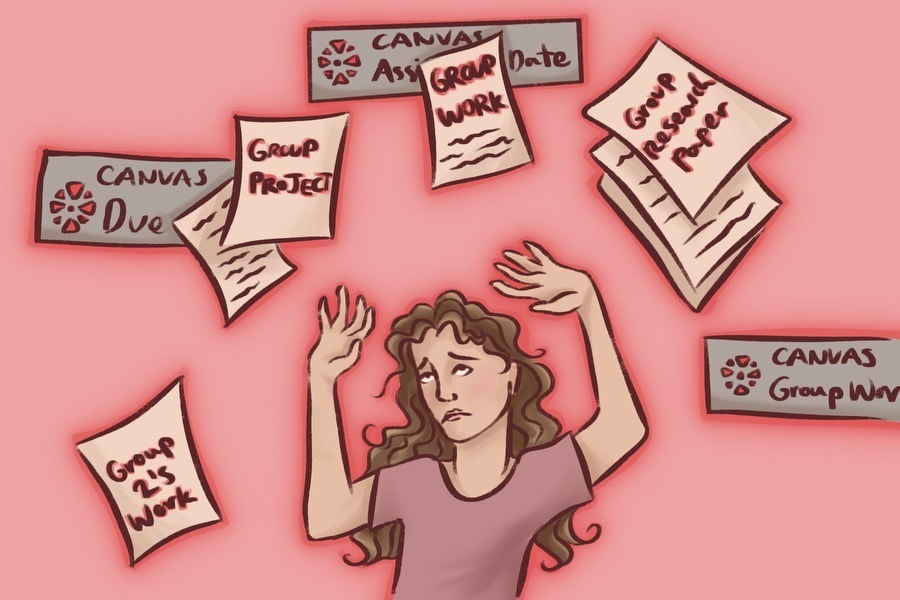
My journalism professors have always told us not to get out of jury duty, mainly because it’s our “democratic responsibility,” but also because it provides valuable insight into how the courts work. But for 48% of Americans polled by Bar Prep Hero, serving is a financial inconvenience. I would be missing class, having to make up work, rescheduling a meeting, and paying for transportation, all while sitting in a room for hours with strangers twice my age and dealing with irritable, overworked court officers.
Like many people there, I just needed to get it over with and get out.
However, the moment I stepped into the courtroom and saw the defendant, an odd thing happened: I suddenly felt inspired to serve. After the judge explained the basics of the case—which I cannot share because it’s presumably still ongoing—he said it was an “easy” one with an “obvious” verdict. I felt he was insinuating the defendant was clearly guilty—an accusation that reinforced my own biases about the U.S. judicial system.
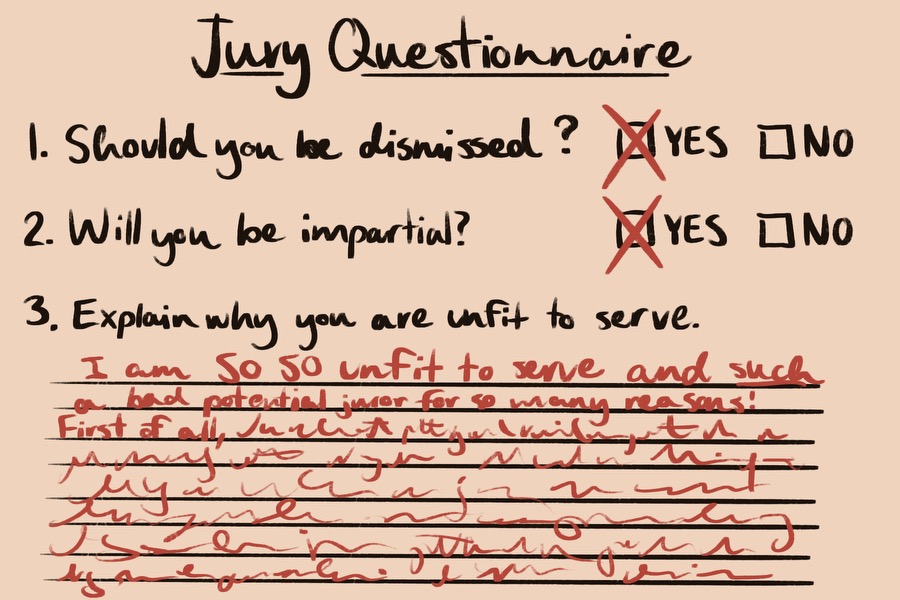
I had admitted on my jury questionnaire that my journalism education affects my views of the criminal justice system, which could affect my ability to be an impartial juror. Many of my journalism professors discuss the system’s failures—the silencing of voices, racial profiling, and mistrials—which have undoubtedly shaped my beliefs. When I saw the jury was composed entirely of white people, I witnessed these pitfalls firsthand. The short video that promised diversity shown at the beginning of our session was misleading.
This was certainly not a diverse selection of peers.
When the judge announced my juror number and I walked up to the bench, I didn’t even have to plead like I had initially planned that morning. The moment they noticed I was a college student who permanently resides in New York, they let me return to the jury pool to be considered for another trial. I couldn’t even enjoy my “success” in getting dismissed. Instead, I worried for the defendant.
I knew I had biases, and I knew I would have a hard time understanding the defendant’s reasoning, but when I saw them wearing translation headphones because they didn’t speak English, I felt sick to my stomach. They didn’t know the jurors selected for their case had spent the morning trying to convince the court officer to let them go home, arguing they had forgotten their paperwork or had more important obligations. When the court officer ultimately refused to budge, they sat back down, disgruntled, angrily texting and not at all concerned about their duty in this trial. One juror had already ushered the bailiff over to whisper something in their ear, while pointing toward the exit. I could only assume he already wanted to leave.
As I looked at the individuals I spent three hours of my morning with sitting on the other side of the judge, I worried they’d vote quickly just to get out, even if that meant it wasn’t in the defendant’s best interest.
I wasn’t picked to serve at any point that day, even after five hours of waiting. It might have been because I was a student, a New Yorker, or even because of my age. I’ll never know, and they advised us not to take it personally. All I know is that I’ll be forever thinking about that defendant—whether their case was really so easy and what verdict was reached—whenever someone brings up jury duty.
Even though I still believe that forcing out-of-state college students to serve as if they were long-term residents undermines the education we pay for, I now recognize jury duty as a valuable learning experience. The courtroom consisted of a judge, a court clerk, a bailiff, the two legal teams, and a presumed innocent—or in this case, supposedly guilty—party, all waiting on a verdict from eight jurors. The jury selection could be racially different from the defendant but not diverse among themselves, and they could be impartial, honest, or hoping to leave as quickly as possible.
This civic obligation, despised by a majority of Americans, is a built-in check on the government. Showing up is your first step in defusing any possible injustice to your peers. But, apparently, even showing up and doing your “democratic responsibility” doesn’t guarantee justice—and that was even more eye-opening. When you attend jury duty, you come face-to-face with the possibility of harming your fellow citizens, all based on who was and wasn’t chosen. I guess my professors were right about something: jury duty really does provide insight.