

Distance makes the heart grow fonder, or at least that’s what everyone says. But what happens when distance actually makes the heart grow worried sick and more attached than it ever was without the physical separation?
For many parents whose children depart their homes to pursue higher education, it’s hard to let go. So they find other ways to hold on, sometimes even tighter than they did previously.
Every semester before move-in day, parents rush to post questions to The Emerson College Parent and Family Programs Facebook page. At the time of this article, this Facebook group—which is exclusive to the parents of current and prospective Emerson students—has around 4,900 members. Their posts range from questions about dorm layouts or registration to fighting with group moderators about their kids’ noisy neighbor. These types of Facebook groups are becoming increasingly popular across the country as parents struggle to release their grip on their kids’ lives.
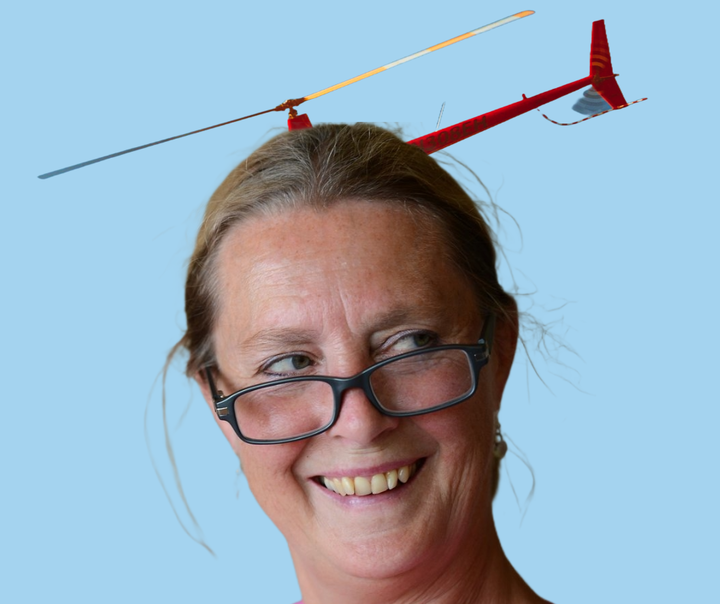
The type of parent who turns to a Facebook page to scout for their child is often referred to as a “helicopter parent”—a term coined by child development researchers Foster Cline and Jim Fay to describe parents who micromanage their children in ways that often prevent them from growing into their independence.
While helicopter parenting seems more common or achievable when children are in elementary and high school, Russell Shaw, a reporter from The Atlantic, said that this form of parenting style has actually become increasingly normalized in the college world. In his article, “When Helicopter Parents Touch Down—At College,” Shaw mentions how these parents are following their children to college, adopting the new name “trailing parents.” They regulate their children’s lives, even when their children are miles away, frequently texting them about dorm life, grades, classes, and friendship drama. Some even go so far as to buy property close to their children’s university to check in on them or be there for them in moments of need. Others set up frequent visits to their kids’ dorms, pay for their child’s transportation home each weekend, or get close to college administration to help leverage their child’s success.
While it’s hard to release control and let your kids make their own decisions, this behavior can be extremely harmful.
It may be a cliché, but college is a space for people to grow independence and develop critical communication and problem-solving skills. If parents are advocating for every small thing for their child through Facebook groups and emails to professors, their children are missing out on experiences that will help them grow in these areas. At a place like Emerson, where we have a whole department dedicated to communication and a motto about expression, it’s ironic for students to rely on their parents to speak for them.
It’s also important to mention that only a certain demographic of people can afford to buy an apartment near their kids’ school or plan multiple visits throughout the year. Helicopter or trailing parenting is much more convenient for parents who have the means to afford their overattentive behavior. As two scholarship students, our parents have to parent from a distance.
Take, for example, a recent Zoom call for the Kasteel Well study abroad pre-departure meeting. Logging on to the call, it was surprising to see so many parents filling the screen on a Thursday at 2 p.m. Tess Gleason suddenly realized she hadn’t even thought to ask her parents if they wanted to join, partly because they’d be working, but also because, to put it frankly, why would they need to? She’d be the one studying in the Netherlands; if she couldn’t handle a Zoom call without them, how could she live for three months in another country?
Gleason’s parents often applaud her for “taking on” so many of her college responsibilities, like applying for scholarships, keeping up with financial aid forms, communicating with offices when problems arise, and working on campus. Her parents don’t know how to log on to her billing portal, and they probably wouldn’t realize if she revoked their FERPA rights to her records. When it really comes down to it, it’s because this is Gleason’s college education, not theirs. Taking on the college responsibility was her choice, especially since her parents never attended college in another state.
To a certain extent, these parents might know that too. Helicopter parenting has many faces, and while it does impact the child’s independence, it can also be a coping mechanism. According to Rachel Girk, a licensed professional counselor in St. Louis, “empty nesting” is the process of letting a child grow, as “[parents] feel the impact of every step of their child’s individuation process.” When a child goes off to college, parents experience intense mental and emotional distress as they essentially grieve the loss of the active stage of parenting their child, feeling, as Girk describes, lost and filled with a lack of purpose.
When Josie Arteaga’s parents joined the Kasteel Well meeting from halfway across the world, completely unprompted, notebook and questions ready for any riveting news this information session could possibly tell them, their hovering didn’t come from a place of possessiveness or malice, but from genuine concern. Likewise, Danielle Evans-Cole, a parent who wrote an essay for Business Insider on helicopter parenting, writes that she was sucked into hovering over her kid due to the frenzy of the Facebook groups she was a part of.
“My anxiety rose with each post I read,” Evans-Cole writes. “Instead of worrying that he wouldn’t be sleeping in the safest crib, 18 years later, I agonized over the best mattress pad and sheets.”
In this sense, Arteaga’s parents hover because, in that small way, they can be closer to her—even from thousands of miles away. When she left for college, she left their nest with a significant hole in it. In constantly checking in, they’re able to feel a small sense of the authority that she broke when leaving home. Their helicoptering is a refusal to acknowledge that their only daughter has become independent, and while it’s completely acceptable to try to reconcile this with their hovering, sometimes it might just be better for both parties to let go.
“It’s hard to sit back,” Evans-Cole concludes.“But the less I do for him, the more he thrives.”
It’s totally reasonable for parents to be scared when their children move away for college, but letting go will help their child succeed on their own schedule. This doesn’t necessarily mean immediate success or happiness, but it does mean growing as a person who can independently navigate their own life. Isn’t college supposed to help nurture that?
The answer is, even as much as the process pains not only those who experience it, but those who witness it from afar, yes.