


Editors note: this story has been updated to protect a source out of fear of retribution
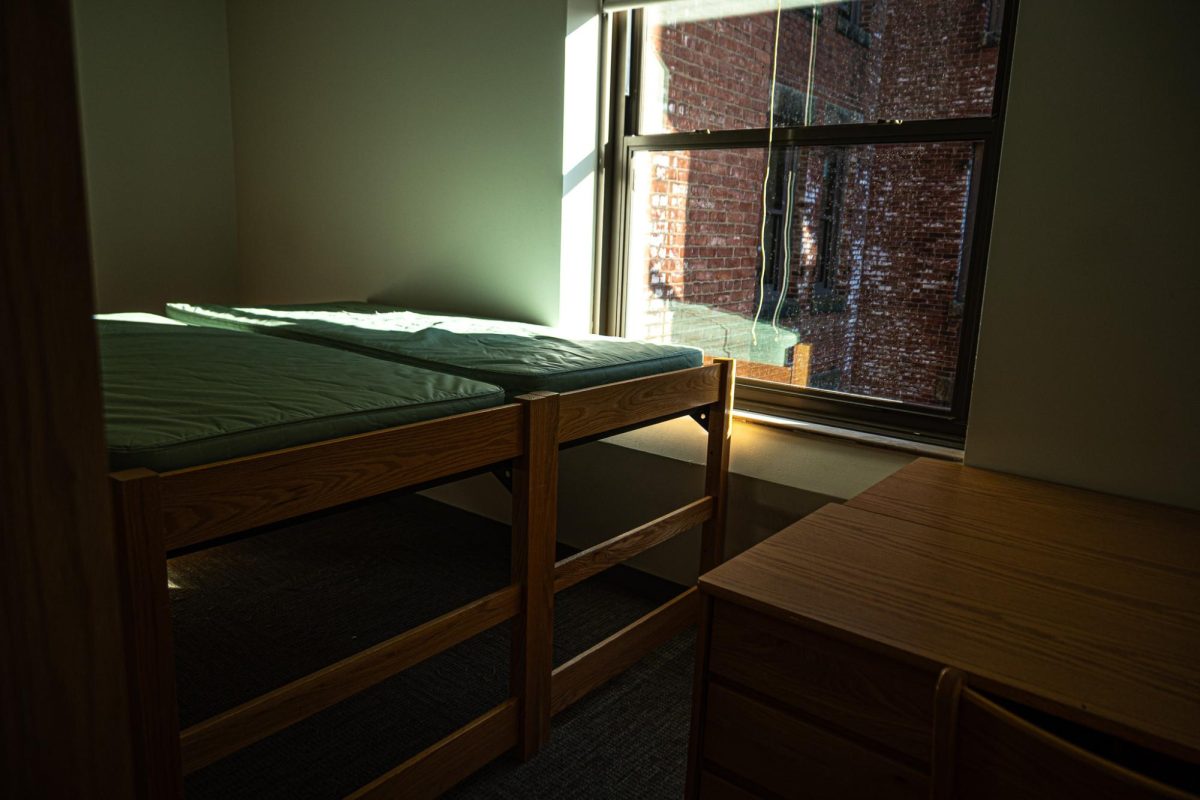
Emerson College students are known for their creativity in the arts and communication; inside the dorms of Little Building, students use nails as canvases and their rooms as a low-cost salon.
Do-it-yourself nail brands skyrocketed in popularity following a state-mandated order during the COVID-19 pandemic that shuttered nail salons nationwide. Bare-nailed customers took to social media, where influencers became nail gurus, and DIY nail brands saw a 2,000% sales increase in 2020 alone.
Now, six years after the pandemic, the trend continues. More customers are opting for DIY or unlicensed, home-based nail technicians, while professional nail salons face high supply costs and rising prices.
Olivia Chen, a freshman writing, literature and publishing student, started doing nails at home last August before coming to Emerson. She said she mainly learned from TikTok, YouTube, Instagram Reels, and even WikiHow.
At the time of their appointment with Chen, clients arrive at her dorm, where she welcomes them into her makeshift nail salon. She sets them up at her desk, trading laptops, notebooks, and pens for nail files and polish. After cleaning up cuticles and nails, she plays mellow pop music for background noise.
During the rest of the appointment, she goes through the process of determining which tips would best fit the client, applies a base layer, then adds color or design, based on what the client wants. She ends with a top layer and cuticle oil, all while establishing a connection with her client. For each, she inquires about their major and how their week is going.
Chen, other Emerson nail artists, and their clients all deeply value creativity. For Chen, the idea of having creative freedom over her nails was what drew her to start nail art in the first place.
“Doing my own nails let me do some of my own designs. I [know] what I [have] in my mind, and it’s harder to translate that [to] another person,” she said.
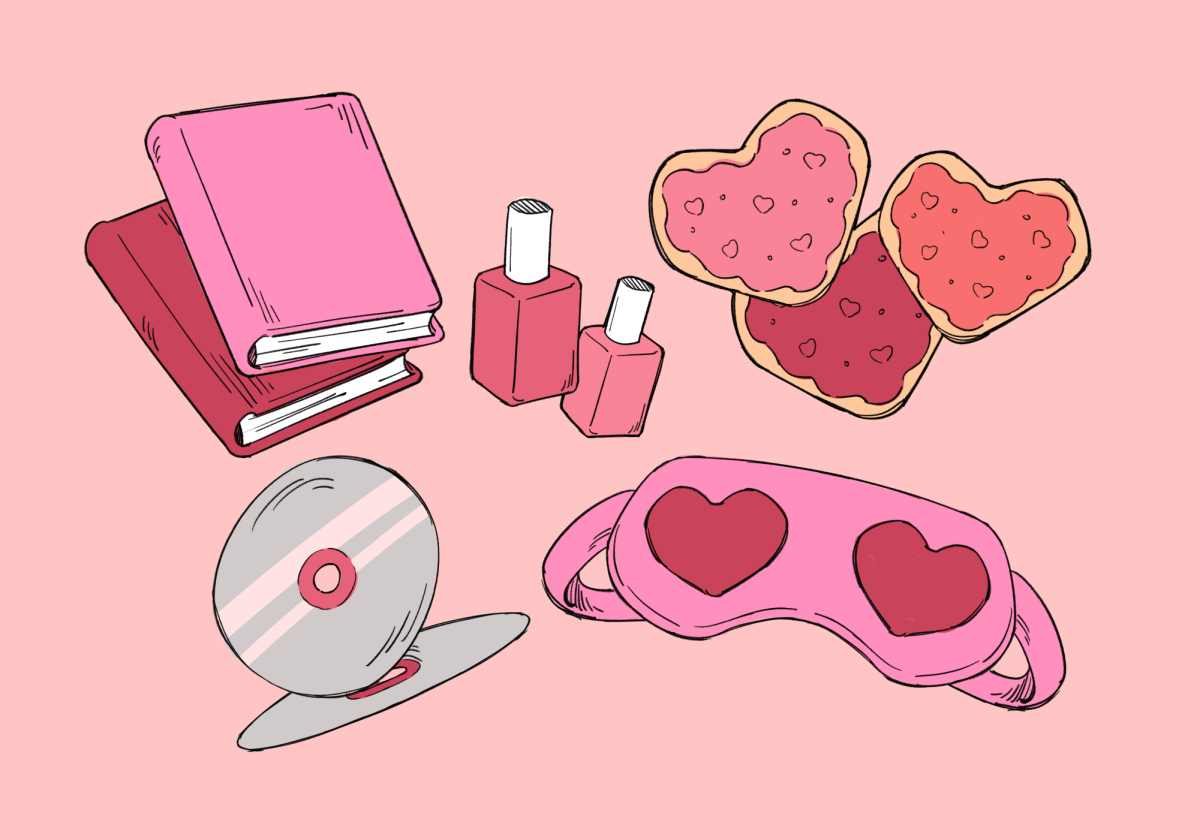
Chen creates various colorful designs, one of which was a Valentine ‘s-themed set with French tips. One nail was adorned with multiple hearts, and the rest of the nails had three hearts to embellish the top of the French tips.
Sidney Schmitt, a freshman interdisciplinary studies student, has been doing nails since middle school. Her designs often include bold and vibrant colors and original designs that go beyond the classic french tip that you would see at a traditional nail salon. Some of her most eye-catching designs include charms and 3D builder gel art.
Her typical routine with a client is asking what day they can meet to ensure it doesn’t conflict with her classes, and having the client send her “inspo” photos before the appointment, ensuring she has the materials and skills to execute the design.
Justine Cox, a freshman theatre major, said that getting her nails done in a Boston salon is not worth the cost.
“It was $85 to get them done professionally; it was just Gel X, plain color. It was way too expensive for no reason,” she said.
With a typical acrylic full set costing around $90 in Boston, some college students opt out of getting their nails done altogether, as they are unable to afford the expense every month. Cox has gotten her nails done by three different student nail artists at Emerson, all of whom charge less than any nail salon, she said.
Schmitt said that prices are a big part of the reason Emerson students, and college students in general, get their nails done by independent student artists.
“It’s so much less accessible here for college students to get their nails done affordably,” she said
“I think it’s nice for students to have a more affordable option for nails because it brings a sense of normalcy that [they] had in high school,” she said. “I know a lot of people who got their nails done every two weeks at home, and they can no longer afford it.”
She added that due to the amount of clients she has, she is able to maintain these prices.
“It works for everyone because [I] have more clients, and people are getting [their nails] done affordably,” she said
Employees at nail salons are either manicurists or nail technicians. Manicurists are responsible for basic nail care services, while nail technicians are trained to apply acrylics or gels.
Chen said that while nail salon employees are trained and licensed for the procedural aspects, she feels that creative ability is not usually something that can be learned through their training programs.
Artists at nail salons usually have more clients and less time to spend with each client than student nail artists at Emerson. This can limit the designs that nail technicians can offer to individual clients. Chen said these limitations may also be why students choose independent nail artists.
“I think that with more individual nail techs, their [clients] are able to get designs that are not so traditional, they’re able to do more trending [nail] art and designs,” Chen said.
Cox enjoys getting more unique designs done on her nails, opting for something different each time.
“It really depends on my mood. Sometimes I’ll go for crazy designs, sometimes I’ll go for something simple,” she said.
She makes sure to send her nail artist her inspiration prior to her appointment.
“I normally find something on Pinterest and show them my inspo. I’ve always been really happy when they do designs [and] with how they turn out,” Cox said.
But being an independent artist means that the results don’t always meet expectations.
Schmitt makes sure to communicate to her clients that she can usually match her nail designs closely to the inspiration image, but may be lacking the specific material.
“I can do the sketching, but if you have a specific chrome color or a specific cat eye color, just know [I] might not have that,” she stated.
Chen follows a similar pattern with her clients, offering workarounds or alternative designs if she is missing a specific material.
The student nail techs who spoke with The Beacon said that the materials needed for nail designs are not cheap; they’re a long-term investment.
“The first time you buy the materials, you’re going to spend $200, but then you’re no longer spending $100 every time you get your nails done,” Schmitt said.
Chen said that much of the money she earns from nail designs goes directly toward replenishing materials.
“In order to make up for the use [of materials], you have to be constantly taking on clients,” Chen said.
Although she also earns money from her job in Chinatown, she admits that the extra money is always helpful as a college student in the city.
“What I’ve been doing is putting all the money I earn at my job into my savings account and then what I earned from nails can go into my checking account,” she said.
The nail artists at Emerson are not just nail artists, they’re students, too. Learning to balance schoolwork, extracurriculars, and a nail business on the side can be challenging.
Schmitt said she prioritizes school over nails and doesn’t take clients if her week fills up with schoolwork. Chen emphasized the importance of receiving high-salon-quality nails with a dash of Emerson creativity at an affordable price.
“People are able to feel like they’re doll[ing] themselves up without breaking the bank,” Chen said.
While nails are not considered a necessity for most students, many enjoy the confidence boost that a fun new set of nails can bring. Student nail artists offer affordable nail services to Emerson students, giving them another opportunity to express themselves.
“It’s not the end of the world obviously,” Cox said. “It’s a nice confidence thing when you have nice nails, and it’s [a] fun … experience to get your nails done by your friends.”