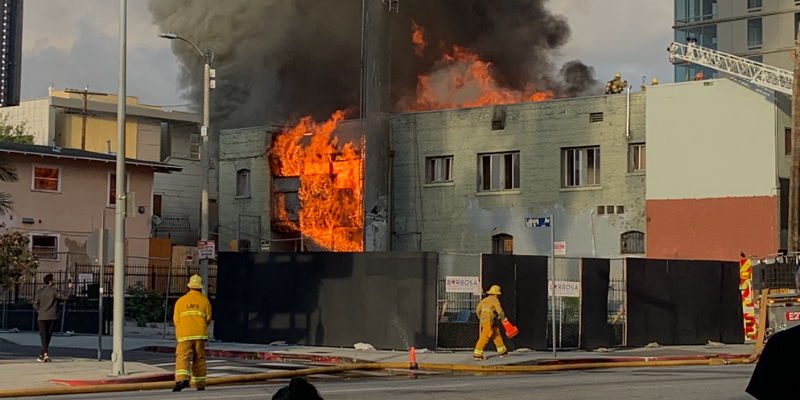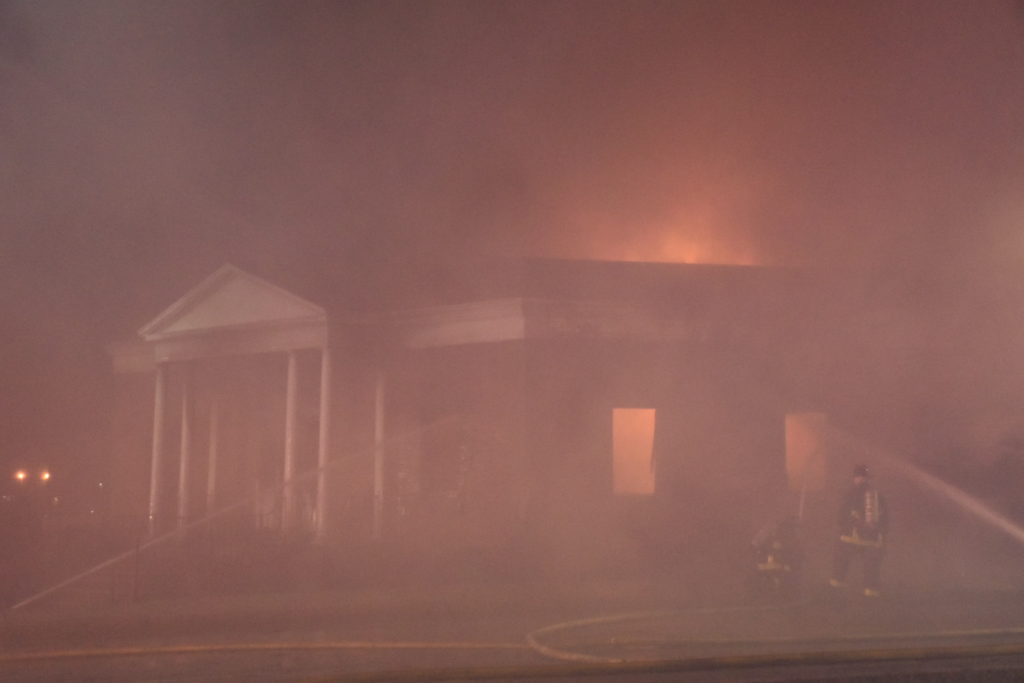


The Palisades fire began for me before it began for most people. It was midmorning on Jan. 7, 2025, and I saw smoke billowing up into the sky from the window of my grandparents’ house. We flipped through local news stations, but nobody was talking about it. My grandma insisted we drive down to the cliffs to see it closer, and when we got there, we joined a crowd of people looking out onto the Pacific Palisades, an upper-class neighborhood of Los Angeles separated from Santa Monica, Calif. by a wide-mouthed canyon. It wasn’t long before the smoke turned from light gray to black, which my grandma told me was a sure sign that it was burning somebody’s house. By the time grandma and I made it back inside the car, there were already evacuation orders put out by the county. Surreal scenes of smoke-drenched roads we drove on all the time flashed across our screen, now packed with unmoving cars. We sat watching, transfixed, until the flames forced us also to flee.
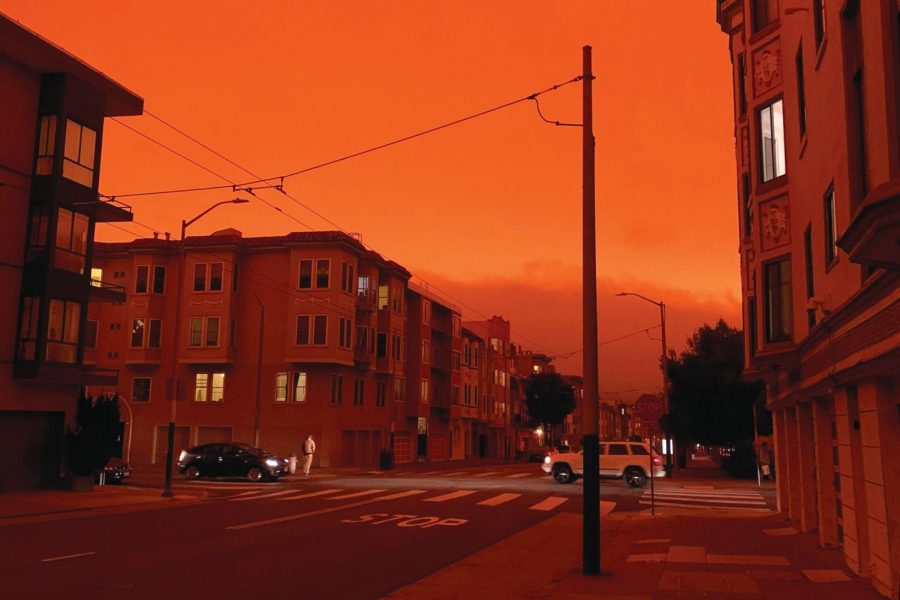
Growing up in Los Angeles, wildfires were never an unusual disaster for me. They are much more frequent than large earthquakes, of which California is infamous for. I have many memories of the sunlight turning a sickly and oppressive orange color, tinged with smoke, of school days spent breathing through masks, or, on one memorable occasion when the fire was particularly close, a damp washcloth tied around my head. The Santa Ana winds, which Joan Didion famously described as the malevolent “foehn” wind of Los Angeles, are always a factor in their spreading.
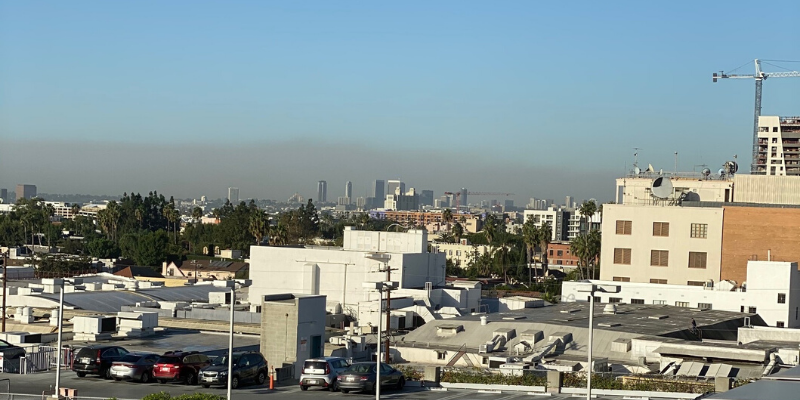
The remarkable and terrifying thing about the fires in January, besides the fact that so many of them started all at once, was that thanks to those winds, there wasn’t much smoke in Los Angeles at all. Two nights and about five additional fires later, running up a street near my house with my brother, the distant mountains glowed with incandescent flame. My grandparents’ house, too, had been evacuated, and they were now camping out with us a few miles farther south. We watched in shock and awe as the flames flickered like distant candles and occasionally flared up high into the air from a gust of particularly strong wind. All of the smoke from the Palisades fire, which we watched from just a few miles away, was being violently blown out to sea before it could spread towards us. The smoke from more distant fires, whose names we were quickly learning from the news—Eton, Hearst, Sunset—had even less of a chance of reaching us before getting swept off into the sky. A hundred and seventy mph is just a number until it isn’t, until you can see and smell the otherworldliness of watching your city burn without smoke. For much of those first few days of the fires, the sky above our house was clear.
All told, the Palisades fire burned uncontrolled for 24 days, incinerating over 23,000 acres, killing 12 people, and destroying almost 7,000 structures. Geographically, most of the area burned was to the west, in Topanga and near Malibu. In terms of property damage, the Palisades, coastal sister to Venice and Santa Monica, was practically wiped off the map. But there was another notable area that was significantly impacted, below the cliffs: Rustic Canyon.
My earliest memory of Rustic Canyon is from when I was in kindergarten. I wanted to learn about frogs, so my grandparents drove my brother and I down to one of the creeks that runs through the canyon, behind modern behemoths of houses and smaller, older, more eclectic ones. We captured some tadpoles, which became the stars of my elementary classroom for the next several weeks as we watched their metamorphoses. When I was little, I spent a lot of time climbing trees at Rustic Canyon Park, where there is a pool which, by my estimation, has not had water in it since at least 2007, and I have a vague memory of watching a show of some kind at the adjacent Rustic Canyon Recreation Center gym. The personal significance of Rustic Canyon was not cemented into my mind until many years later, when, as a freshman in high school during the pandemic, I took refuge from isolation in exploring its remote corners with some of my friends.
It’s a rare and wonderful feeling to be 14 or 15 years old, moving alone through the world for the first time; every step feels like a step too far, and yet there’s nobody to stop you. That was how it felt the first couple of times we went down to the creek. Every day we took a new route, discovering slowly but surely the network of stairways carved into the hillsides and between McMansions.
When we did find the creek, we wanted to see where it went. Each time we visited, we pressed on a little farther, always navigating carefully so as not to get our shoes wet. It felt a bit like a video game—which I think reveals a lot about where our heads were at after a year of quarantine—the way the waters would shift a little bit week after week, and we slowly discovered paths to get farther along. We built little bridges with stones and sticks, and on one famous occasion, I tried to make it across a particularly deep stretch of water by fashioning a long piece of bamboo into stilts. “I think it’s stable!” I called out, moments before falling in. I walked home barefoot that day.
The delightful and frequently strange history of Rustic Canyon was revealed to me slowly over many months and years of casual interest and determined exploration. It wasn’t long after my friends and I started spending our lunch breaks hiking down the steps which led into the canyon before we found the creek where I’d caught tadpoles, and it wasn’t long after that that we started to recognize some important landmarks along its banks. There is the so-called “cursed statue”—a 4-foot tall boy dressed as a jester holding a cornucopia—where deer and coyotes and dogs and opossums seem to like to die. Upstream from that is the bridge that does not sit on anyone’s property, and does not lead anywhere except for into a thick meadow of invasive cape ivy.
The best—and as far as I know, the only—somewhat complete history of Rustic Canyon was compiled in the 1970s by a local woman named Betty Lou Young. Her account starts with a description of the various Native American tribes that lived pressed up against the Santa Monica Mountains, chiefly the Tongva, or Gabrielino, and their early encounters with Spanish explorers. She then goes on to detail the history of regional developer Abbot Kinney, who laid out the street plans for much of Venice, the Palisades, and the Canyon at the end of the 19th century; The Uplifters, a flamboyant group of Hollywood-affiliated socialites who settled in the Canyon during the 1920s prohibition; and the unsettling mysteries of national socialist influence at Murphy’s Ranch.
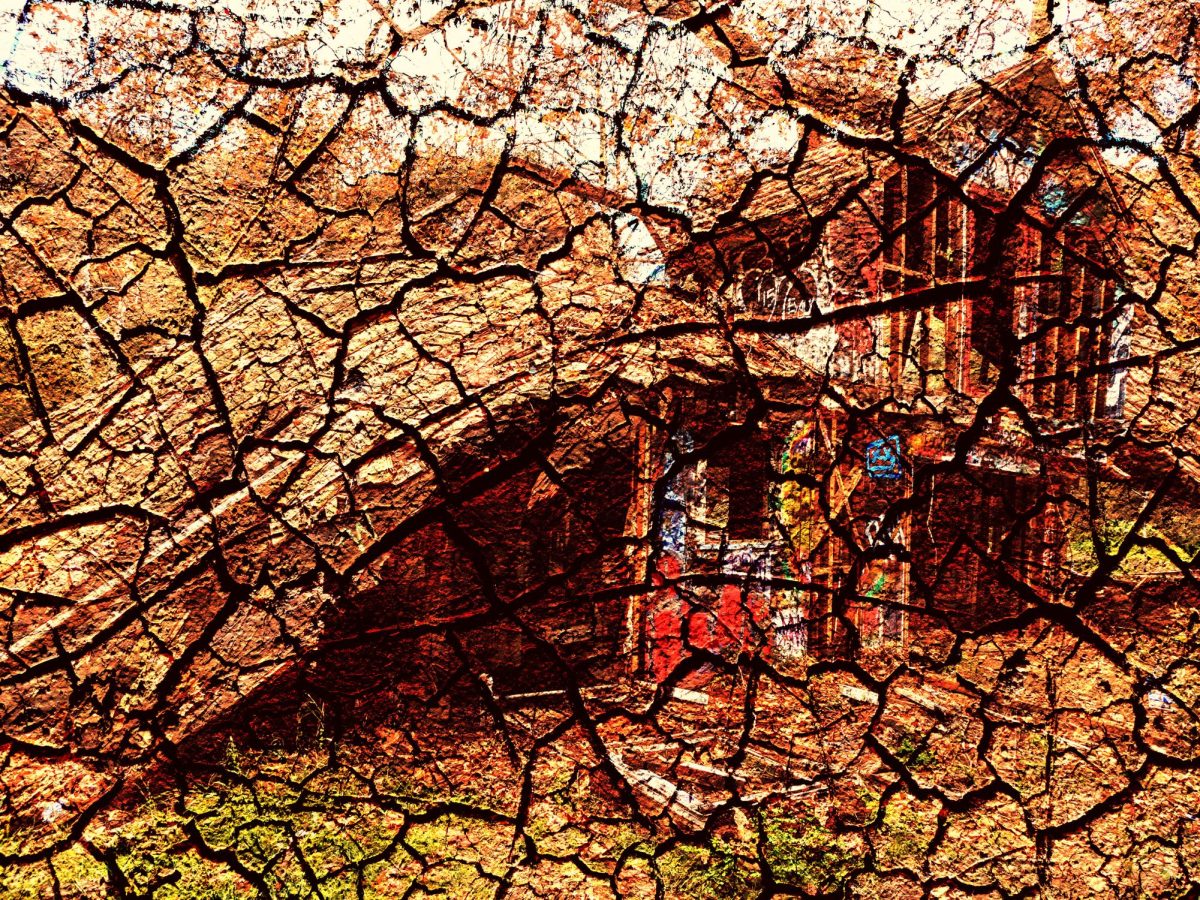
The mystery of Murphy’s Ranch began for me when my friend Jacob, an avid mountain biker who knew the trails and fire roads of the Santa Monica mountains better than any of the rest of us, offered to take us to see the “Nazi bunker,” which was much farther upstream than any of us had ever been. Nestled below the boughs of old trees are a bunch of abandoned buildings covered in graffiti, which were supposedly built and inhabited by a family of white supremacists in the 1930s, who designed them to survive a Second World War and live to see Adolf Hitler’s successful conquest of the United States. The camp was raided in 1941 by the U.S. Army, and later became a hippie commune, as is the way of things.
The true story of Murphy’s Ranch, according to Young, is much stranger than anything my friends and I could have dreamed up. A large property was purchased in the mountains in 1933 by a Mr. Jessie Murphy, and was quickly developed. This development involved the construction of a 395,000- gallon water tank, and a 20,000-gallon diesel fuel tank, enough to supply a whole community of people. Thousands of fruit and nut trees were planted on the mountainsides. The whole place was surrounded with a barbed wire fence. Most of the buildings that remain today were designed to house the tools and equipment needed to construct what had originally been planned: a huge 22- bedroom mansion with other buildings surrounding it. All of this activity was supposedly being directed by a mysterious “Herr Schmidt,” a Nazi spy who was later apprehended after the U.S. declared war on Germany. He died before coming to trial. There is no record of there ever being anyone named Jessie Murphy, except on the deed of the property, which he purchased.
Much of Murphy’s Ranch was later repurposed to serve as an artist colony sponsored by the Huntington Hartford Foundation. The studios, where many famous writers, composers, and visual artists would live, were designed by Lloyd Wright. The colony lasted 15 years and housed some 400 artists, but eventually became too expensive for Huntington to run. The site of the colony has since been burned several times.
Although fires are a normal part of nature in the Santa Monica mountains, they have become increasingly destructive to the environment. Fires across Southern California continue to grow to be much larger than typical due to drought conditions created by anthropogenic climate change. And these larger-than-typical fires occur much more frequently when the vast majority of “wild” fires originate from human activity. According to the National Park Service, only around 3% of fires in the Santa Monica mountains since the beginning of the 20th century have been caused naturally.
The key statistic to pay attention to is called the fire-return interval, or the frequency at which an area gets burned. The National Parks Service reports an average interval of 28 years across the Santa Monica mountains, but the impact of fires becoming larger and more frequent is causing this rate to decline significantly. In some regions of the Santa Monica mountains, especially near Malibu, the return interval is as low as eight years. The more frequent an area burns, the more difficult it is for the ecosystem to bounce back. Even the hardy shrubs have their limits, and might not regrow as well after rapid repeat burnings.
It is commonly understood that some ecosystems, including the chaparral of the Santa Monica mountains, are meant to burn in order to thrive. This is true of many ecosystems in Southern California, and it is true of Rustic Canyon. Native oak and sycamore trees are well adapted to surviving intense wild fires such as the Palisades fire, and many of them, especially the ones nestled deeply into the canyon along the banks of the creek, have. The short brush that covers most of the mountain landscape above regrows quickly, and in just a few months since the fires, the hills have gone back from being brown to green.
The most personally devastating loss in the Palisades fire was a small yellow house in Rustic Canyon, which was unfortunate enough to catch a stray ember that floated down from the Palisades and burned to the ground. It was a proud A-frame with huge skylight windows that almost filled the roof. Home to well-known painter Nicolai Fechin in the 1940s and ‘50s. I used to walk past it every time I went on an adventure in the creek with my friends, and whenever I gave someone a tour of the area, I proudly pointed it out as my favorite house in the canyon.
Like the rest of the areas lost in the fires, it will be rebuilt, it will regrow, it will bounce back. But it will never be quite the same. The history of Rustic Canyon, both the chapters I have discovered and the moments of it that I have written, will be more fragile now, and will likely burn more frequently. How can I best go about remembering a place that I no longer recognize? Perhaps memory itself, the connections that we make to places when we “put down roots,” are hardy tendrils that can be regrown.